

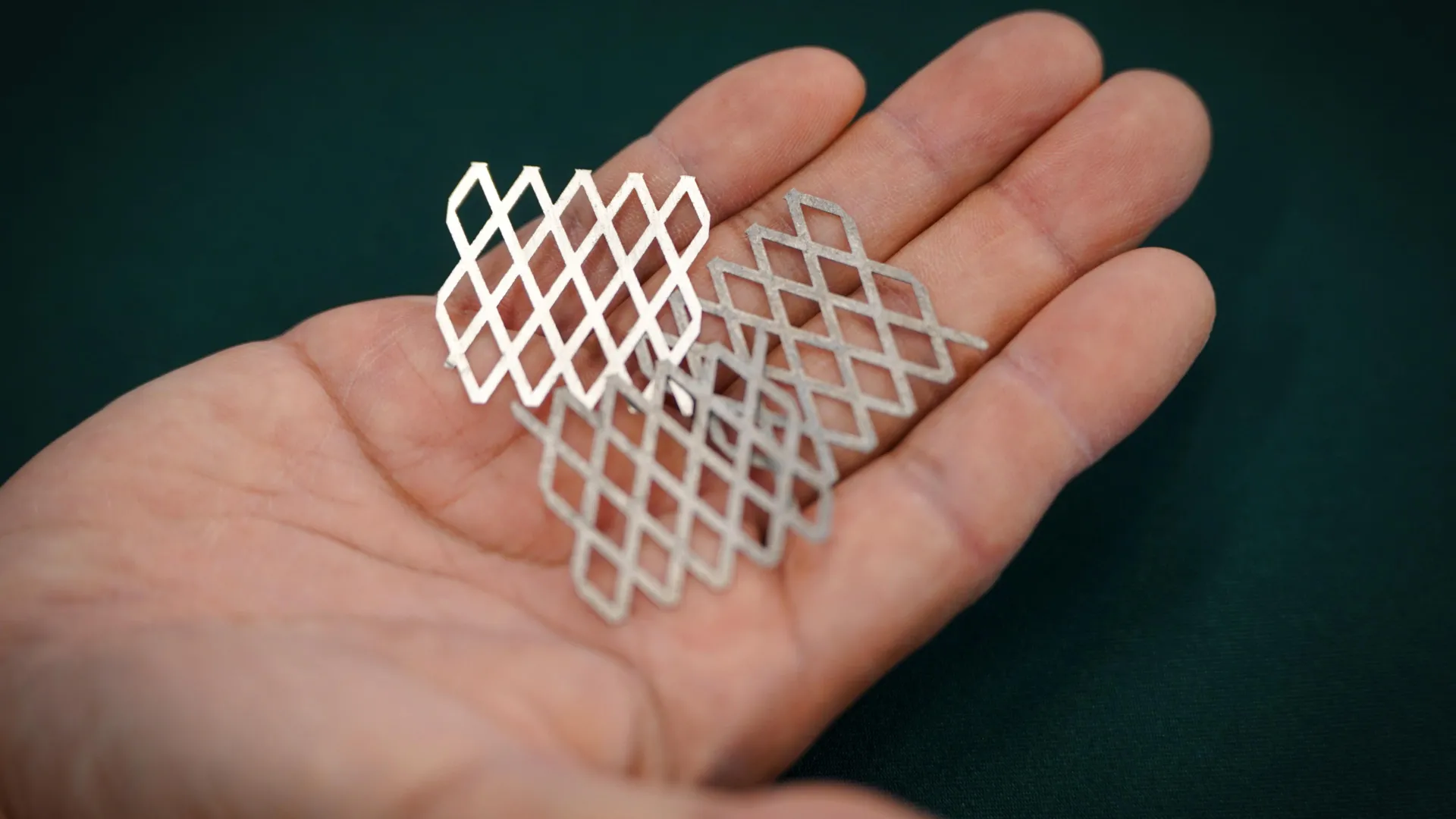
A team led by Professor Mingxin Huang at the University of Hong Kong has created a new stainless steel variant called SS-H2, designed to withstand severe corrosion in conditions that conventional stainless steel cannot tolerate. The material shows particular promise for applications in green hydrogen production, where electrolyzers must operate in harsh chemical and electrical environments, particularly when saltwater is involved.
Conventional stainless steel’s corrosion resistance relies on a protective chromium oxide layer that forms on its surface. However, this protection has a critical limitation: the chromium oxide can undergo further oxidation at high electrical potentials, leading to transpassive corrosion. This process occurs at approximately 1000 mV, while water oxidation during electrolysis requires potentials around 1600 mV, creating a fundamental incompatibility with high-voltage electrochemical applications.
SS-H2 overcomes this limitation through what researchers term “sequential dual-passivation.” The material develops a second protective layer based on manganese beneath the traditional chromium oxide layer. This manganese-based layer begins forming at approximately 720 mV and works in conjunction with the chromium oxide to enable corrosion resistance at potentials reaching 1700 mV in chloride-rich environments like seawater. The discovery is counterintuitive, as manganese has traditionally been considered detrimental to stainless steel’s corrosion resistance, and researchers note the mechanism cannot be explained by current corrosion science knowledge.
The economic implications are substantial. Current electrolysis systems producing hydrogen from desalinated seawater or acidic solutions require expensive titanium components coated with gold or platinum, which account for significant portions of system costs. According to the research team, SS-H2 could reduce structural material costs by approximately 40 times compared to these conventional materials. For a 10 megawatt PEM electrolysis system currently costing approximately HK$17.8 million, this represents potential savings of tens of millions of dollars. The findings appear in Materials Today, and patents have been authorized in multiple countries. The research required nearly six years to complete and involved extensive atomic-level analysis to understand the material’s behavior.
Article Attribution | Read More at Article Source
Article summary produced by Claude AI