

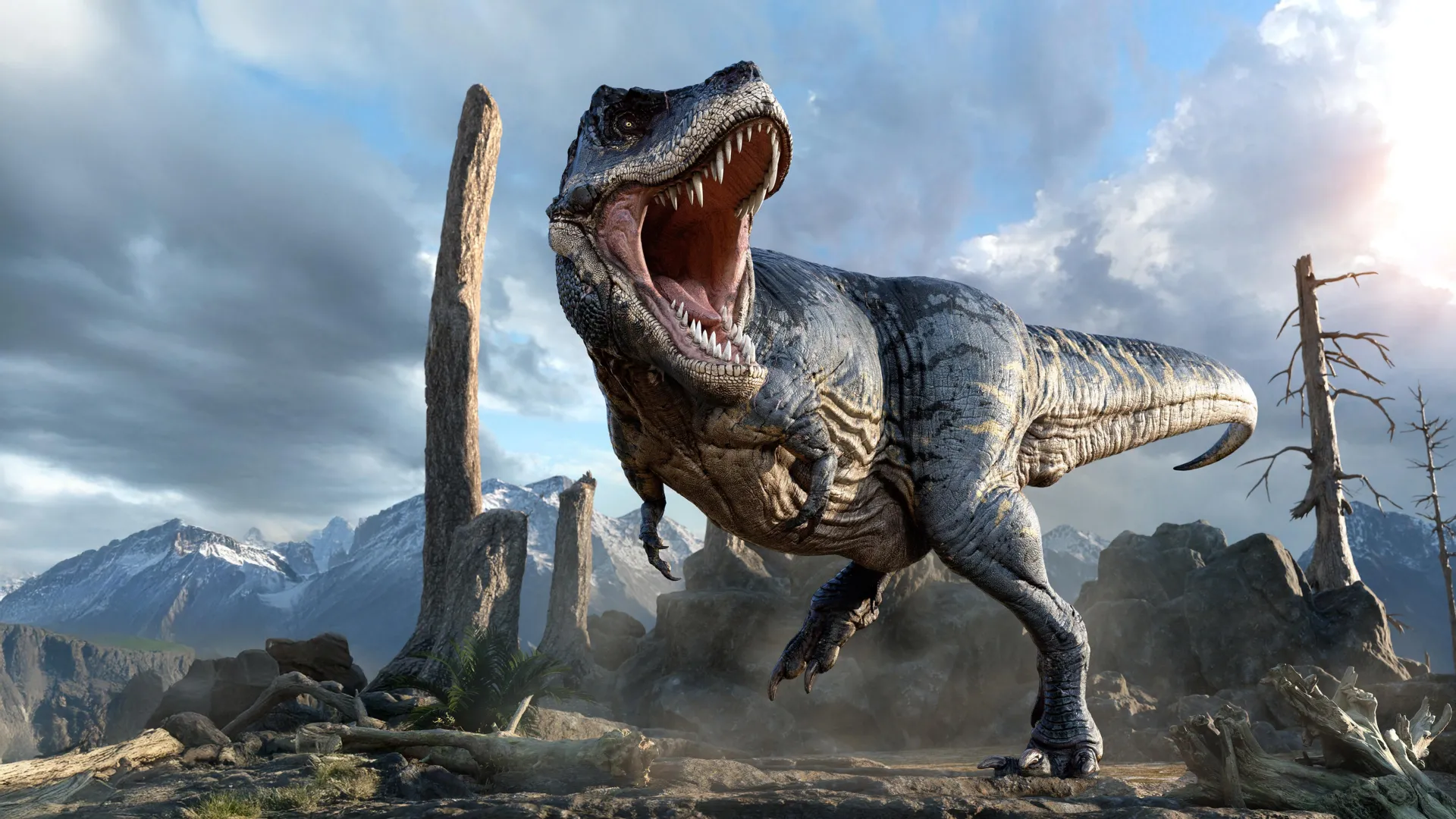
A study published July 15, 2026, in PLOS One has identified fossilized bite marks that researchers believe were likely produced by Tyrannosaurus rex. The investigation was conducted by Bethania C. T. Siviero of Loma Linda University alongside her research team, who examined bone samples to develop better methods for interpreting tooth damage on ancient fossils.
The team analyzed more than 3,000 bones from a site in northeastern Wyoming, with specimens dating to the late Cretaceous period between approximately 72 and 66 million years ago. The majority of the fossils belonged to Edmontosaurus annectens, a large herbivorous dinosaur characterized by its distinctive broad, duck-shaped bill. Among the entire collection, only 12 bones showed evidence of possible tooth marks. Of these, four displayed patterns particularly consistent with the expected tooth shape and spacing of T. rex, leading researchers to conclude that the apex predator was the probable source of those markings. The team noted that other damaged bones may have resulted from bites by alternative carnivorous creatures present in the ecosystem, including other dinosaur species and crocodilians.
A significant finding emerged from examining the condition of the marked bones: most showed no indication that any surrounding tissue had healed before fossilization. This observation suggests the tooth marks were inflicted either at or shortly after the time of death. Combined with earlier research from the same location, the evidence supports a scenario in which predators killed certain animals, whose remains subsequently remained exposed to scavenging activity before eventual burial and fossilization.
The research also contributed a broader methodological advancement to paleontology. Distinguishing genuine tooth marks from other types of bone damage proves challenging, as disease, insect activity, weathering, and erosion can produce superficially similar features. By establishing clearer diagnostic criteria for identifying authentic tooth damage, the study provides paleontologists with improved tools for reconstructing prehistoric behavior and understanding ecological relationships among ancient species. The research received funding from internal sources at Loma Linda University.
Article Attribution | Read More at Article Source
Article summary produced by Claude AI