

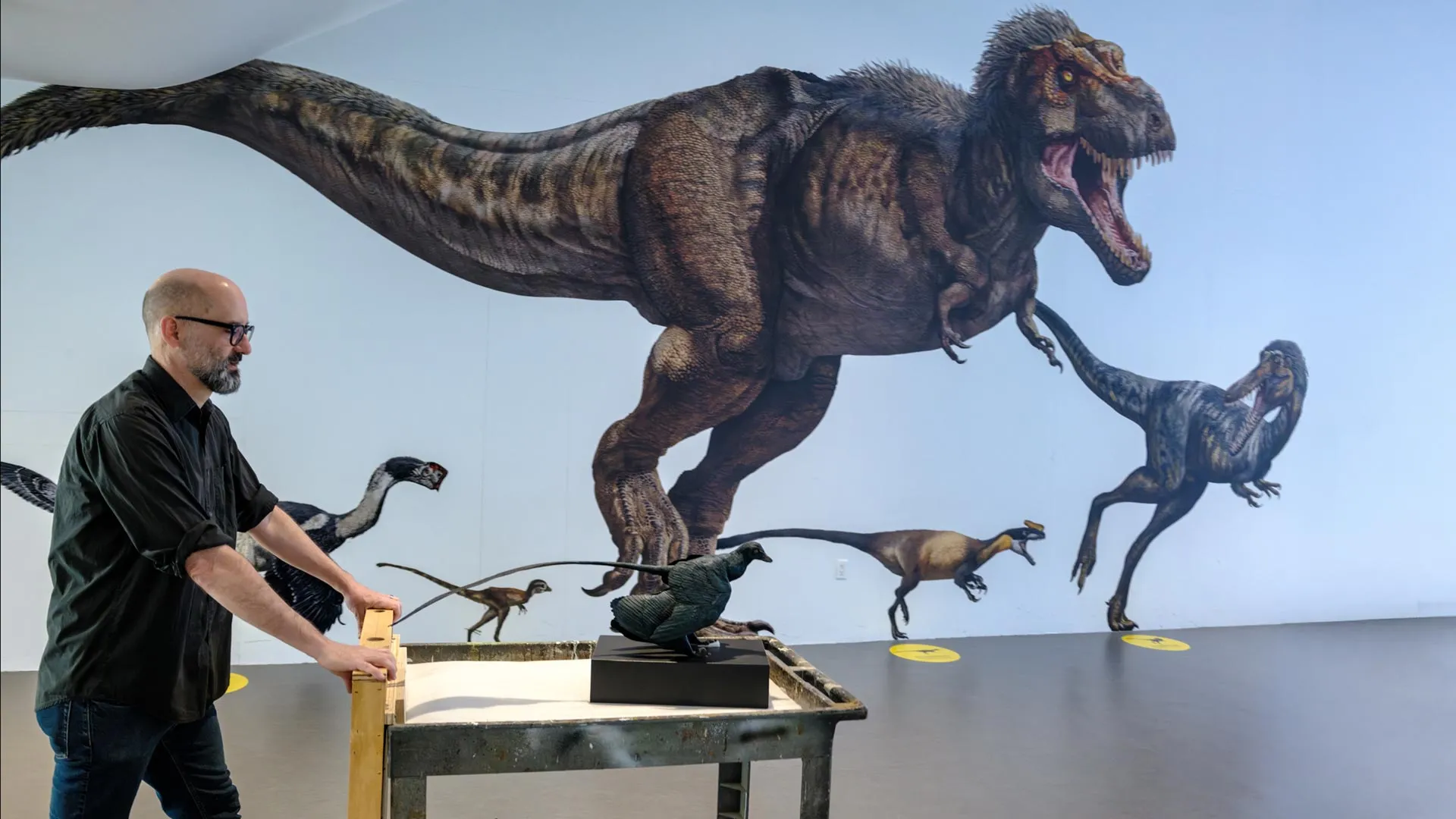
A collaborative study from the American Museum of Natural History and Princeton University investigates why dinosaurs, despite their famous gigantic proportions, apparently never evolved to extremely small body sizes. Using mathematical models to examine vertebrate body size evolution, scientists determined that energy expenditure and physiological factors can account for the size ranges observed in modern mammals, birds, and turtles, but these same mechanisms fail to explain the conspicuous absence of tiny dinosaurs.
The fossil record reveals a striking contrast: the largest dinosaurs exceeded 80 tons, while the smallest non-avian dinosaurs weighed approximately one pound—roughly the size of a large rabbit. This is more than 200 times heavier than today’s smallest birds and mammals. In contemporary ecosystems, approximately 75 percent of living mammal species and 90 percent of bird species are smaller than the smallest known non-avian dinosaurs, yet no comparable diversity of tiny dinosaur species existed.
Researchers propose that ecological competition, particularly with early small mammals, may have imposed a lower size limit on dinosaur evolution. Though one might assume tiny dinosaur fossils simply remain undiscovered, the scientific team notes that fossil sites preserving dinosaurs frequently contain much smaller animals including mammals, lizards, and amphibians. The absence of even occasional tiny dinosaur remains suggests these creatures were genuinely rare or nonexistent rather than merely overlooked.
A notable exception to this pattern concerns birds, which evolved from dinosaurs but rapidly achieved body sizes far smaller than any other dinosaur lineage. The researchers suggest that powered flight granted early birds access to ecological niches unavailable to terrestrial dinosaurs, enabling them to escape the constraints that prevented their non-avian relatives from miniaturizing. This finding highlights a paradox in evolutionary history: dinosaur ancestors could be tiny, living bird descendants can be tiny, yet dinosaurs themselves appeared constrained from entering this size range, a phenomenon researchers indicate warrants continued investigation.
Article Attribution | Read More at Article Source
Article summary produced by Claude AI