

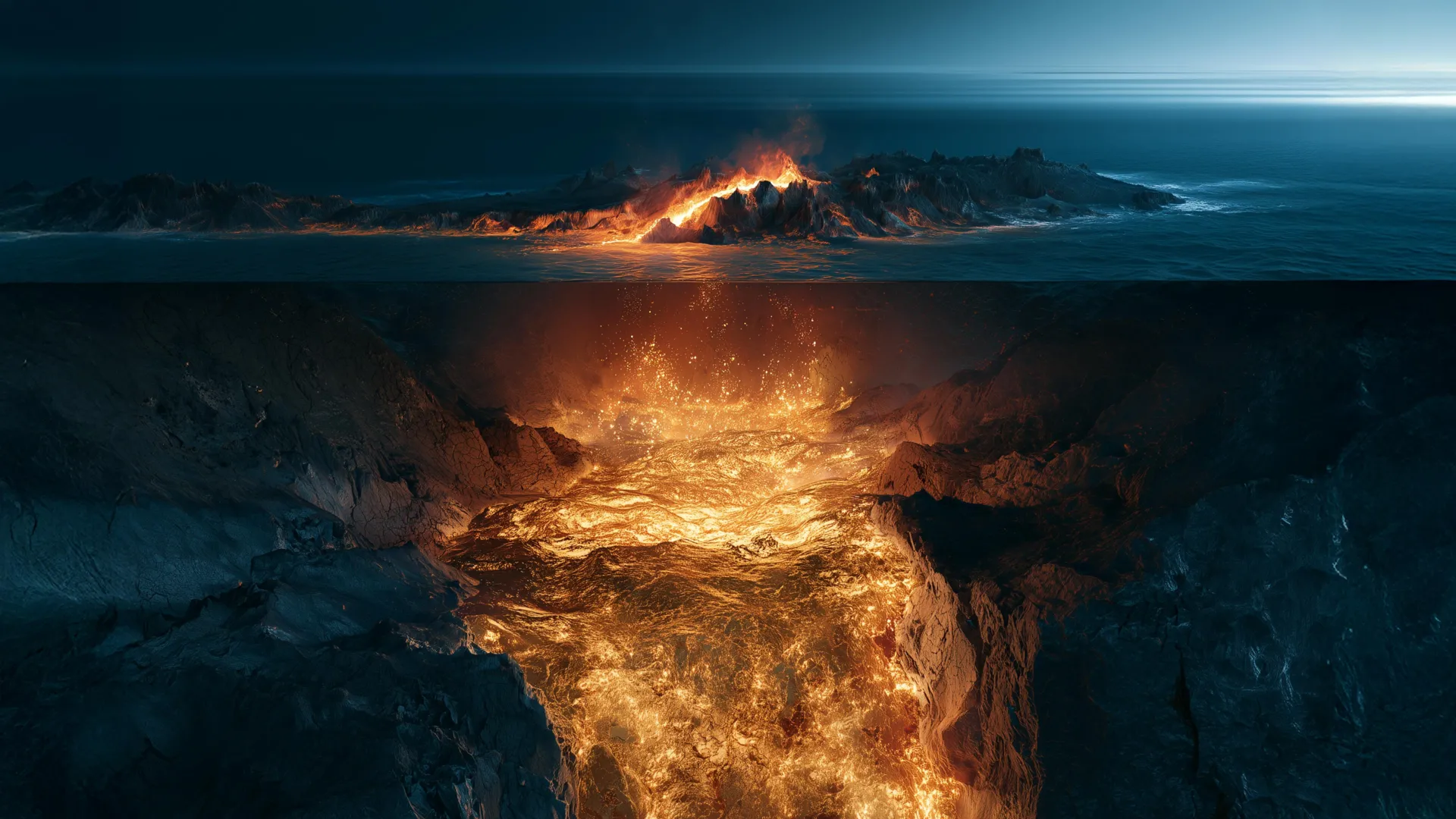
Research led by Dr. Christian Timm at GEOMAR Helmholtz Centre for Ocean Research Kiel has identified a mechanism explaining why island arcs—chains of volcanoes above subduction zones—accumulate unusually high concentrations of gold. The study analyzed 66 volcanic glass samples collected from the seafloor along the Kermadec island arc and Havre Trough north of New Zealand. Volcanic glass preserves the original chemical composition of magma by cooling extremely rapidly underwater, providing scientists with records of conditions deep beneath the seafloor.
The research focused on primitive glass samples, which retain the chemistry of magma before crystallization alters its composition. Analysis revealed that gold concentrations in these samples were often several times higher than those found in comparable magmas from mid-ocean ridges. Researchers measured gold at extremely low concentrations and compared it with other chalcophile elements—silver, copper, selenium, and platinum—whose chemical patterns during melting reveal mantle conditions. The team detected original gold concentrations reaching six nanograms per gram of rock, unusually high for mantle-derived magma, and found gold-to-copper ratios significantly above those in fertile mantle and primitive mid-ocean ridge basalts.
Chemical analysis indicated that the mantle beneath the Kermadec island arc melts in the presence of water at relatively high temperatures, above the sulfide liquidus point where sulfide minerals break down completely. The data suggest that elevated gold concentrations result from multi-stage melting of a water-rich and oxidized mantle source that had been depleted by earlier melting episodes. Water released from the descending plate primarily facilitates extensive melting rather than directly controlling gold transfer. Gold in the mantle is typically bound in sulfide minerals; when melting intensity becomes sufficient to destroy these minerals, the trapped gold releases completely into the magma.
The findings indicate that gold enrichment requires repeated melting events rather than a single occurrence. The stronger and more repeated the melting, the more effectively gold transfers into rising magma. While gold concentrations in these rocks remain far too low for commercial mining, the results improve understanding of gold-rich deposits associated with intra-oceanic island arcs and may explain elevated gold content in hydrothermal sulfide deposits along submarine island arcs. The research demonstrates that the mantle’s chemical history beneath subduction zones establishes starting conditions for gold deposits long before magma reaches the surface.
Article Attribution | Read More at Article Source
Article summary produced by Claude AI