

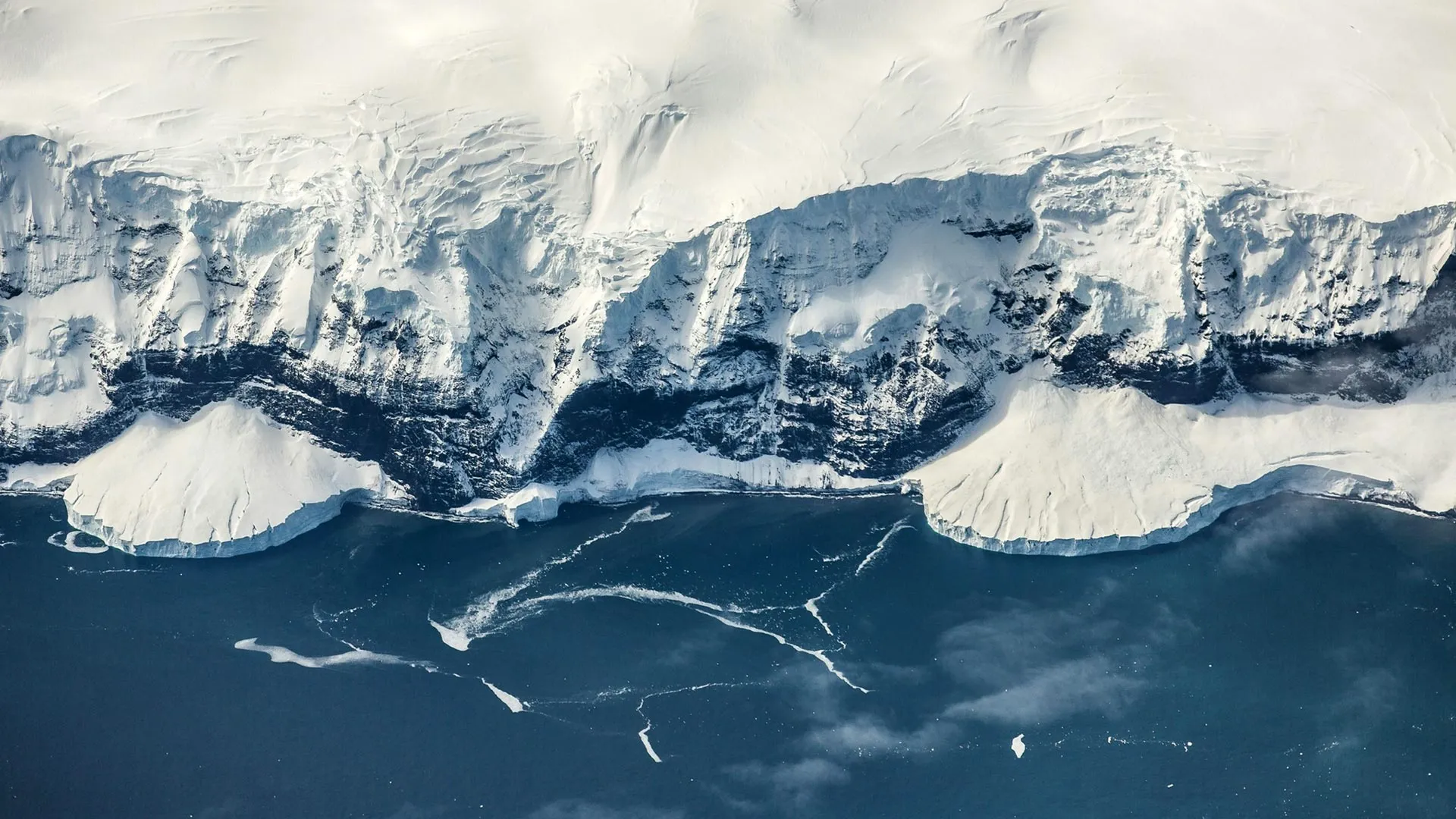
An international research team has identified a geological explanation for why Antarctica developed a major ice sheet approximately 34 million years ago, despite global temperatures being roughly 5 degrees Celsius warmer than present conditions. The study, published in Science and led by researchers from the University of Southampton alongside institutions in Germany, the Netherlands, and Italy, attributes the early Antarctic glaciation to the gradual uplift of East Antarctic terrain over an extended period.
The uplift process began following the separation of Antarctica and Africa during the Jurassic Period and continued for more than 100 million years. Scientists determined that a phenomenon called mantle waves—slow-moving features that travel beneath continents after tectonic plates separate—were responsible for much of this gradual elevation increase. Computational models reconstructed how the landscape evolved, showing that by approximately 45 million years ago, substantial portions of East Antarctica had reached critical elevations around 2 kilometers high, enabling mountain glaciers to form and eventually merge into the East Antarctic Ice Sheet.
The research provides insight into why the polar regions followed divergent paths. While Antarctica became heavily glaciated around 34 million years ago, the Northern Hemisphere did not develop major ice sheets until approximately the past five million years. Although declining atmospheric carbon dioxide levels are recognized as an important factor in Antarctic glaciation, the study indicates that topographic elevation played an equally critical role. Once snow and ice began accumulating at higher elevations, additional climate feedbacks accelerated cooling. The expanding ice sheet’s bright surface reflected more sunlight back into space, reducing global temperatures by approximately 1 degree Celsius through the ice-albedo effect, while reduced atmospheric water vapor further weakened the atmosphere’s insulating properties.
The East Antarctic Ice Sheet now represents the largest ice sheet on Earth and contains sufficient frozen water to raise global sea levels by approximately 52 meters if completely melted. The findings suggest that geological forces from Earth’s interior may precondition landscapes for glaciation, potentially reshaping scientific understanding of how major ice ages originate and when critical climate transitions become possible.
Article Attribution | Read More at Article Source
Article summary produced by Claude AI