

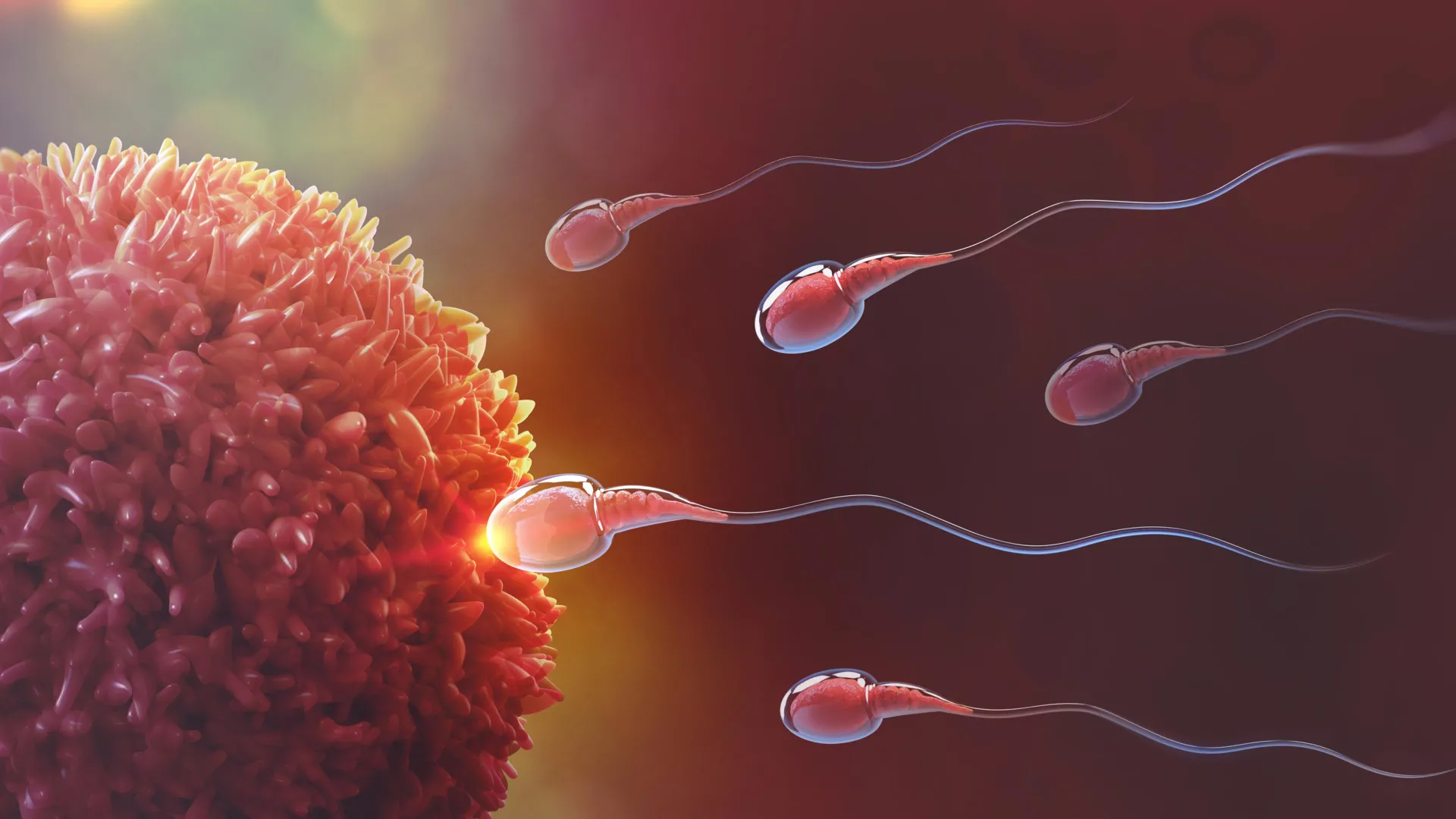
Evolutionary biologists from Syracuse University, the University of Siena in Italy, and the University of Szeged in Hungary have published findings challenging the traditional view of fertilization as a competitive race among sperm. Their research, published in Nature Communications, indicates that in many arthropod species—including insects, spiders, crabs and centipedes—reproductive success may depend on sperm working together in organized groups or structures rather than competing individually.
The phenomenon, known as sperm conjugation, involves coordinated behavior in which sperm cells join together through sperm-associated material, a membrane-enclosed substance that can attach cells to one another or arrange them into organized formations. This cooperative approach may provide advantages in mobility, organization or overall performance as sperm navigate the complex female reproductive tract. The researchers examined sperm structures across hundreds of arthropod species using previously published research and placed these traits onto an evolutionary family tree to trace the history of sperm cooperation.
The analysis revealed a striking pattern: sperm conjugation appeared hundreds of millions of years ago and has repeatedly evolved, disappeared and reappeared across different arthropod lineages over the past 600 million years. The common ancestor of all insects possessed conjugated sperm, demonstrating the widespread nature of this strategy. This recurring pattern illustrates how evolution repeatedly generates similar solutions to reproductive challenges across vastly different groups and time periods.
The findings carry potential applications beyond evolutionary biology. Understanding sperm cooperation could lead to new approaches for studying human fertility challenges. Additionally, researchers are investigating whether disrupting sperm conjugation or sperm-associated material could offer targeted pest control methods, particularly against the invasive spotted lanternfly, which employs an unusual reproductive strategy where individual sperm cells are embedded in thick layers of material rather than coordinating in groups.
Scientists acknowledge that fundamental questions remain unanswered, including why sperm cooperation evolves at all and what specific benefits it provides. Future research will attempt to observe sperm behavior within actual reproductive systems to better understand these cooperative mechanisms and their evolutionary advantages.
Article Attribution | Read More at Article Source
Article summary produced by Claude AI