

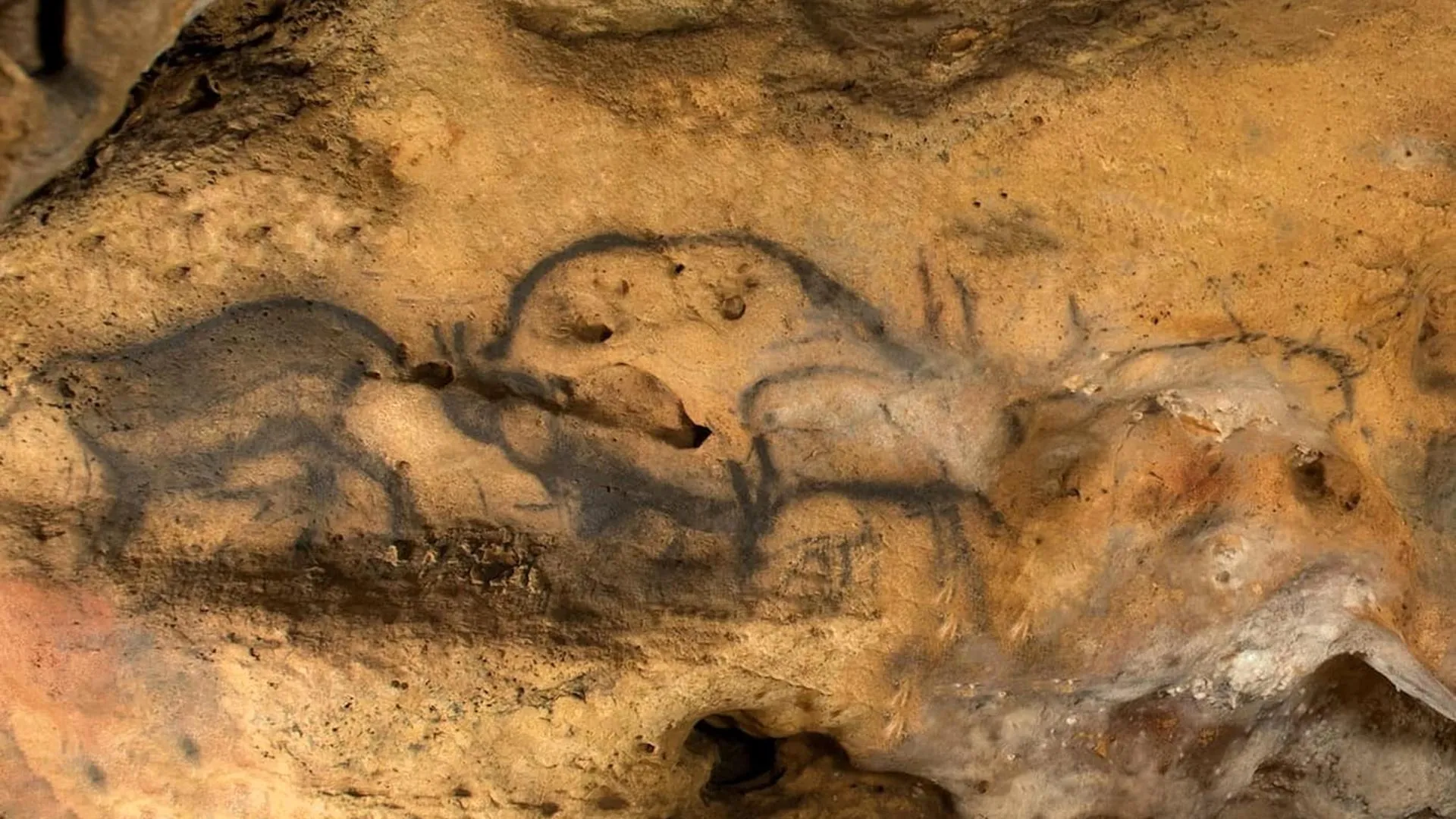
Researchers have successfully dated two black images at Font-de-Gaume, a decorated cave in southwestern France, using a novel approach that detected previously unknown charcoal traces within the pigments. The bison image dates to between 13,461 and 13,162 calBP (Calibrated Before Present), placing it in the Upper Paleolithic period. The second figure, commonly described as a mask, produced more complex results with samples indicating creation at three distinct periods separated by thousands of years.
For decades, dating prehistoric cave paintings in the Dordogne region proved challenging because the black pigments were believed to contain only mineral compounds such as iron and manganese oxides, which lack the organic carbon necessary for radiocarbon analysis. Scientists had never conclusively demonstrated that no carbon existed within these pigments. Using Raman microspectrometry and hyperspectral imaging, non-invasive techniques that identify materials without damaging artwork, researchers identified charcoal distributed consistently throughout the black lines of both figures, indicating the carbon was part of the original pigment rather than later contamination.
The discovery of charcoal enabled researchers to obtain rare authorization for removing extremely small samples for carbon-14 dating. The results revealed that the mask may contain elements created at vastly different times, suggesting that decorated caves were not always completed during single periods but may have remained significant locations where later communities returned to modify or reinterpret existing artwork.
The research, published in PNAS and led by specialists from multiple French scientific and cultural institutions, demonstrates a method potentially applicable to other prehistoric figures previously considered impossible to date directly. More precise dating of cave paintings could help researchers understand which images were created simultaneously, how artistic styles evolved, and whether communities repeatedly visited particular caves across generations, ultimately providing deeper insight into prehistoric cultures and the importance these underground spaces held over thousands of years.
Article Attribution | Read More at Article Source
Article summary produced by Claude AI