

The UK is facing a debate over its approach to scientific research funding following proposed reductions to particle physics and astronomy programs. The controversy centers on whether money is being diverted away from fundamental research toward government-prioritized applied science areas, with significant implications for the nation’s scientific standing.
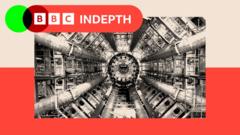
The dispute gained prominence following the 2013 Nobel Prize awarded to British physicist Peter Higgs for his decades-old prediction of the Higgs boson, later confirmed by experiments at CERN. Higgs used that moment to emphasize the importance of fundamental research, noting how discoveries without immediate practical applications have historically led to transformative technologies. However, Britain now faces decisions about withdrawing from major international research collaborations, including upgrades to the Large Hadron Collider.
A new funding structure introduced by the UK Research and Innovation Agency earlier this year divides research money into three categories: fundamental inquiry, government priorities such as artificial intelligence and quantum computing, and applied work to assist businesses. Concurrently, the Science and Technology Facilities Council announced a projected 30 percent reduction to particle physics and astronomy funding. While council leadership attributed the cuts to previously overfunded projects and economic factors like inflation, internal documents suggest a deliberate reallocation of resources from curiosity-driven to priority-driven research.
The potential consequences extend beyond academia. Approximately 30 early-career physicists have been unable to secure funding to continue work in the UK, potentially prompting emigration to other research centers. Scientists argue that removing foundational research infrastructure will ultimately undermine the industries that depend on such discoveries, creating a cascading economic impact. Leadership at UKRI has denied that funding has been deliberately shifted away from fundamental research, characterizing internal statements about such shifts as misstatements.
Article Attribution | Read More at Article Source
Article summary produced by Claude AI