

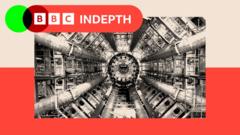
British physics research is at a crossroads as the government considers significant reductions in funding for particle physics and astronomy projects. The proposed cuts, which could amount to approximately 30 percent of funding administered by the Science and Technology Facilities Council, have prompted warnings from leading scientists that the country risks losing its standing in international scientific collaborations.
The funding reductions come amid a broader restructuring of how scientific research is financed in the UK. The UK Research and Innovation Agency recently introduced a new system that categorizes funding into three categories: blue-sky research focused on fundamental scientific questions, government priorities such as artificial intelligence and quantum computing, and applied research aimed at commercialization. Scientists and politicians have raised concerns that this reorganization has effectively shifted resources away from fundamental research toward applied projects.
Proponents of the reorganization, including the head of UKRI, argue that the changes protect curiosity-driven research while also ensuring that scientific investments deliver economic benefits and address government priorities. However, skeptics point to internal documents suggesting a deliberate funding shift and note that accounting practices make it difficult to verify whether blue-sky research is truly being protected. Some young physicists have already faced delays in securing grants to continue their work in the UK, with concerns that talented researchers may be forced to seek opportunities abroad.
Astronomers and particle physicists have characterized the potential cuts as catastrophic, warning that British scientists could be excluded from some of the world’s most important research experiments investigating fundamental questions about the universe. These collaborations, historically led in part by UK scientists, address questions ranging from the origins of the universe to the search for extraterrestrial life.
Senior figures in British science, including Nobel Prize winner Paul Nurse, have called for a pause in the implementation of the new funding system to allow for more careful consideration and consultation. The government has indicated it is working to address immediate funding shortfalls affecting early-career researchers, though broader disagreements about the direction of scientific funding remain unresolved.
Article Attribution | Read More at Article Source
Article summary produced by Claude AI