

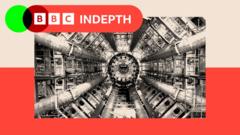
The UK is preparing to reduce or eliminate its participation in major particle physics and astronomy projects, including upgrades to the Large Hadron Collider where the Higgs boson was discovered. The proposed cuts represent approximately 30 percent of funding administered by the Science and Technology Facilities Council, affecting research institutions across the country.
The reductions are part of a broader reorganization of how British science funding is allocated. The UK Research and Innovation Agency recently implemented a new system dividing research money into three categories: blue-sky research focused on fundamental scientific questions, government priorities such as artificial intelligence and quantum computing, and applied research aimed at commercial product development. Critics contend that this restructuring has shifted resources away from curiosity-driven research toward applied areas expected to generate economic growth.
Proponents of fundamental research argue that blue-sky investigations have historically produced discoveries with transformative real-world applications. The Higgs boson discovery exemplifies this pattern; Peter Higgs predicted the particle’s existence decades before experimental confirmation in 2013, a breakthrough that contributed to his Nobel Prize recognition. Other foundational discoveries such as the electron and DNA structure similarly emerged from research with no immediate practical purpose but subsequently enabled multi-billion pound industries.
Young physicists report significant consequences from the funding uncertainty. Approximately 30 early-career researchers reportedly cannot secure grants to continue work in the UK, forcing some to seek positions abroad or abandon research careers. Researchers contend that reducing fundamental science investment harms not only academic institutions but also industries dependent on theoretical breakthroughs. Leadership at the Science and Technology Facilities Council attributed the cuts to projects initiated without adequate funding and to inflation and currency pressures. However, internal council documents reference a deliberate shift from curiosity-driven research to priority areas, contradicting public explanations. Officials at UKRI and the Science and Technology Facilities Council have disputed characterizations of a funding diversion.
Article Attribution | Read More at Article Source
Article summary produced by Claude AI