

The Royal Entomological Society is leading a project funded by Natural England and the Crown Estate to revise habitat management practices for rare species in southern England. The initiative focuses on six species found in lowland chalk grassland: the large blue butterfly, Duke of Burgundy butterfly, marsh fritillary butterfly, wart-biter cricket, juniper, and burnt-tip orchid. Project organizers note that existing guidance was developed over 20 years ago and no longer reflects current climate conditions or the accelerated pace of environmental change.
The project comes amid unprecedented weather conditions affecting the region. This year marked the first time temperatures reached 35C in three separate calendar months, while July was the driest since records began 190 years ago. Wildlife managers report significant impacts on plant life and soil stability across grassland habitats. Conservation professionals describe the environmental pressures as severe, with vegetation loss and stress evident across multiple species.
The initiative combines decades of long-term research with new scientific understanding to develop practical recovery strategies. Officials emphasized that urgent modifications to habitat management are necessary to help plants and dependent insects withstand successive heatwaves. The project represents one of 130 initiatives funded through Natural England’s £60m Species Recovery Programme, part of the broader Wild Again: Restoring England’s Wildlife initiative.
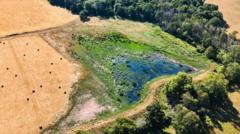
Other conservation efforts demonstrate potential solutions to climate-related challenges. At the National Trust’s Holnicote Estate in Somerset, beaver-created wetlands have maintained green vegetation despite drought conditions while reducing flooding risk. This nature-based approach—using natural features and wildlife to manage landscapes—has yielded positive results that officials view as a viable model for broader environmental management strategies.
Article Attribution | Read More at Article Source
Article summary produced by Claude AI