

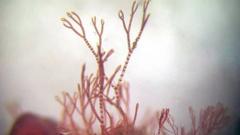
A pink-striped seaweed found living on maerl beds—carpets of free-living calcified seaweed in UK waters—has been formally identified as a new species to science. The discovery began when Prof Christine Maggs encountered a small fragment of the organism during her PhD research four decades ago, but lacked sufficient material for formal identification. Despite periodic sightings over the subsequent years, confirmation required samples large enough for molecular analysis.
Two years ago, researchers conducting a survey of maerl beds in Cornwall located specimens that matched Maggs’ long-sought seaweed. The samples were subsequently cultivated in controlled conditions to enable DNA sequencing, carried out in collaboration with Prof Beatriz de Barros Barreto. This process confirmed that the organism represents a previously unknown species. The findings will be published in the peer-reviewed journal Phycologia, with the species designated scientifically as ceramium ruenessianum.
Maerl beds represent biologically diverse marine habitats, and the identification of a new species underscores the continued ecological importance of these ecosystems. Maerl beds are classified as a threatened and declining habitat under international environmental protection agreements, with only four formally protected sites currently designated in the UK. The less-studied maerl beds off the south Cornish coast, where this species was discovered, remain without formal protected status, despite ongoing discussions regarding their conservation value alongside other national priorities such as offshore energy development and fisheries.
The discovery highlights the potential for further species identification within these marine environments. Researchers involved in the surveys continue documenting and recovering specimens from maerl habitats. Public input is being sought on potential common names for the species, with suggestions including “pink-zebra weed,” “pink-banded bandit,” and “ribbon claw.”
Article Attribution | Read More at Article Source
Article summary produced by Claude AI