

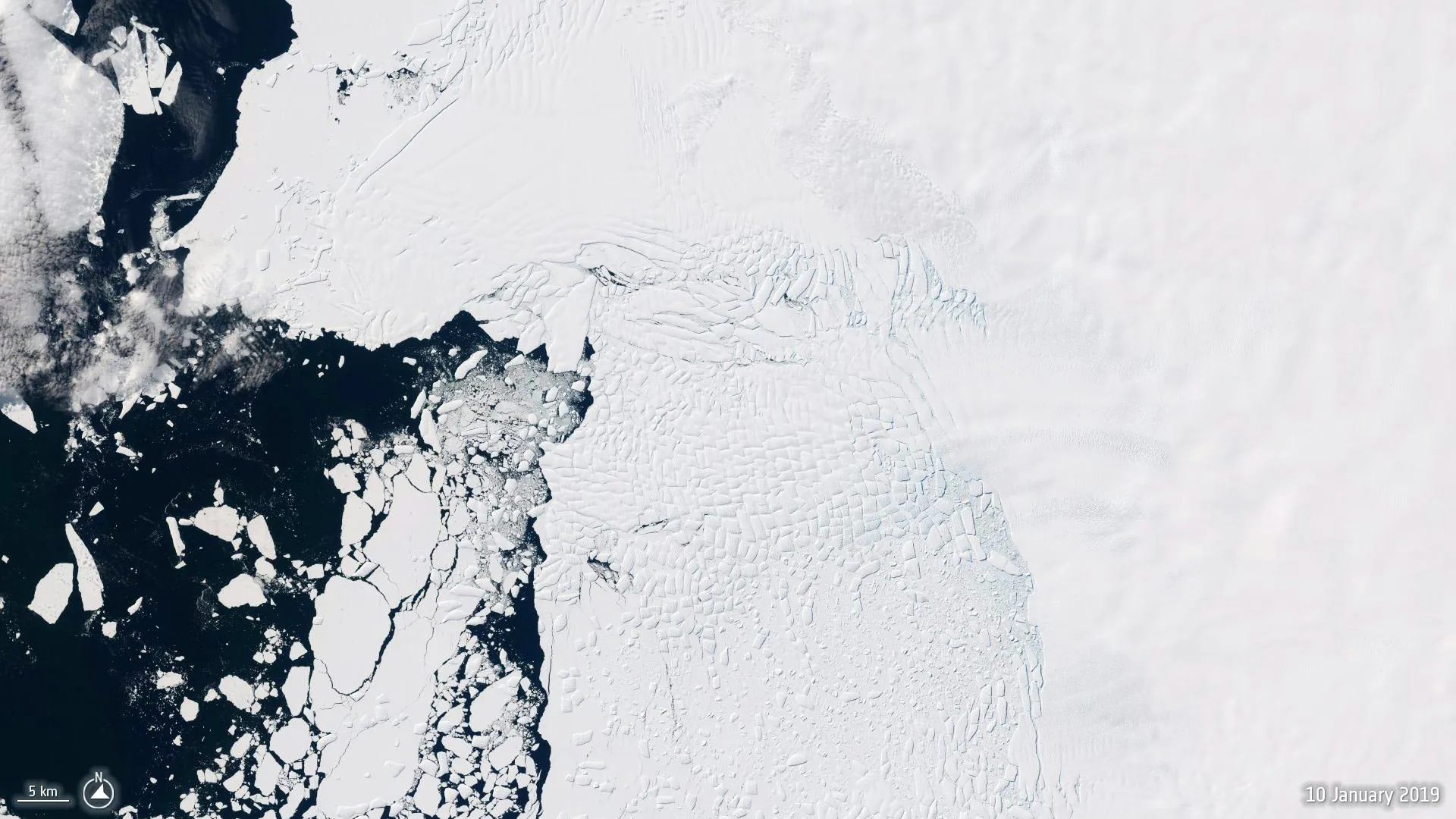
A new study published in Geophysical Research Letters documents the discovery of hundreds of glacial earthquakes in Antarctica, a phenomenon previously rarely observed in the southern hemisphere. Researchers identified more than 360 seismic events occurring between 2010 and 2023, with the majority concentrated near the Thwaites Glacier and Pine Island Glacier, the two Antarctic glaciers contributing most significantly to sea-level rise.
Glacial earthquakes form when large icebergs break away from glaciers and collapse into the ocean, creating mechanical vibrations that travel thousands of kilometers. Unlike conventional seismic events, these earthquakes produce no high-frequency seismic waves, making them difficult to detect with standard global monitoring networks. The discovery in Antarctica was made possible by analyzing data from seismic stations located on the continent itself, allowing researchers to identify much smaller magnitude events that worldwide networks would typically miss.
Approximately 245 of the detected events occurred near the marine end of the Thwaites Glacier, likely representing iceberg calving activity. The research revealed that the most intense period of glacial earthquakes at Thwaites, spanning 2018 to 2020, coincided with accelerated ice flow toward the ocean—a pattern confirmed independently through satellite observations. Unlike glacial earthquakes in Greenland, which follow seasonal temperature patterns, the Antarctic events appear driven primarily by ocean conditions rather than atmospheric temperatures.
The Thwaites Glacier, known colloquially as the Doomsday Glacier, holds particular significance for climate research. Complete collapse of the glacier could elevate global sea levels by approximately 3 meters and potentially trigger rapid disintegration. The second largest cluster of detected events near Pine Island Glacier produced unexpected results, with activities occurring 60 to 80 kilometers inland from the coastline, suggesting mechanisms unrelated to iceberg calving that warrant further investigation.
Researchers indicate that better understanding the relationship between ocean conditions, ice dynamics, and ground stability at the glacier’s terminus may clarify future sea-level rise projections, an area currently marked by substantial uncertainty extending across multiple decades.
Article Attribution | Read More at Article Source
Article summary produced by Claude AI