

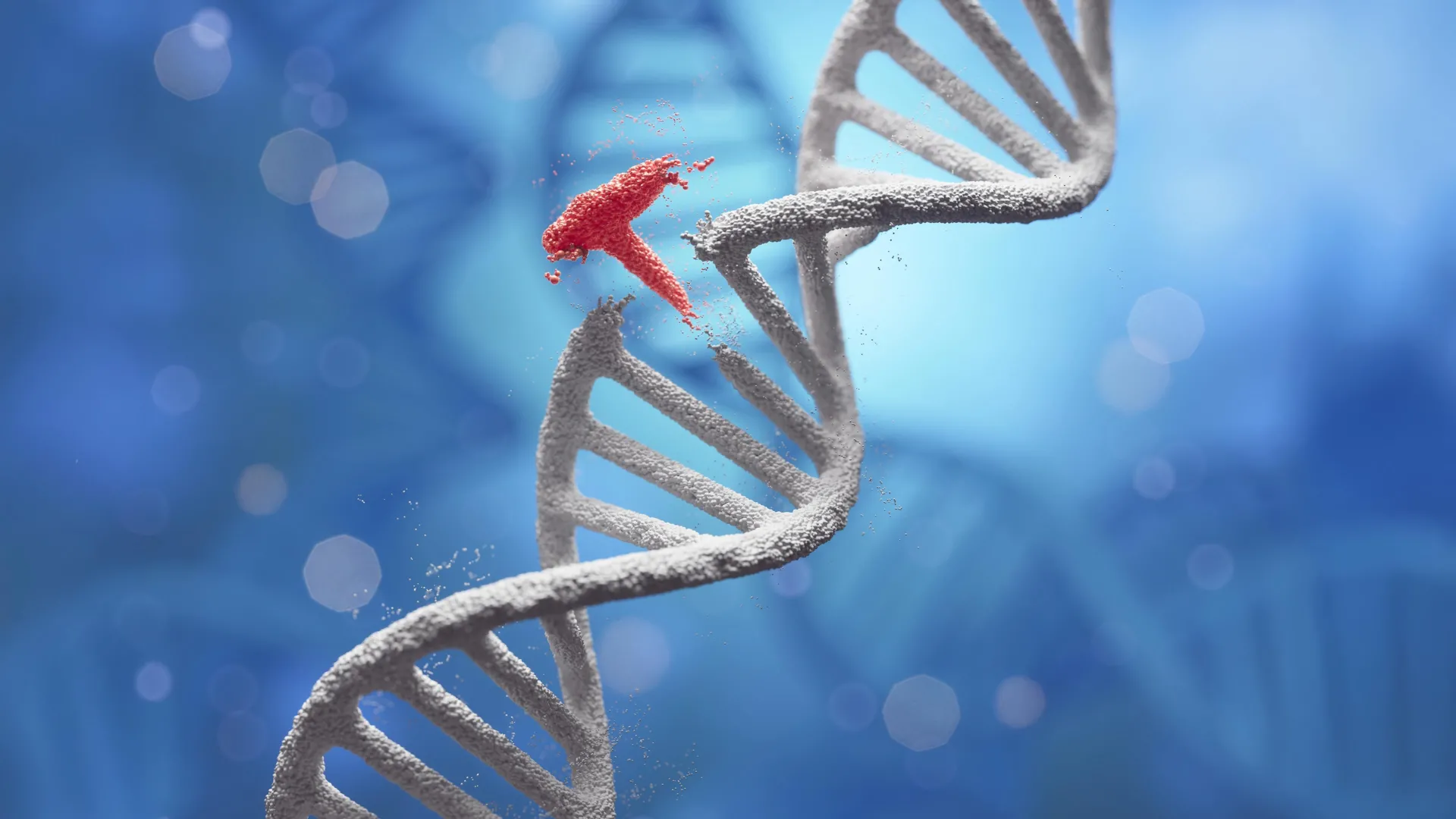
A team of researchers at Japanese universities has created a novel approach to DNA assembly that significantly outperforms existing methods. The technique employs silver nanoparticles to cut and rejoin DNA molecules at precisely targeted locations, achieving assembly efficiencies between two and five times greater than those produced by traditional restriction enzyme-based approaches. The findings were reported in the journal Nucleic Acids Research.
Conventional DNA assembly relies on restriction enzymes to make cuts and T4 DNA ligase to connect fragments. However, this method faces limitations because restriction enzymes can only recognize certain DNA sequences and typically generate relatively short sticky ends, which reduces the efficiency of fragment joining. Scientists at Nagoya University and Gifu University sought an alternative by revisiting a chemical reaction involving silver ions that could cut DNA at specific sites. While silver ions proved effective at cutting DNA, they caused undesired side effects including nonspecific attachment and precipitation, resulting in only 14 percent DNA recovery.
The researchers substituted silver ions with silver nanoparticles, which could be separated from reaction mixtures through centrifugation to improve DNA recovery. Initial trials showed high cleavage efficiency but required elevated temperatures that could damage long DNA molecules. To address this constraint, the team coated the nanoparticles with polyethylene glycol, a water-soluble polymer that improved stability and dispersion. This modification enabled DNA cleavage efficiency of 92 percent at 37°C over 31 hours, and above 91 percent at 50°C within one to two hours. The coating also provided a built-in purification mechanism, raising final DNA recovery from 14 percent to 98 percent.
The silver nanoparticle method enabled production of 8-base sticky ends, which are difficult to generate using conventional restriction enzymes. When scientists joined these fragments using T4 DNA ligase, joining efficiency doubled compared to traditional methods. With 18-base overhangs, the researchers achieved 44 percent joining efficiency versus only 8 percent with conventional 4-base overhangs. The researchers validated the approach by assembling DNA encoding green fluorescent protein and successfully introducing it into human cells, which expressed the protein accurately.
The team indicated plans to expand the technique to connect multiple DNA fragments simultaneously, a capability needed for genome-scale DNA assembly. Potential applications include development of mRNA libraries for cancer vaccines, gene therapy treatments, artificial protein drugs, and genome-enhanced crops. Funding for the research was provided by multiple Japanese government agencies and foundations.
Article Attribution | Read More at Article Source
Article summary produced by Claude AI