

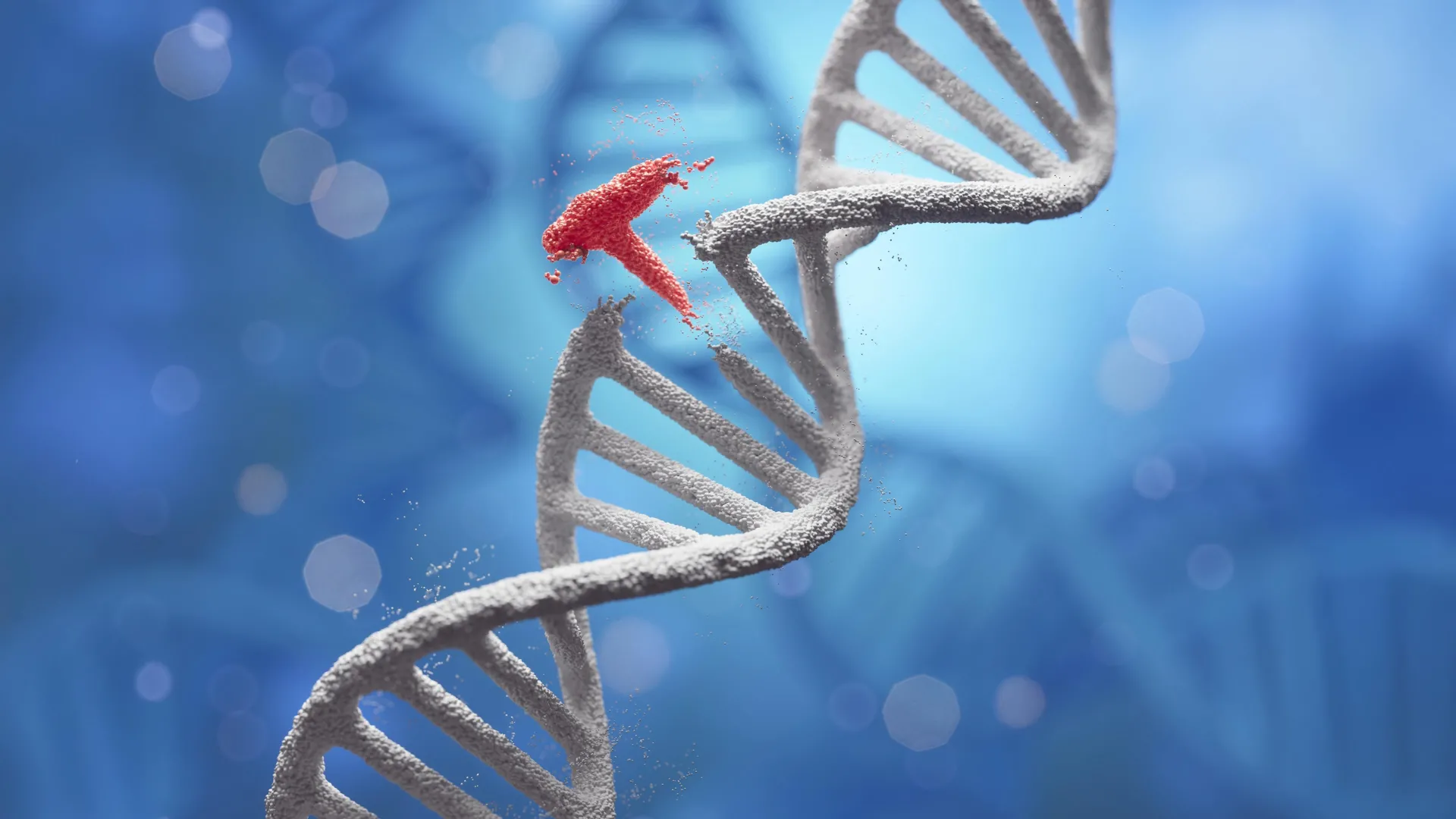
A team of scientists at Japanese universities has demonstrated a novel approach to DNA assembly using silver nanoparticles, according to research published in Nucleic Acids Research. The technique addresses limitations of conventional methods that rely on restriction enzymes and T4 DNA ligase, which produce relatively short sticky ends and cannot efficiently cut DNA at all desired locations.
The researchers initially explored a chemical reaction involving silver ions that could cut DNA at specific sites, but this approach recovered only about 14% of the DNA due to nonspecific attachment and precipitation. By switching to silver nanoparticles, the team significantly improved results. The nanoparticles could be separated from the reaction mixture through centrifugation, enabling better DNA recovery. Further refinement involved coating the nanoparticles with polyethylene glycol, a water-soluble polymer, which increased cleavage efficiency to above 91% at 50°C within one to two hours and improved final DNA recovery to 98%.
A key advantage of the silver nanoparticle method is its ability to produce longer sticky ends, with the researchers successfully creating 8-base and 18-base overhangs. When connecting DNA fragments, these longer overhangs substantially improved joining efficiency. Using an 18-base overhang resulted in 44% joining efficiency, compared to just 8% with the conventional 4-base overhang approach—a fivefold improvement. The researchers verified the method’s effectiveness by assembling a DNA fragment encoding green fluorescent protein and successfully introducing it into human cells, where the protein was expressed.
The team plans to expand the research to determine whether multiple DNA fragments can be joined simultaneously, which would be essential for constructing genome-scale DNA sequences. Scientists involved in the project indicated potential applications in mRNA library development for cancer vaccines, gene therapy, artificial protein drugs, and genome crop development.
Article Attribution | Read More at Article Source
Article summary produced by Claude AI