

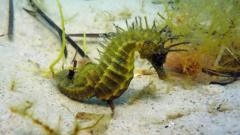
Conservationists and regulatory authorities in the United Kingdom have issued a legal warning regarding the disturbance of seahorse populations, which are protected species under national law. The Marine Management Organisation (MMO) has announced plans to intensify educational outreach efforts following a documented rise in incidents involving human interference with these marine animals, both through unintentional encounters and deliberate attempts to observe or document them.
The heightened activity is occurring as warmer temperatures draw increased numbers of people into coastal waters for recreational activities such as swimming, diving, and snorkelling. Educational campaigns are being concentrated in areas known to support significant seahorse populations, including Poole Harbour and Studland Bay in Dorset, as well as Torbay in Devon. The MMO has clarified that individuals wishing to intentionally seek out, photograph, or film seahorses are required to obtain a wildlife licence, and those engaging in such activities without proper authorization could face enforcement action.
According to the MMO’s head of marine wildlife conservation, seahorses are described as exceptionally vulnerable creatures that are easily disrupted by human contact and activity. The regulatory body emphasized that this legal requirement applies broadly to recreational divers and snorkellers, as well as television and film production companies. The Seahorse Trust, an organization dedicated to seahorse conservation, has provided guidance for individuals who encounter these animals, recommending minimal handling time if seahorses become inadvertently caught in fishing nets, and advising distant observation without flash photography for those spotting them in natural settings.
Conservation experts have noted that recent publicity surrounding environmental protection measures, including eco-mooring installations and no-anchor zones established to safeguard seahorse habitats, may have inadvertently increased public interest in locating these animals. The Seahorse Trust has also urged the public to report all seahorse sightings to contribute data to the National Seahorse Database, citing increased knowledge about these species as essential for their long-term protection and conservation efforts.
Article Attribution | Read More at Article Source
Article summary produced by Claude AI