

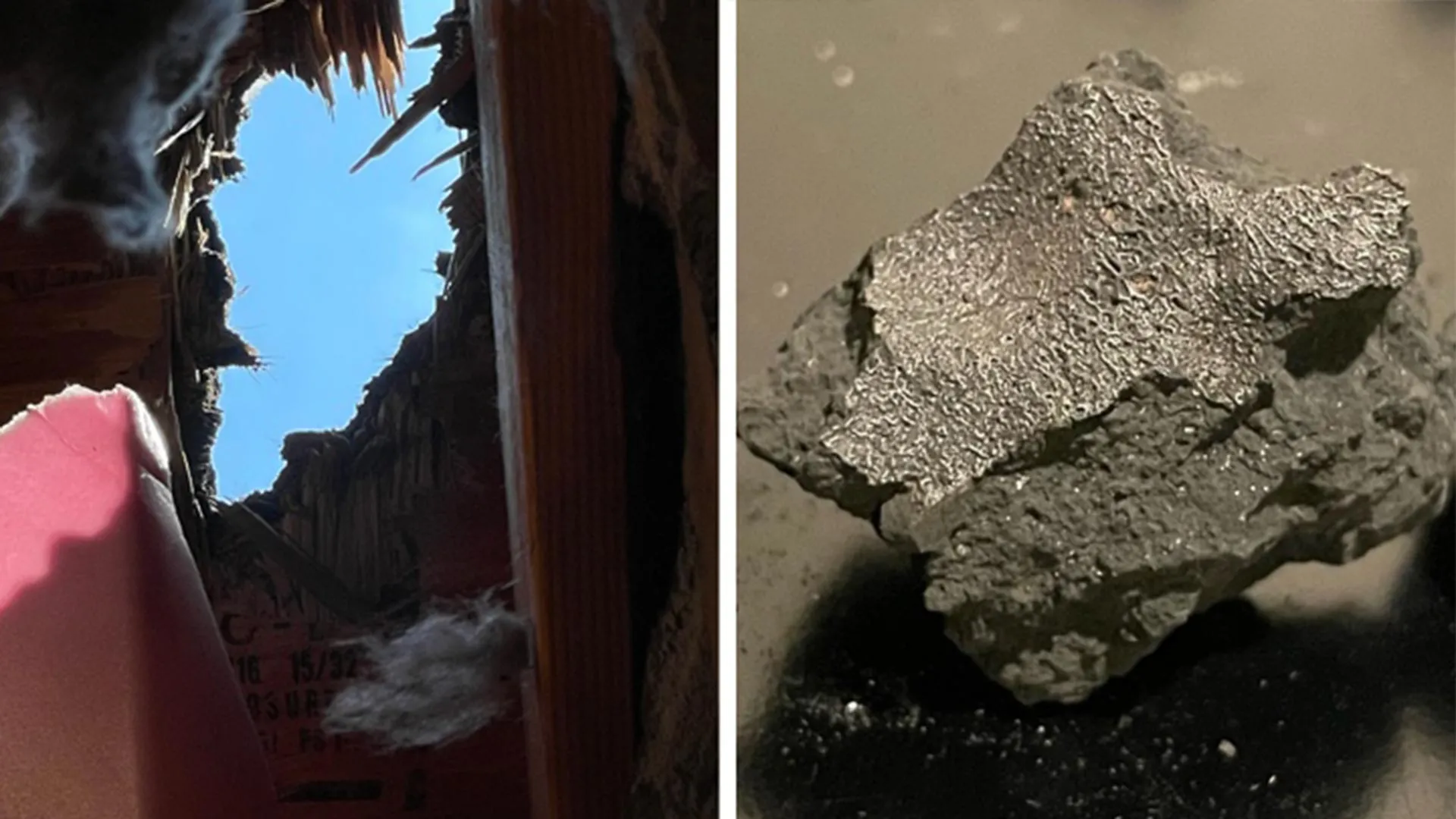
A meteor passed over the New York City area in broad daylight, producing a sonic boom as it traveled at roughly 32,000 miles per hour. The fragile object broke apart as it entered Earth’s atmosphere, disappearing from view at an altitude of approximately 22 miles. Debris from the event fell across New Jersey, with the largest pieces landing in Hillsborough, where a meteorite weighing more than two pounds struck a residential home, punching through the master bedroom roof.
The recovered material was analyzed by an international research team and identified as a CM1/2 carbonaceous chondrite, placing it in an exceptionally rare category. This represents only the second observed witnessed fall of a CM1/2 meteorite globally. Scientists found that portions of the meteorite displayed evidence of extensive water alteration on its parent asteroid. Researchers discovered small fragments rich in salt throughout the material, indicating the sample originated from near the surface of its parent asteroid where liquid water had evaporated and left behind highly concentrated salt deposits.
The meteorite contained notable quantities of organic material, including approximately 1.8 percent carbon by weight and various amino acids. Laboratory analysis revealed a diverse range of soluble organic compounds, with evidence suggesting that briny fluids played a role in forming these complex molecules. The saltwater chemistry present in such ancient asteroid materials could have facilitated chemical reactions involving organic compounds and minerals that would have supported the development of prebiotic molecules.
Researchers emphasized the significance of the homeowner’s swift action in preserving the meteorite fragments and preventing contamination. The rapid documentation of the recovery preserved the pristine nature of the material, making these samples among the most uncontaminated CM1/2 meteorites known to science. Select fragments are being prepared for curation at the American Museum of Natural History in New York City, where they will be maintained for future scientific investigation and comparison with samples returned from asteroids Ryugu and Bennu.
Article Attribution | Read More at Article Source
Article summary produced by Claude AI