

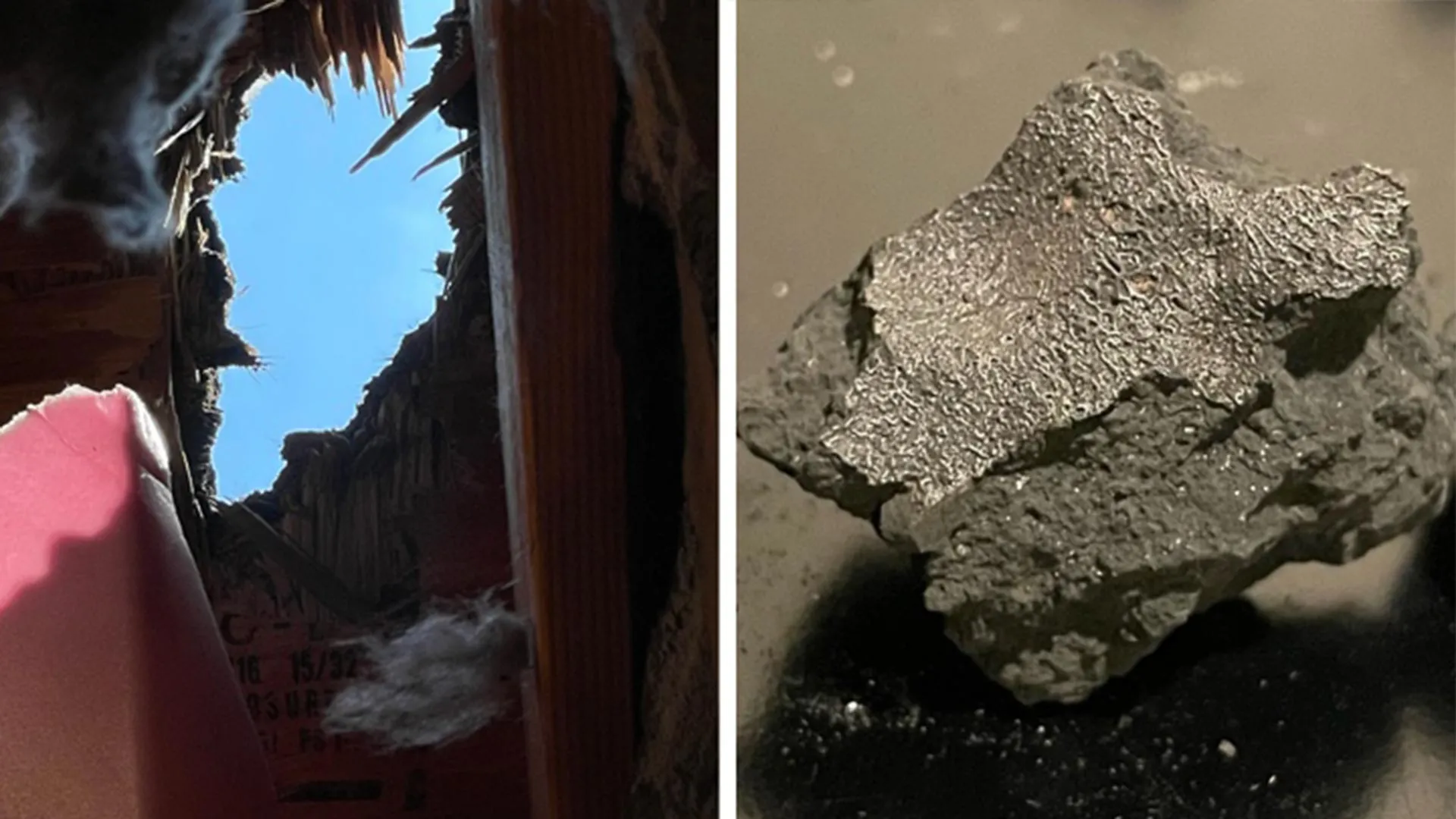
A meteor streaked across the New York City area during daylight on July 16, 2024, generating a sonic boom as it passed near the Statue of Liberty. The object, approximately the size of a large airline bag, traveled at 32,000 miles per hour before fragmenting in the atmosphere. A meteorite weighing more than two pounds subsequently penetrated the roof of a residence in Hillsborough, New Jersey, making its impact impossible to overlook. The homeowner documented the scene carefully and preserved the fragments in glass containers, preventing contamination.
An international team of researchers has completed analysis of the recovered material and published their findings in Science Advances. Laboratory examination identified the meteorite as belonging to the CM1/2 carbonaceous chondrite classification, placing it between two petrographic categories. This represents only the 22nd documented meteorite fall of CM-type material and notably the second witnessed fall of a CM1/2 carbonaceous chondrite, making it exceptionally rare. The material had undergone more extensive alteration by water on its parent asteroid than typically observed in similar specimens.
The analysis revealed evidence of ancient brine activity on the parent asteroid. Researchers identified small salt-rich fragments within the meteorite, suggesting the material originated from a surface region where liquid water had evaporated and left behind concentrated salts. Scientists are now comparing these salt minerals with similar materials obtained from asteroid samples returned by international space missions, examining how these chemical conditions may have influenced primitive asteroid chemistry.
The meteorite contained various organic compounds with significant implications for understanding prebiotic chemistry. The material held 1.8 percent carbon and 0.07 percent nitrogen by weight, along with numerous amino acids and other soluble organic compounds. The diversity and complexity of these compounds provide evidence of extensive water-driven chemical processes. Researchers concluded that concentrated brines could have facilitated reactions involving organic matter and minerals, potentially contributing to the development of prebiotic molecular building blocks that preceded the emergence of life on early Earth.
Portions of the Hillsborough meteorite will be preserved by the American Museum of Natural History in New York City for future scientific investigation, ensuring this rare extraterrestrial material remains available for continued research into asteroid chemistry and life’s chemical origins.
Article Attribution | Read More at Article Source
Article summary produced by Claude AI