

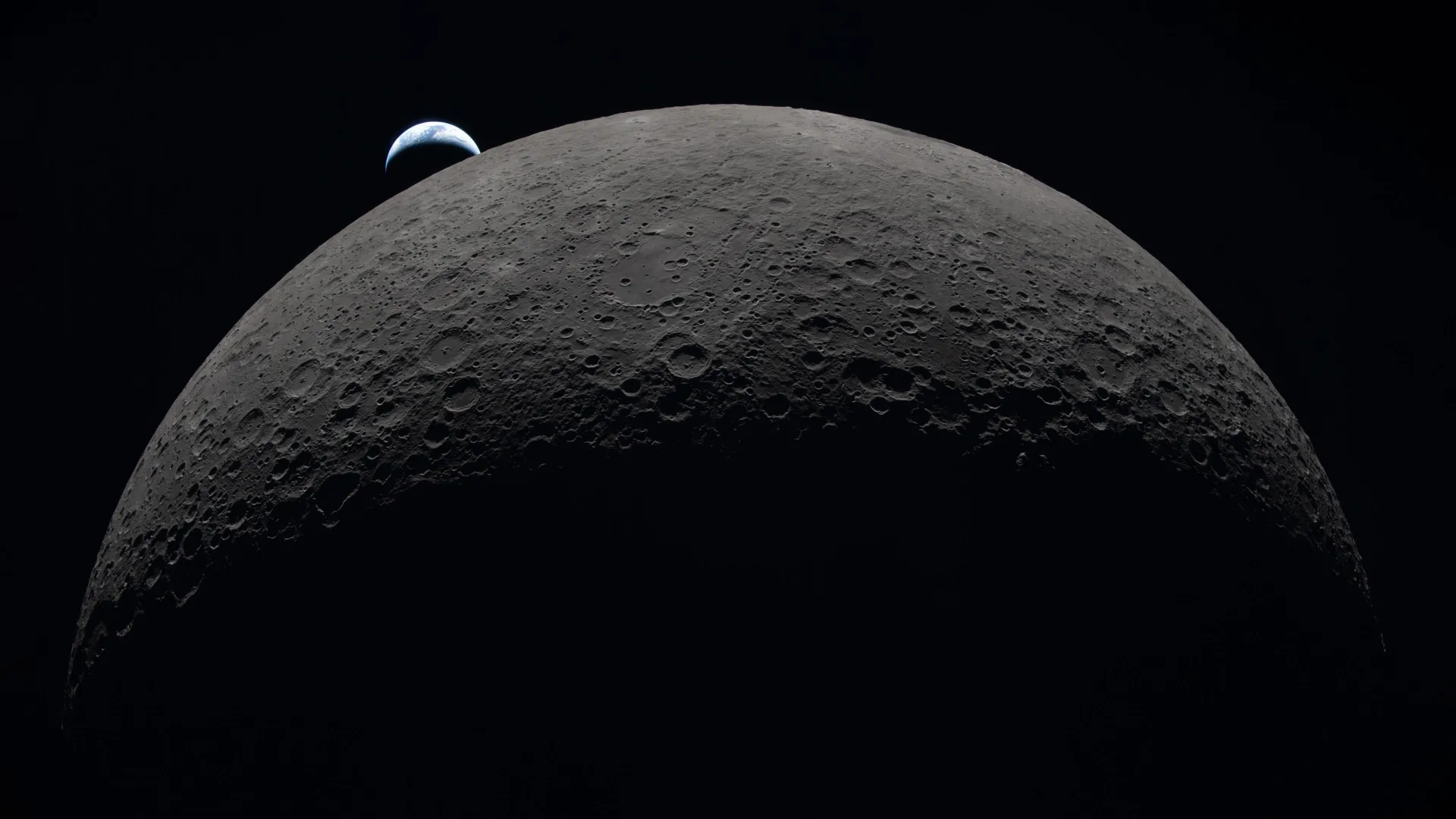
Scientists at NASA have determined that some microorganisms carried by human explorers could potentially survive in protected regions near the Moon’s South Pole, according to findings published earlier this month in Science Advances. The research highlights the challenge of distinguishing between ancient lunar chemistry and biological material introduced by astronauts as humanity establishes a more permanent presence on the Moon. This concern extends beyond lunar missions, as similar contamination issues will become relevant during future searches for life on Mars.
Earth-based organisms are an inevitable part of human spaceflight. Approximately one million bacteria inhabit each patch of human skin roughly the size of a pencil eraser, and some escape from spacesuits and habitats into surrounding environments. Traditional sterilization methods used on robotic spacecraft, which involve heating to temperatures exceeding 400 degrees Fahrenheit, cannot be applied to crewed missions. This creates a significant challenge for scientists who need to establish baselines of uncontaminated lunar material before human exploration alters the environment.
The study examined five microorganisms selected for their demonstrated resilience in spaceflight conditions, including Aspergillus niger, a fungus commonly found in warm, humid environments. Researchers analyzed how these organisms could withstand exposure to extreme conditions by evaluating their tolerance to heat and ultraviolet radiation. The team then modeled conditions in three locations near the lunar South Pole using elevation and temperature data from NASA’s Lunar Reconnaissance Orbiter, combined with radiation models.
The analysis identified potential “survivable niches” ranging from large crater floors to areas as small as an astronaut’s boot print. Aspergillus niger emerged as particularly resilient, with the capacity to survive even in locations receiving some sunlight due to its exceptional resistance to ultraviolet radiation. Researchers emphasize that microbial survival does not equate to growth or reproduction, and the microbes would likely remain dormant in protected regions. The findings underscore the need for careful contamination monitoring as lunar exploration proceeds.
Article Attribution | Read More at Article Source
Article summary produced by Claude AI