

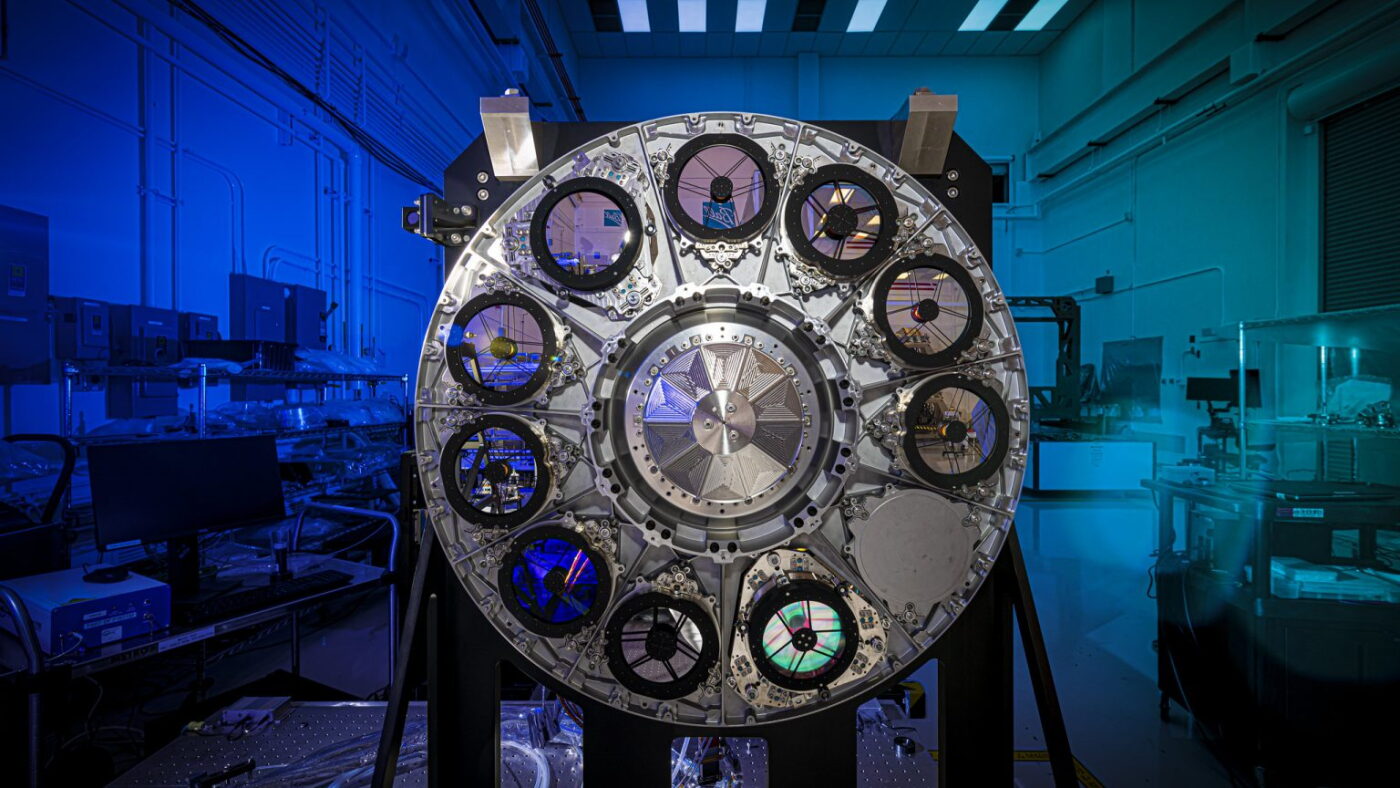
The Nancy Grace Roman Space Telescope is scheduled to launch Aug. 30, representing a significant investment in astronomical research and exploration. Named after NASA’s first chief astronomer, the $4.3 billion observatory is expected to provide new insights into the expansion of the universe, discover numerous planets orbiting distant stars, and help astronomers better understand fundamental cosmic phenomena.
The telescope has an unconventional origin story. Approximately 15 years ago, NASA began developing plans for a space observatory capable of detecting Type 1A supernovas, which serve as tools for studying dark energy—the mysterious force responsible for the universe’s accelerating expansion. During this development phase, the National Reconnaissance Office approached NASA with an unusual proposal: offering a satellite originally designed for surveillance purposes that was not being utilized. Rather than discarding existing technology, NASA modified the satellite for astronomical purposes, transforming it into a space observatory.
According to cosmologists at research institutions, the Roman telescope could fundamentally reshape scientists’ understanding of cosmological models. The observatory’s design enables rapid surveying of large sky regions, a capability that would require approximately a century of observations using the currently operational Hubble Space Telescope to accomplish in just one month. Project scientists emphasize that the telescope’s data will be made publicly available to educators and students worldwide, not limited to academic researchers.
The mission includes specific scientific objectives such as detecting exoplanets through gravitational microlensing, a technique that measures how planets bend starlight as it passes nearby. Researchers expect the telescope to identify planets that remain undetectable through conventional methods, including those in the galactic center that resemble Jupiter, Saturn, Uranus, and Neptune. Additionally, the observatory should reveal previously unknown galaxies and contribute to mapping the universe’s large-scale structure.
Astronomers acknowledge uncertainty regarding the telescope’s most significant discoveries during its planned five-year operational period. Historical patterns in astronomy suggest that new observational capabilities frequently reveal unexpected phenomena, which often prove to be among the most scientifically valuable findings.
Article Attribution | Read More at Article Source
Article summary produced by Claude AI