

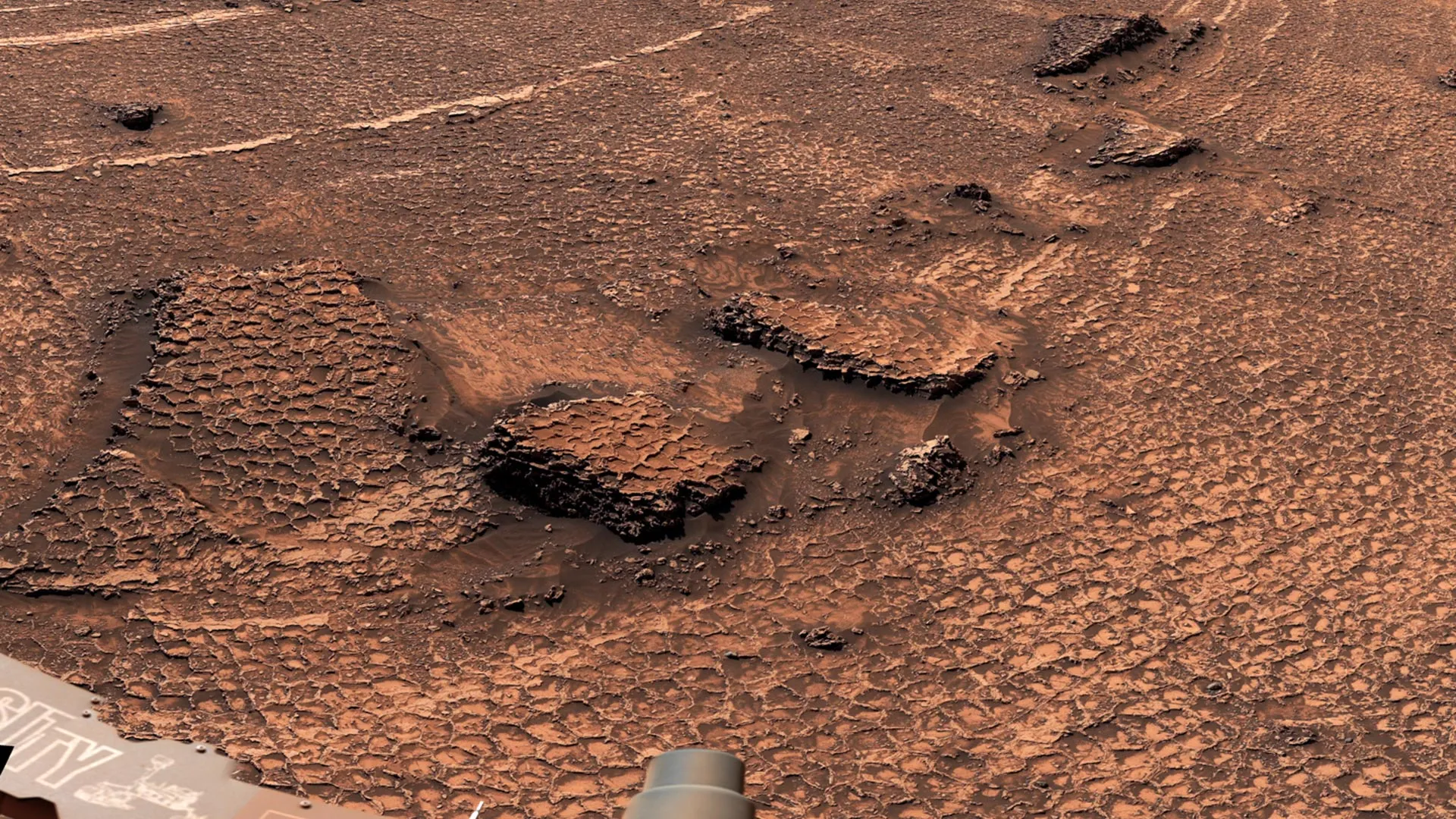
The Curiosity rover has identified an expansive field of geometric polygonal fractures across a Martian valley known as Valle Grande. The patterns, which resemble a honeycomb structure, measure between 1.5 to 3 inches across and extend across the terrain in all visible directions. A panoramic image captured during consecutive days in late June revealed the full scale of the formations, which also cover the sides of a nearby elevated feature called Miraflores that rises approximately 20 feet above the surrounding landscape.
While Curiosity has previously encountered smaller clusters of similar geometric patterns during its traversal of Mars, the current discovery represents a significantly larger concentration of these features. Mission scientists have begun detailed analysis of the polygon formations to understand their origins. The honeycomb patterns could have developed through several mechanisms, including the cracking of drying mud, thermal fracturing from repeated warming and cooling cycles, or compression that forces water from sediment after burial beneath the surface.
The polygon field discovery continues a pattern of significant findings throughout Curiosity’s extended mission, which began in 2012. Since its arrival on Mars, the rover has documented numerous geological features including sulfur crystals and meteorites. More substantially, Curiosity’s investigations have established that ancient Mars possessed water, suitable chemical conditions, and nutrients compatible with microbial life. The rover has traced evidence of ancient lakes and streams that once existed across the lower regions of Mount Sharp, the large mountain it has been climbing since 2014.
Chemical analysis has revealed organic molecules, including compounds thought to be precursors to RNA and DNA, within Martian samples examined by the rover. Scientists remain unable to determine whether these organic compounds arose through biological or purely geological processes, though both remain viable explanations. The discovery nevertheless reinforces the conclusion that ancient Mars contained the fundamental chemical components necessary to support life. The mission is managed by Caltech’s Jet Propulsion Laboratory, which built the rover and directs operations on behalf of NASA’s Science Mission Directorate.
Article Attribution | Read More at Article Source
Article summary produced by Claude AI