

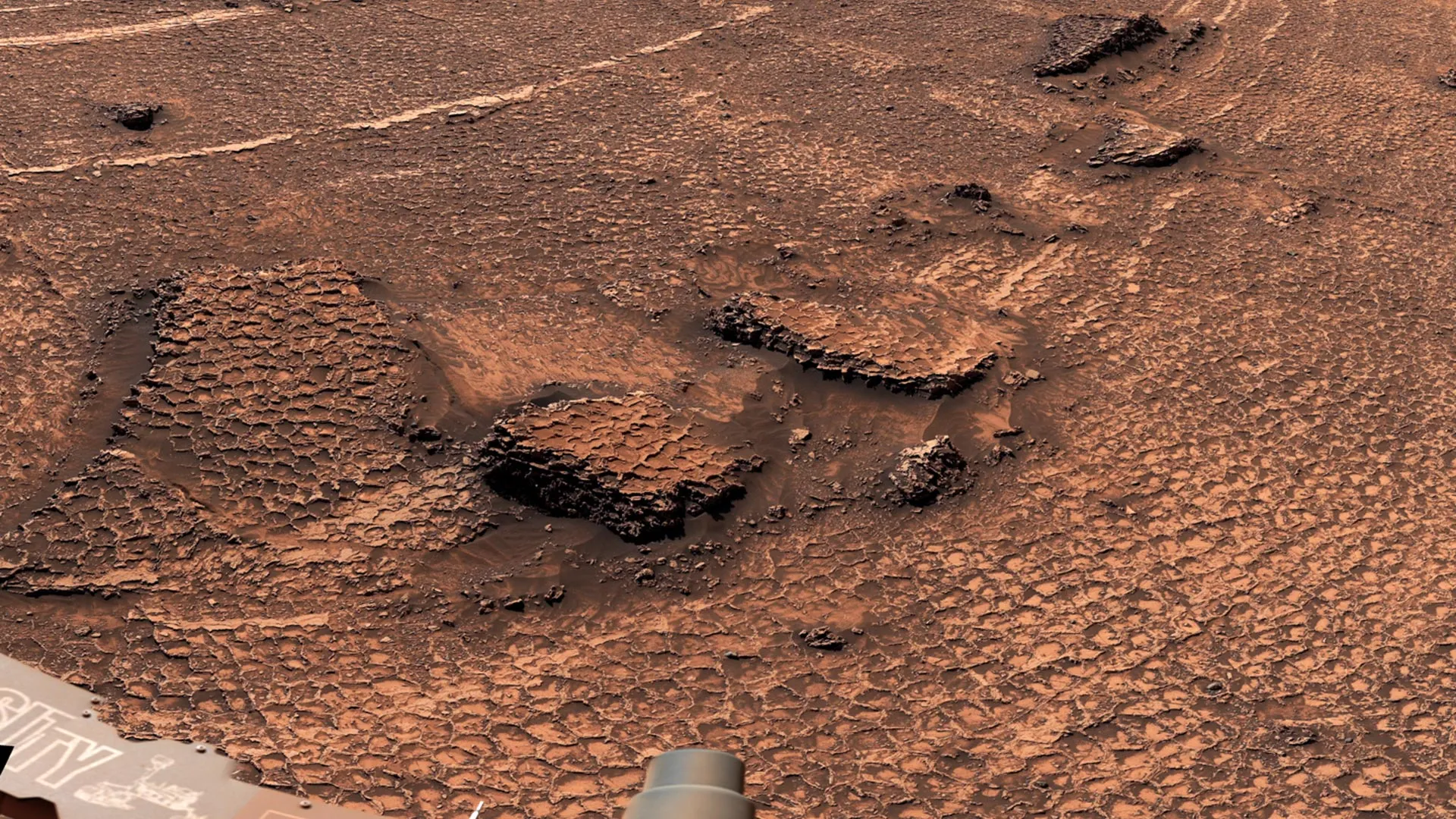
NASA’s Curiosity rover has identified an extensive field of polygonal fractures while traversing a region on Mars designated Valle Grande. The geometric patterns, measuring between 1.5 and 3 inches across, resemble a honeycomb structure and cover vast stretches of terrain visible in all directions. Images captured during the rover’s 4,930th and 4,931st Martian days show the formations extending across the landscape and climbing the sides of a nearby elevated formation called Miraflores, which rises approximately 20 feet above the surrounding ground and features a thick sand cap.
While Curiosity has previously documented small clusters of similar geometric shapes, the scale of the polygon field in Valle Grande represents a substantially larger occurrence than any previously encountered. The rover’s project scientist stated that the discovery captured significant interest among researchers, who have conducted detailed measurements of the shapes and chemical composition of the formations. Scientists are actively studying the newly discovered field to identify the specific processes responsible for creating the distinctive patterns.
Multiple geological mechanisms can produce polygonal formations of this type. Repeated cycles of heating and cooling can fracture ground into geometric shapes, while compression forces may also generate similar patterns by extracting water from sediment following burial beneath overlying material. Some polygonal features examined previously by Curiosity clearly originated from cracks in drying mud, though researchers are investigating whether the Valle Grande formations resulted from one or several of these processes.
The polygon discovery represents the latest in a series of significant geological findings made by Curiosity throughout its extended mission. The rover landed on Mars 14 years ago and has since documented sulfur crystals, reflective meteorites, and numerous other unusual features. Research from Curiosity has demonstrated that ancient Mars possessed water, appropriate chemical conditions, and necessary nutrients potentially capable of supporting microbial life, fundamentally reshaping scientific understanding of the planet’s early history.
Article Attribution | Read More at Article Source
Article summary produced by Claude AI