

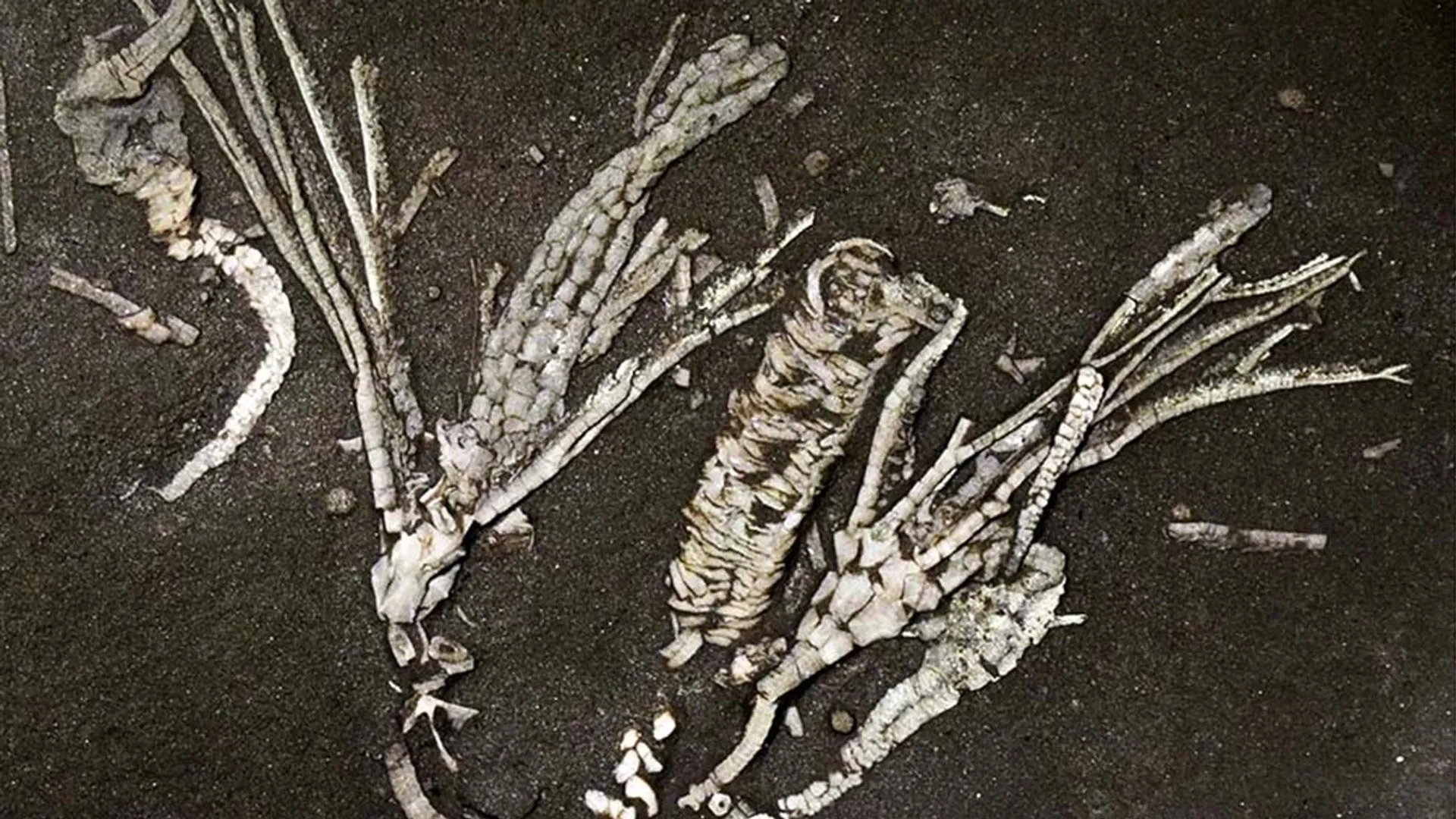
Paleontologists at the University of Oklahoma have identified a remarkable fossil of Dendrocrinus simcoensis, an ancient crinoid that lived more than 450 million years ago. The specimen is noteworthy for preserving soft tissue structures, specifically tube feet, which almost never survive the fossilization process. According to Dr. Lena Cole, an OU paleontologist and assistant curator of invertebrate paleontology, soft tissues typically decay rapidly after an organism dies, leaving only durable structures like bones and shells in the fossil record. The preservation of delicate tissues requires extremely rare environmental conditions that function like a natural preservation mechanism.
The discovery marks only the second time soft tissue has been found in a crinoid fossil and represents the oldest known example of such preservation. Crinoids were marine creatures that resembled flowers growing on stalks and were abundant in early coral reef ecosystems long before dinosaurs appeared. The tube feet preserved in this specimen provided crucial feeding functions for the animal, and their anatomical features can reveal information about the creature’s ecological role and feeding strategy — comparable to how mammal teeth inform scientists about diet. Comparisons between the ancient specimen and modern crinoids have revealed substantial anatomical differences, providing insights into how these animals evolved and adapted their feeding strategies over hundreds of millions of years.
The fossil had been stored for years in the Montréal Musée de paléontologie et de l’évolution before its scientific significance became apparent during an examination by Drs. Cole and Wright. The discovery underscores the importance of museum collections in paleontological research, as major findings can emerge from specimens that have been cataloged and preserved for extended periods. The researchers emphasized that museum collections contain specimens that may hold undiscovered insights for years or decades after initial collection, highlighting the value of maintaining accessible fossil repositories for the scientific community.
Article Attribution | Read More at Article Source
Article summary produced by Claude AI