

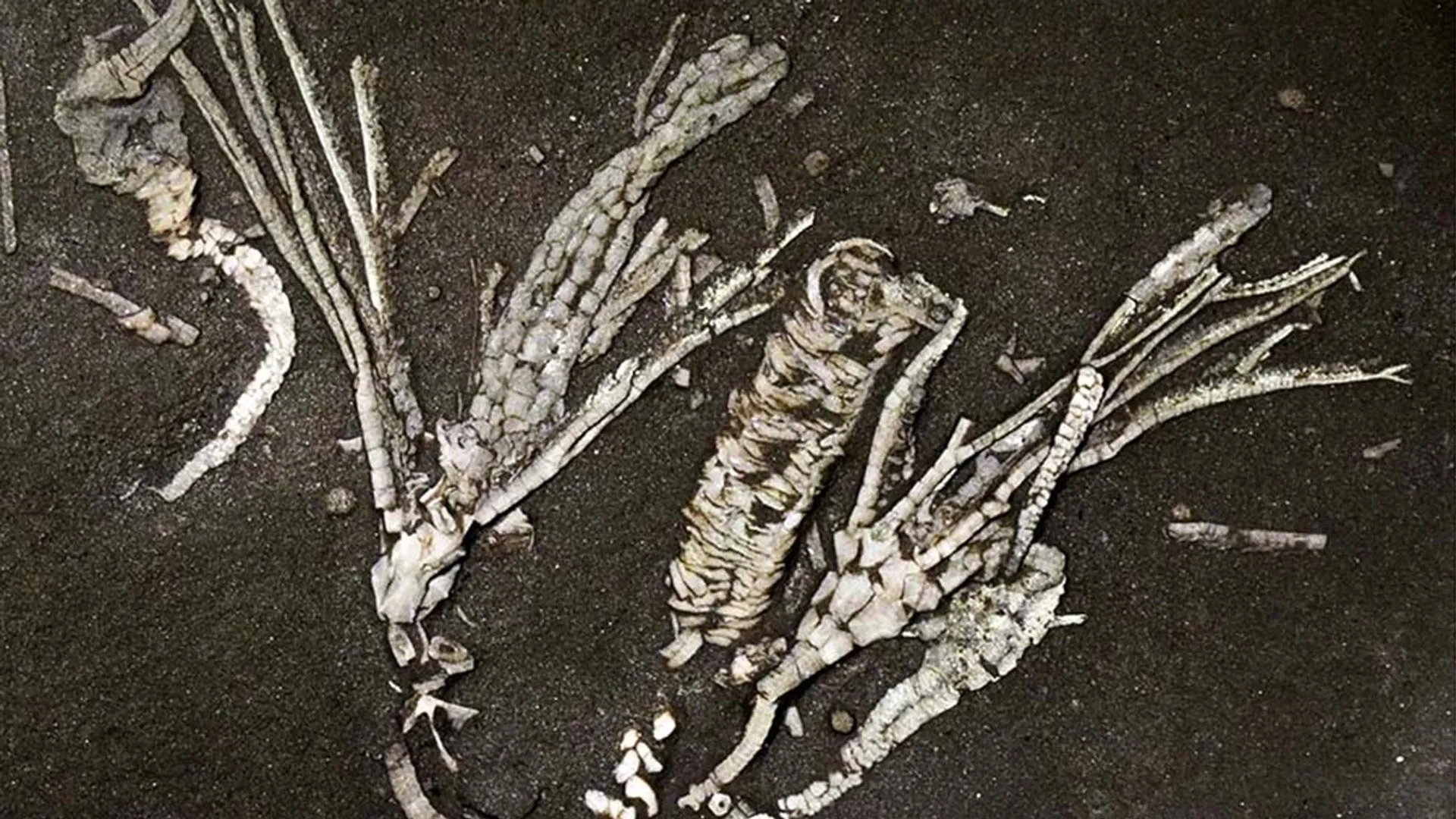
University of Oklahoma paleontologists have examined a remarkably well-preserved crinoid fossil housed in a Montreal museum collection, representing only the second known specimen of its kind to retain soft tissue structures. The fossil belongs to the species Dendrocrinus simcoensis and dates back more than 450 million years, predating the earliest known dinosaurs by over 200 million years.
Soft tissue preservation in fossils is exceptionally uncommon, as delicate structures such as skin, organs, and feeding appendages typically decompose rapidly following death. The exceptional nature of this discovery lies in the preserved tube feet, which are used by crinoids for feeding and responding to water currents. Dr. Lena Cole of the University of Oklahoma noted that among millions of known crinoid fossils, soft tissue preservation has occurred only twice in the scientific record.
The tube feet provide paleontologists with valuable information about ancient species’ feeding strategies and ecological roles. By comparing the fossil’s anatomy to modern crinoid species, researchers identified notable structural differences that illuminate how these animals evolved and adapted their feeding methods across hundreds of millions of years. The variations in tube feet structure can reveal details about the environments ancient crinoids inhabited and their specific feeding behaviors.
The discovery extends beyond individual species biology to inform broader understanding of early Paleozoic ocean ecosystems, when crinoids and other early animal groups thrived in ancient coral reef systems. Soft tissue specimens from early echinoderms, the larger group encompassing crinoids and starfish, remain exceptionally scarce, making each newly discovered specimen capable of substantially advancing scientific knowledge about extinct species and ecosystem patterns.
The fossil’s significance was not immediately apparent during initial collection and cataloging, highlighting the important role museum collections play in paleontological research. The specimen’s unusual importance became evident during a specialized examination by invertebrate paleontology experts, underscoring how institutional collections and community support facilitate discoveries that may emerge years after specimens are first acquired and preserved.
Article Attribution | Read More at Article Source
Article summary produced by Claude AI