

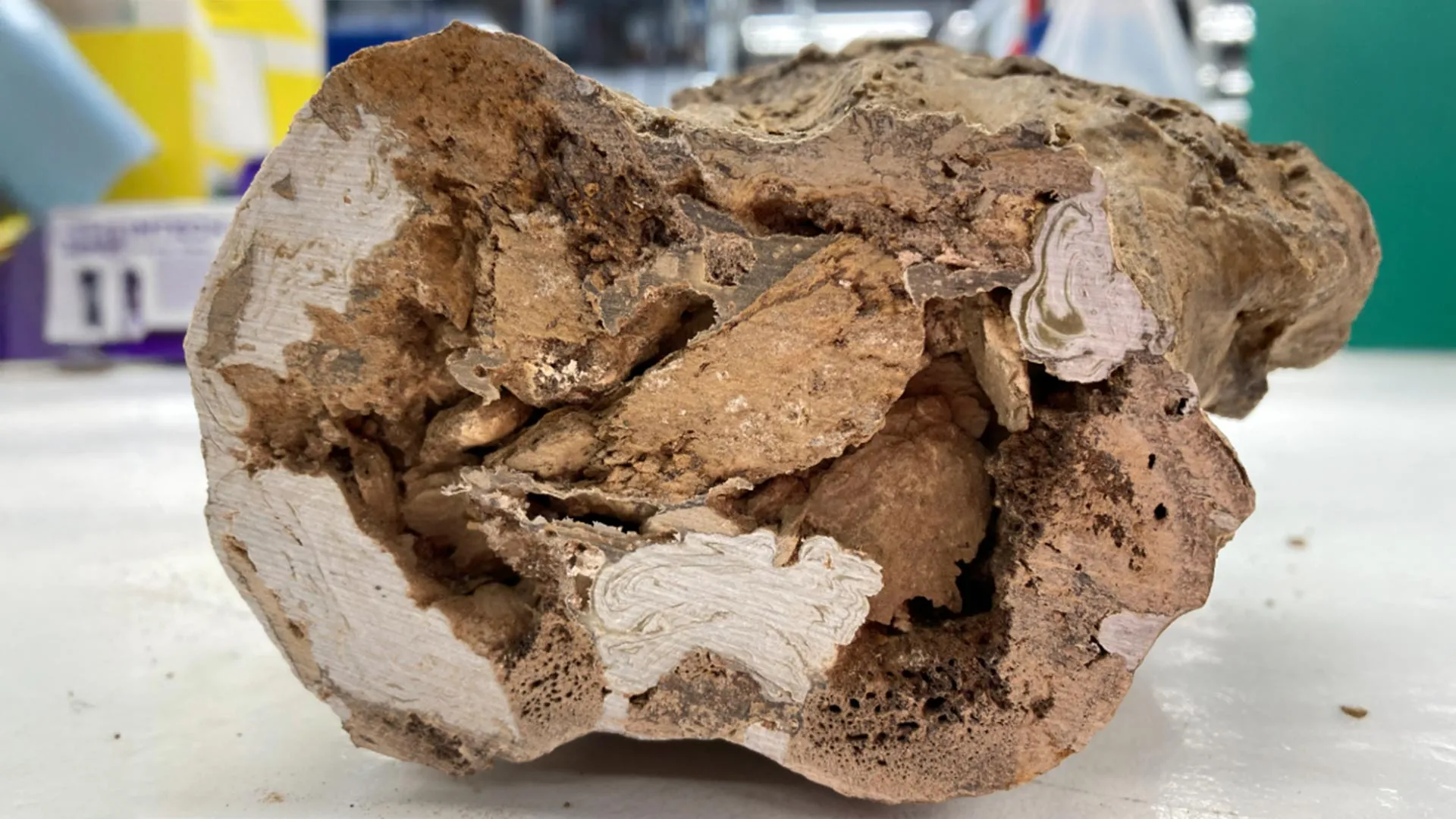
Scientists at the University of Liverpool have published findings demonstrating that some fossils from the Mesozoic era, including dinosaur bones and teeth, retain traces of original organic molecules. The research focused on an exceptionally well-preserved hip bone from an Edmontosaurus, a duck-billed dinosaur species, excavated from the Hell Creek Formation in South Dakota. Using advanced analytical techniques including mass spectrometry and protein sequencing, the team detected remnants of collagen, a major structural protein found in bone tissue.
The discovery addresses a scientific debate that has spanned approximately three decades regarding whether organic biomolecules can persist in fossils over geological timescales. Traditionally, researchers assumed that fossilization destroyed all original biological materials, making protein survival implausible over tens of millions of years. Critics of earlier claims of ancient proteins argued that any detected organic material must have resulted from contamination introduced by microbes, soil exposure, or handling after excavation. The new findings, published in Analytical Chemistry, provide evidence countering contamination hypotheses by confirming the presence of hydroxyproline, an amino acid specifically associated with collagen in bone tissue.
The research involved collaboration among specialists from multiple institutions, including UCLA and the University of Liverpool’s Mass Spectrometry Research Group and Materials Innovation Factory. Researchers identified fragments of collagen alpha-1, the predominant collagen form in bone tissue, through several independent analytical methods that collectively confirmed the presence of degraded collagen. This convergence of evidence from different techniques strengthens the conclusion that the detected proteins originated from the original fossilized bone rather than external sources.
The findings have broader implications for paleontological research. Archived cross-polarized light microscopy images of fossil bones collected over approximately a century may contain recognizable patterns of preserved collagen that could help identify promising specimens for molecular analysis. This could provide researchers with an extensive collection of candidates for protein studies, potentially offering biological insights that traditional fossil anatomy cannot supply, such as clarifying evolutionary relationships among dinosaur species. However, the mechanisms enabling protein persistence over such vast time periods remain unexplained and represent an important avenue for future investigation.
Article Attribution | Read More at Article Source
Article summary produced by Claude AI