

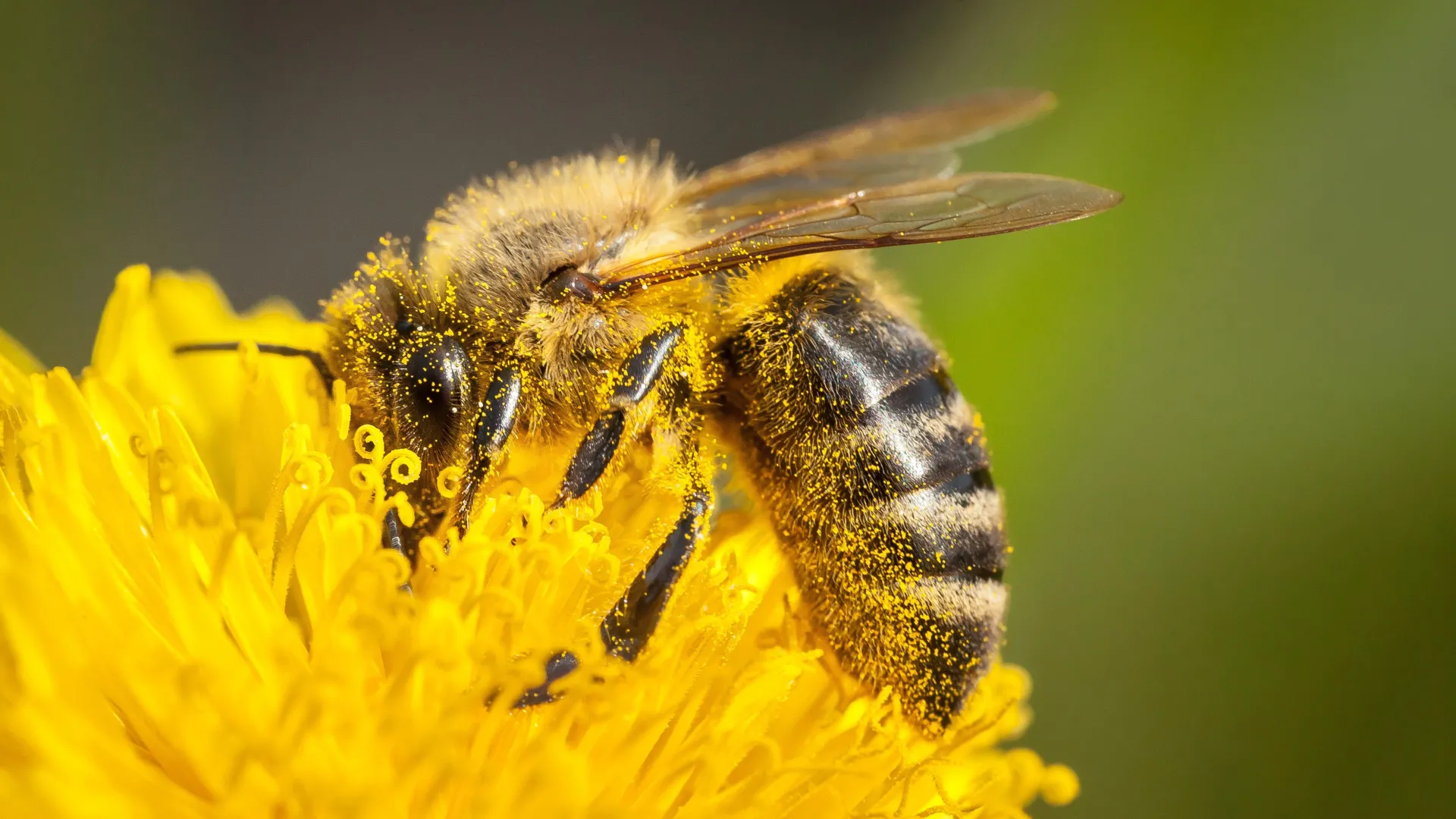
Researchers at the University of Oxford have identified a previously unknown ability in honeybees to adjust their feeding behavior in response to the essential amino acid composition of their food sources. The findings, detailed in a study published in Current Biology, reveal that bees modulate consumption levels depending on whether available nutrition matches their physiological needs.
The research compared the amino acid profiles of 99 flowering plant species with honeybee tissue composition. Scientists found that most pollen samples provide an inadequate nutritional match for bees, as pollen evolved primarily as plant reproductive material rather than as a pollinator food reward. In response, researchers created controlled laboratory diets mimicking various pollen compositions and those resembling honeybee tissues. When bees consumed food aligned with their own tissue composition, they ate more overall, gained greater body mass, and increased their protein intake compared to those fed pollen-like diets.
The study identified histidine, an essential amino acid required by bees in small quantities, as a potential regulator of feeding behavior. When artificial diets contained elevated histidine levels relative to branched-chain amino acids critical for bee development, bees significantly reduced their overall consumption of both protein and carbohydrates. Researchers theorize this response represents a post-digestive feedback mechanism that prevents bees from accumulating potentially toxic concentrations of specific amino acids, a phenomenon observed in other animal species as well.
Honeybees employ an additional strategy unavailable to many wild bee species: they collect pollen from diverse plant sources and process it into bee bread and royal jelly through nurse bee secretions. This processed food maintains a more balanced amino acid profile than individual pollen sources, allowing colonies to compensate for nutritional gaps. However, solitary and bumblebees that feed pollen directly to larvae may face greater nutritional challenges in biodiverse-limited habitats.
These findings suggest that pollinator conservation strategies should prioritize plant diversity alongside flower abundance. Planting schemes designed to support pollinator health may require careful attention to pollen nutritional quality and botanical variety to ensure bees obtain appropriate nutrient balance throughout the season.
Article Attribution | Read More at Article Source
Article summary produced by Claude AI