

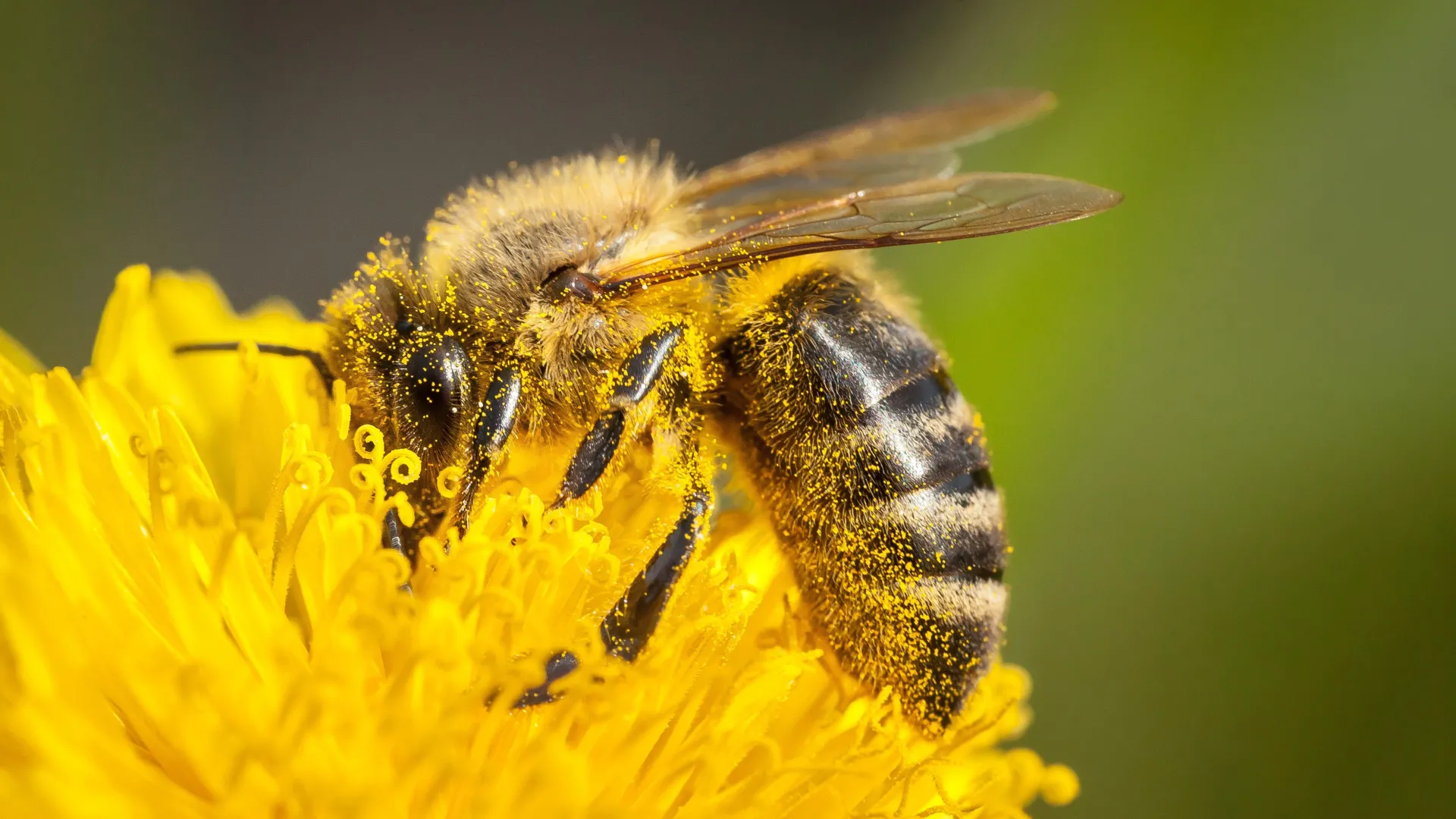
Researchers from the University of Oxford have identified an adaptive feeding mechanism in honeybees that responds to the nutritional composition of pollen, according to findings published in Current Biology. The study reveals that bees can modulate their food consumption based on the balance of essential amino acids available, potentially protecting themselves from consuming excessive amounts of particular nutrients.
The investigation compared the amino acid profiles of honeybee tissues with pollen samples collected from 99 flowering plant species across 26 plant families. Scientists created artificial diets mimicking either the amino acid composition of various pollens or that of honeybee tissue itself. Laboratory experiments with newly emerged worker honeybees demonstrated that when offered food more closely resembling their own tissue composition, bees consumed greater quantities, gained more mass, and selected diets with higher protein proportions. The researchers determined that most of the pollen samples examined provided a relatively poor nutritional match to honeybee requirements.
The team identified histidine, a minor essential amino acid, as potentially critical in regulating bee feeding behavior. When artificial diets contained elevated histidine levels relative to branched-chain amino acids important for bee development, bees reduced their overall food intake. Researchers suggest this response reflects a post-digestive feedback mechanism preventing overconsumption of specific amino acids, a pattern also observed in other species such as rats.
Honeybees employ additional strategies to address pollen’s nutritional limitations. Worker bees collect pollen from diverse plant sources and transform it into bee bread within the hive. Nurse bees then metabolize this material into glandular secretions including royal jelly, which are fed to developing larvae. Analysis showed that bee bread and royal jelly possessed more balanced amino acid profiles than individual pollen sources, suggesting that combining and processing pollen from multiple plants allows colonies to compensate for nutritional gaps.
Wild bee species lacking this processing capability may face greater nutritional challenges in environments with limited plant diversity. The findings suggest that pollinator-support initiatives should prioritize not only flower abundance and seasonal availability but also pollen nutritional quality and plant species diversity to adequately support bee populations.
Article Attribution | Read More at Article Source
Article summary produced by Claude AI