

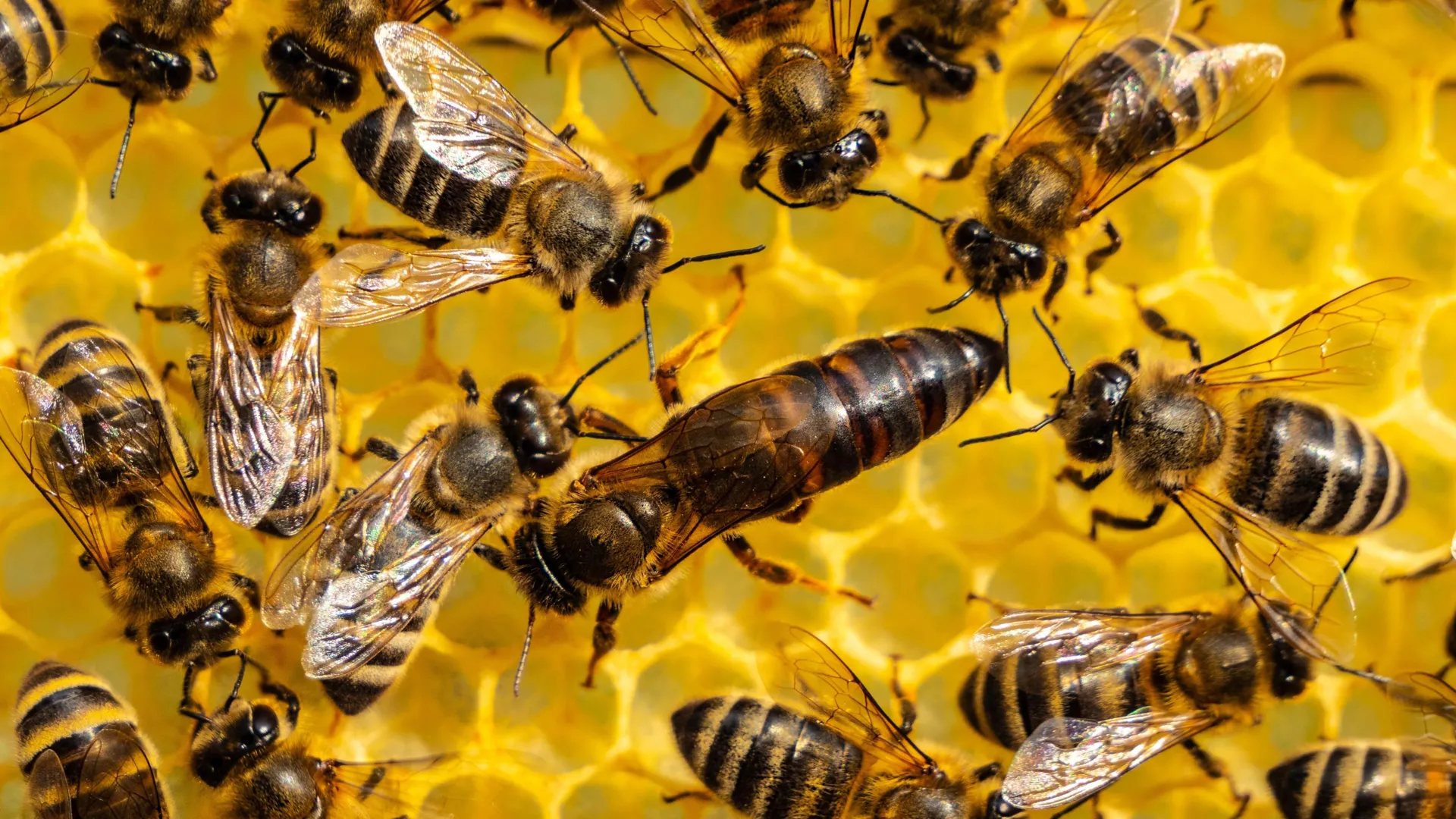
Researchers at UC Davis have discovered that honeybee queens employ a previously undocumented defense mechanism against pesticide exposure by transferring accumulated chemicals into their eggs, according to findings published in Current Biology. This process, termed maternal offloading, allows queens to reduce their own chemical burden by offloading toxic substances into their developing offspring.
The study, conducted in collaboration with Lawrence Livermore National Laboratory and the U.S. Department of Agriculture’s Agricultural Research Service, challenges the assumption that worker bees provide complete protection to queens through their normal filtering functions. While worker bees typically shield the colony by filtering harmful substances from food before it reaches the queen, the research demonstrates that this protective capacity has limits. Initial observations showed worker bees filtering out 95 percent of the pesticide methyl parathion on the first day of exposure, but this efficiency declined to 86 percent by day 10, indicating that worker bee filtration can be overwhelmed over time.
To conduct the research, scientists created small experimental systems called nanocolonies, each containing one queen and 60 worker bees, and exposed them to pesticide-contaminated pollen and food. Using specialized radioactive tracking technology known as biological accelerator spectrometry, researchers were able to monitor pesticide movement throughout the colony at extremely low concentrations that reflected environmentally relevant levels found in nature. The findings suggest that continued pesticide accumulation within a colony could eventually reach a critical threshold where egg development is compromised, potentially contributing to delayed colony collapse.
The implications of these findings extend beyond honeybee health to affect agricultural productivity and food security, given that honeybees pollinate approximately one-third of the world’s food crops. Queens produce between 1,500 and 2,000 eggs daily, making them essential to colony survival and function. Researchers acknowledge significant gaps in current understanding, including the duration queens can sustain chemical transfer to eggs, long-term consequences for colony health, and whether the process varies across different pesticide types. Future investigations will address these unanswered questions to better understand the full impact of pesticide exposure on honeybee colonies.
Article Attribution | Read More at Article Source
Article summary produced by Claude AI