

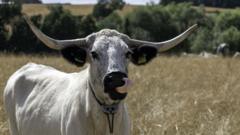
The Castle Howard Estate in North Yorkshire has introduced White Park cattle to its Bog Hall rewilding scheme, marking the latest phase of a long-term habitat restoration project. The breed, considered one of the most ancient species of cattle in the British Isles, has been selected specifically for its suitability to outdoor conservation grazing in wet grassland environments. The herd now resides permanently in the project area and will graze the newly-sown meadows year-round.
The Bog Hall Habitat Bank project encompasses 440 acres of former agricultural land designated for ecological restoration. Approximately three miles of fencing has been installed to support the initiative, with additional infrastructure including badger tunnels and otter passes designed to maintain safe wildlife corridors. The estate reports that volunteer efforts have included creating ponds, planting willows, establishing scrub banks, and installing leaky dams to improve water retention across the site.
The rewilding effort began in 2024 and is being delivered in partnership with Environment Bank, a biodiversity research organization. The White Park cattle grazing is expected to help create a more varied habitat structure, according to estate leadership. Guy Thallon, head of natural environment, noted that the reintroduction of animals has been inspiring for the team and beyond, with plans to release beavers in the autumn.
The project includes an educational component, with children from nearby primary schools having designed signage for the fencing that features animals they hope to see in the Bog Hall Habitat Bank. Officials view this as providing pupils with the opportunity to observe nature restoration firsthand throughout their school years. Part of the 440-acre site is designated as a Site of Importance for Nature Conservation within the Howardian Hills National Landscape.
Article Attribution | Read More at Article Source
Article summary produced by Claude AI