

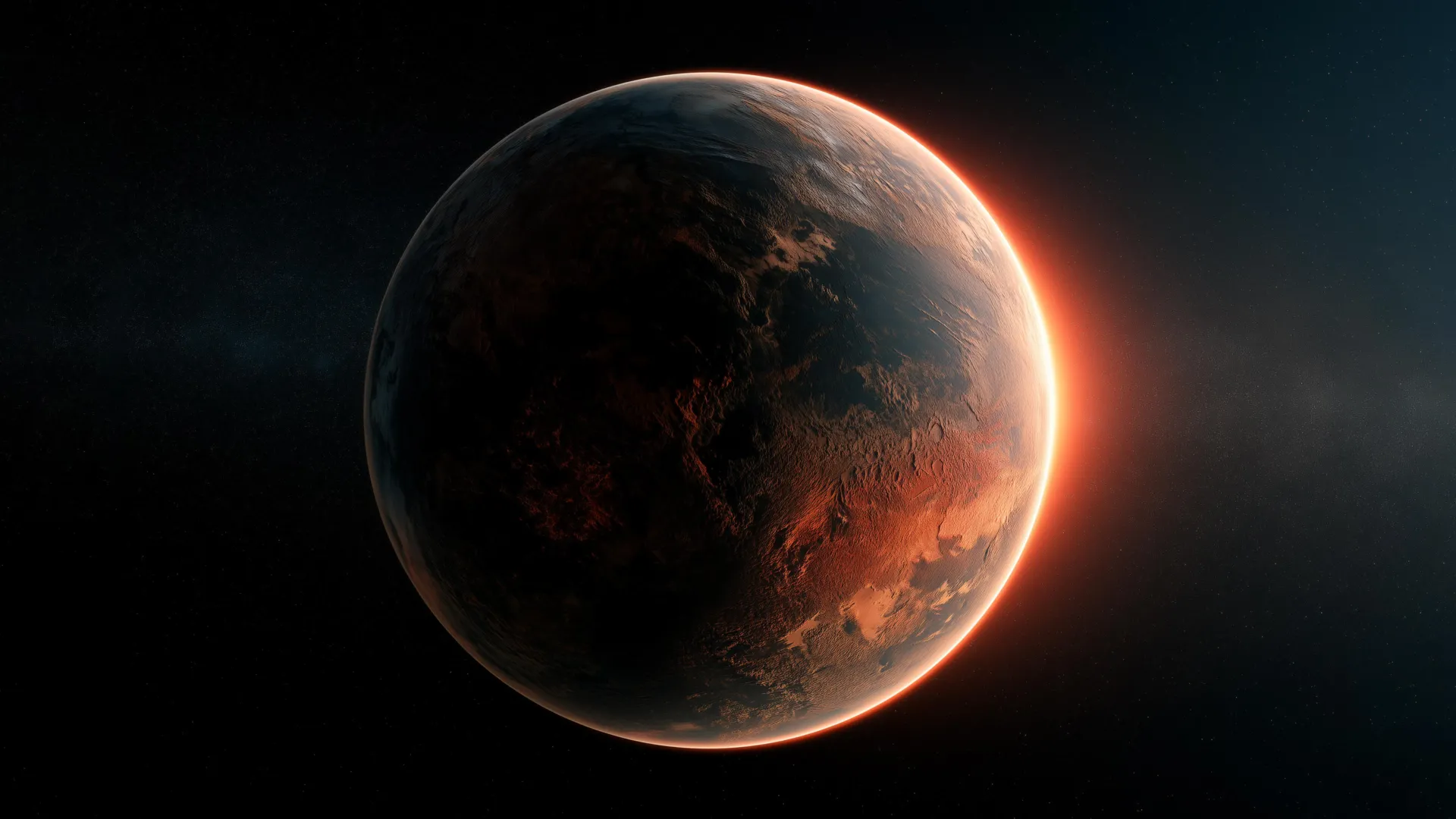
New research from the University of Portsmouth suggests that the fundamental ingredients needed to construct rocky planets may have emerged remarkably early in cosmic history. The study indicates that planet formation could have begun approximately 100 million years following the Big Bang, a timeframe that predates the full emergence of the first galaxies and challenges long-held scientific assumptions about planetary development.
The research centers on the role of the Universe’s earliest stars, which were substantially more massive than modern stellar bodies. When these ancient stars reached the end of their lifecycles, they underwent catastrophic explosions known as Pop III supernovae. These violent events distributed significant quantities of heavy elements—including carbon, oxygen, and iron—throughout surrounding regions of space. Scientists have identified these stellar explosions as the Universe’s initial major sources of the heavier chemical elements required for planet formation.
A particularly powerful variant of these early supernovae, termed pair-instability supernovae, can expel more than 100 times the Sun’s mass in heavy elements during a single detonation. According to the research, this enriched material can substantially increase the concentration of heavy elements in nearby gas clouds. As gravitational forces compress these chemically-enriched clouds, rotating disks can form around young stars—structures similar to the protoplanetary disk that eventually gave rise to the Solar System.
Computer simulations conducted for the study identified a disk forming around a young star approximately 70 percent as massive as the Sun. The modeling revealed that sufficient solid material accumulated within this disk to create several Earth-masses worth of planetary precursors at distances from their star comparable to Earth’s distance from the Sun. Notably, the simulations also detected substantial water content within the disk—only a few times less than the amount available during our own Solar System’s formation.
These findings raise the possibility that habitable worlds, or at least planets with some characteristics associated with habitability, may have existed far earlier in cosmic history than previously theorized. The research has been published in The Astrophysical Letters Journal.
Article Attribution | Read More at Article Source
Article summary produced by Claude AI