

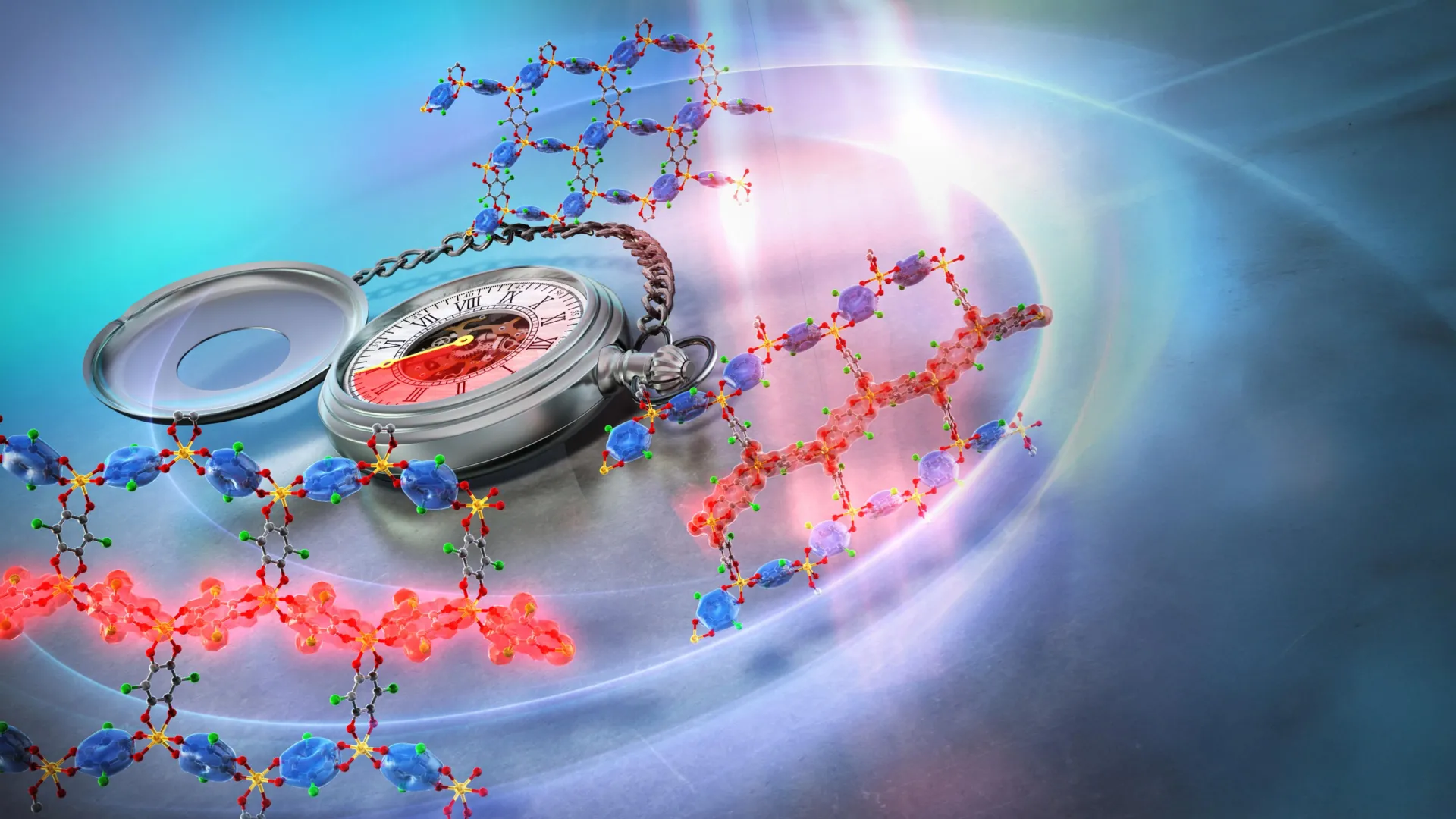
A collaborative research team from Science Tokyo, Tohoku University, and Nagoya Institute of Technology has identified a rapid electronic transformation occurring within a metal-organic framework. Using combined experimental and theoretical methods, the scientists captured the formation of a photoinduced hidden state in just 30 femtoseconds—a timeframe representing one millionth of one billionth of a second.
The research employed time-resolved reflectance spectroscopy and ultrashort laser pulses lasting six femtoseconds to track the material’s optical properties immediately after absorbing light energy. This extraordinarily fine temporal resolution enabled the team to measure how the material’s reflectance spectrum shifted and developed new features associated with the emergence of the hidden state. The measurements revealed dramatic changes in the electronic behavior occurring at the femtosecond timescale.
Theoretical calculations paired with experimental observations unveiled a previously unknown intermediate stage in the transformation process. When the metal-organic framework absorbed light, it initially entered an electronic state characterized by alternating stronger and weaker bonds between neighboring sites, a configuration termed a bond-order wave state. This fleeting intermediate state was succeeded by small atomic movements that ultimately generated the photoinduced hidden state. Analysis suggested this newly formed state may display polar characteristics, with unevenly distributed positive and negative electrical charges.
The findings carry implications for future materials science and technology development. The ability to create and control temporary electronic states through light manipulation could enable new photoresponsive materials for high-speed electronics and optoelectronic applications. Researchers indicated that exposing these previously invisible intermediate stages during ultrafast transformations may facilitate the design of advanced materials whose properties can be deliberately manipulated using light. The experimental and theoretical approach potentially extends to investigating similar processes in other material systems.
Article Attribution | Read More at Article Source
Article summary produced by Claude AI