

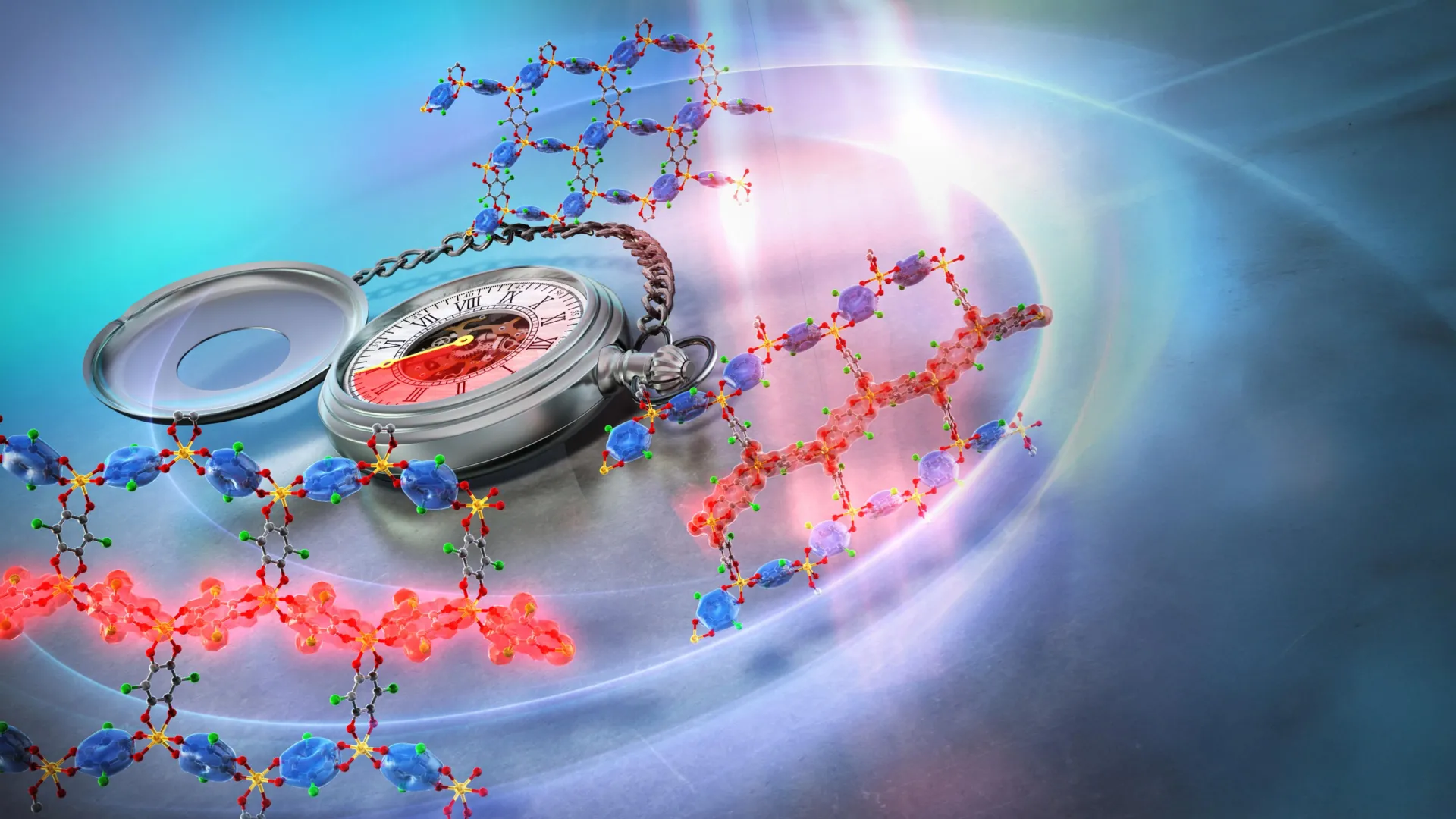
A collaborative team of scientists from multiple Japanese institutions has documented an extraordinarily rapid electronic transformation within a metal-organic framework, capturing evidence of a hidden electronic state that develops in approximately 30 femtoseconds. The research combines ultrafast laser spectroscopy measurements with theoretical modeling to identify a previously uncharacterized intermediate electronic state that appears during this ultrafast process.
Materials can exhibit unexpected behaviors when exposed to light, entering photoinduced states with properties substantially different from their normal conditions. Such states provide researchers with alternative mechanisms for modifying material behavior beyond traditional methods. Understanding the precise mechanisms by which these states form could advance the development of photoresponsive materials and optical technologies. However, observing these transformations presents significant technical challenges, as the initial stages occur on femtosecond timescales—periods of extraordinary brevity measured in millionths of a billionth of a second.
The research team, led by Tadahiko Ishikawa from the Department of Chemistry at Science Tokyo, employed time-resolved reflectance spectroscopy using ultrashort laser pulses lasting six femtoseconds to track changes in the material’s optical properties. The experimental measurements tracked how light reflected by the metal-organic framework changed immediately following laser pulse absorption, revealing dramatic shifts in reflectance spectra within the 30-femtosecond window.
Theoretical calculations performed alongside experiments revealed that the photoinduced hidden state forms through an intermediate electronic configuration in which electronic bonds between neighboring sites exhibit alternating strengths. This bond-order wave state exists only transiently before atomic position adjustments occur, ultimately producing the final photoinduced hidden state. Analysis suggests this newly formed state may possess polar characteristics, with uneven distribution of electrical charge throughout the material.
The findings suggest that reliably creating and controlling such light-induced states could enable new strategies for manipulating electronic properties using extremely short light pulses. Future research applying similar experimental and theoretical methods to additional materials could facilitate the development of advanced photoresponsive devices for high-speed electronics and optoelectronic applications requiring precise control over material behavior.
Article Attribution | Read More at Article Source
Article summary produced by Claude AI