

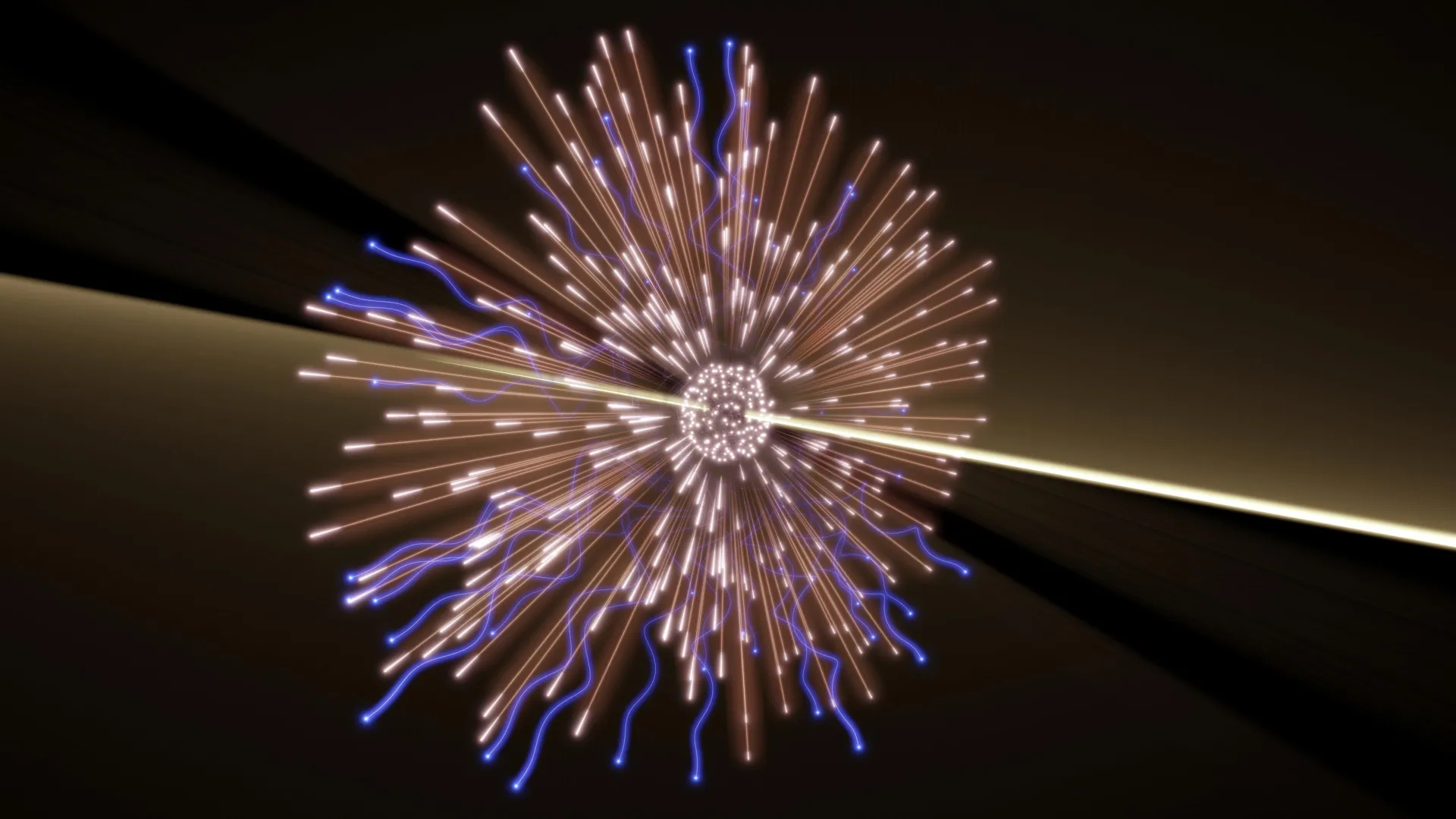
Researchers affiliated with the Double Chooz collaboration have successfully measured antineutrino emissions from a deactivated nuclear reactor, marking the first direct observation of this phenomenon. The study, led by Anthony Onillon and Thierry Lasserre of the Max-Planck-Institut für Kernphysik in Heidelberg, was recently published in Physical Review Letters. Antineutrinos are among the lightest and most difficult-to-detect particles known to physics, yet they stream continuously from radioactive decay processes occurring deep within reactor cores even after shutdown.
The measurement was conducted at the Chooz nuclear power plant in northern France using the Double Chooz detector, positioned approximately 400 meters underground from the facility’s reactor cores. The detector contains over 30 cubic meters of liquid scintillator material, which produces distinctive light signals when struck by antineutrinos. During an observation period spanning 17.2 days when both reactor units were fully shut down, the detector recorded approximately 100 antineutrino events attributable to residual radioactivity in the reactor cores and associated spent-fuel cooling pools.
The detected antineutrino signal closely aligned with theoretical predictions based on simulations accounting for remaining nuclear fuel and the decay of long-lived fission products. This agreement provides the first experimental validation of models describing antineutrino emission from inactive reactors and spent fuel. Researchers noted that detecting the residual signal required exceptionally low background noise levels and analytical techniques refined through years of Double Chooz operations.
The findings open potential applications for nuclear monitoring and safety. Antineutrino detectors may eventually serve as independent verification tools for confirming reactor status and tracking spent-fuel inventories during maintenance periods and after shutdown. Other research groups, including the JUNO-TAO collaboration, are beginning similar investigations into faint antineutrino signals from spent nuclear fuel, with initial results presented at Neutrino 2026. The Double Chooz detector, originally designed to study neutrino oscillations and measure fundamental mixing parameters, has now documented another scientific milestone.
Article Attribution | Read More at Article Source
Article summary produced by Claude AI