

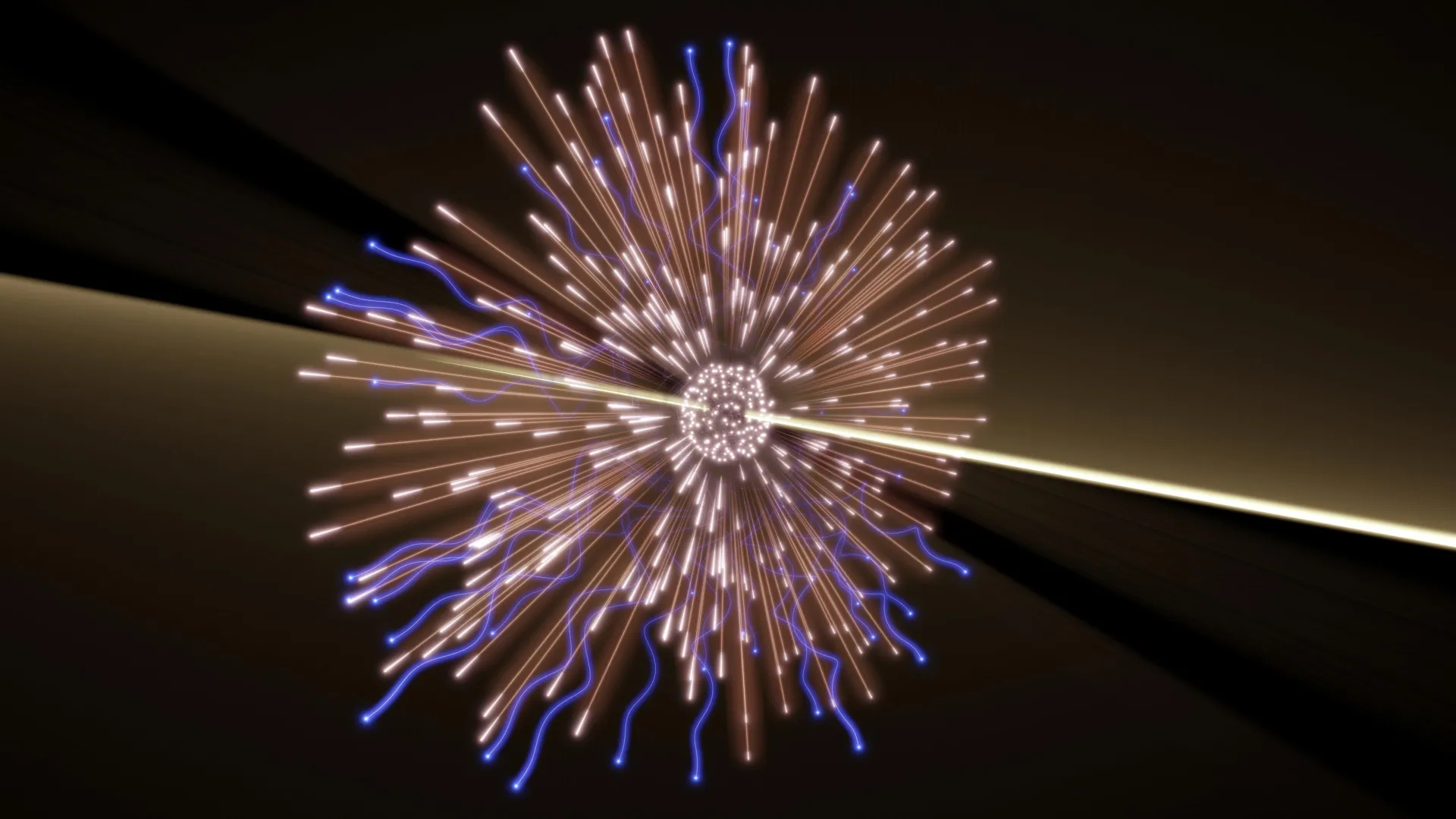
Researchers affiliated with the Double Chooz collaboration have successfully detected antineutrino emissions persisting from a nuclear reactor after shutdown, marking the first experimental measurement of this phenomenon. The study, led by Anthony Onillon and Thierry Lasserre of the Max-Planck-Institut für Kernphysik in Heidelberg, Germany, was published in Physical Review Letters and demonstrates that radioactive fission products continue releasing particles long after a reactor ceases operations.
The experiment took place at the Chooz nuclear power plant in northern France, where the Double Chooz detector operates approximately 400 meters from the facility’s reactor cores. The detector contains more than 30 cubic meters of liquid scintillator material, which generates distinctive light signals when antineutrinos interact with it. These nearly undetectable particles can penetrate reactor shielding with minimal obstruction, allowing researchers to observe residual reactor activity remotely.
During an analysis of 17.2 days of observations when both reactor units were fully operational shutdown, the detector identified approximately 100 antineutrino candidate events originating from radioactive decay in the reactor cores and adjacent spent-fuel cooling pools. The measured signals aligned closely with computer simulations based on remaining nuclear fuel inventory and fission product decay rates, providing the first direct experimental validation of theoretical predictions regarding antineutrino emissions from inactive reactors.
The breakthrough has implications extending beyond fundamental physics research. Antineutrino detectors could potentially serve as independent verification tools for confirming reactor status and tracking spent-fuel inventories during maintenance periods and following permanent shutdown. Other experimental collaborations, including JUNO-TAO, have begun pursuing similar measurements of the faint antineutrino emissions from spent nuclear fuel, building upon the Double Chooz findings as a reference benchmark. The Double Chooz collaboration, historically recognized for measuring neutrino oscillation parameters, has thereby contributed a new capability to the field of nuclear reactor monitoring and safety oversight.
Article Attribution | Read More at Article Source
Article summary produced by Claude AI