

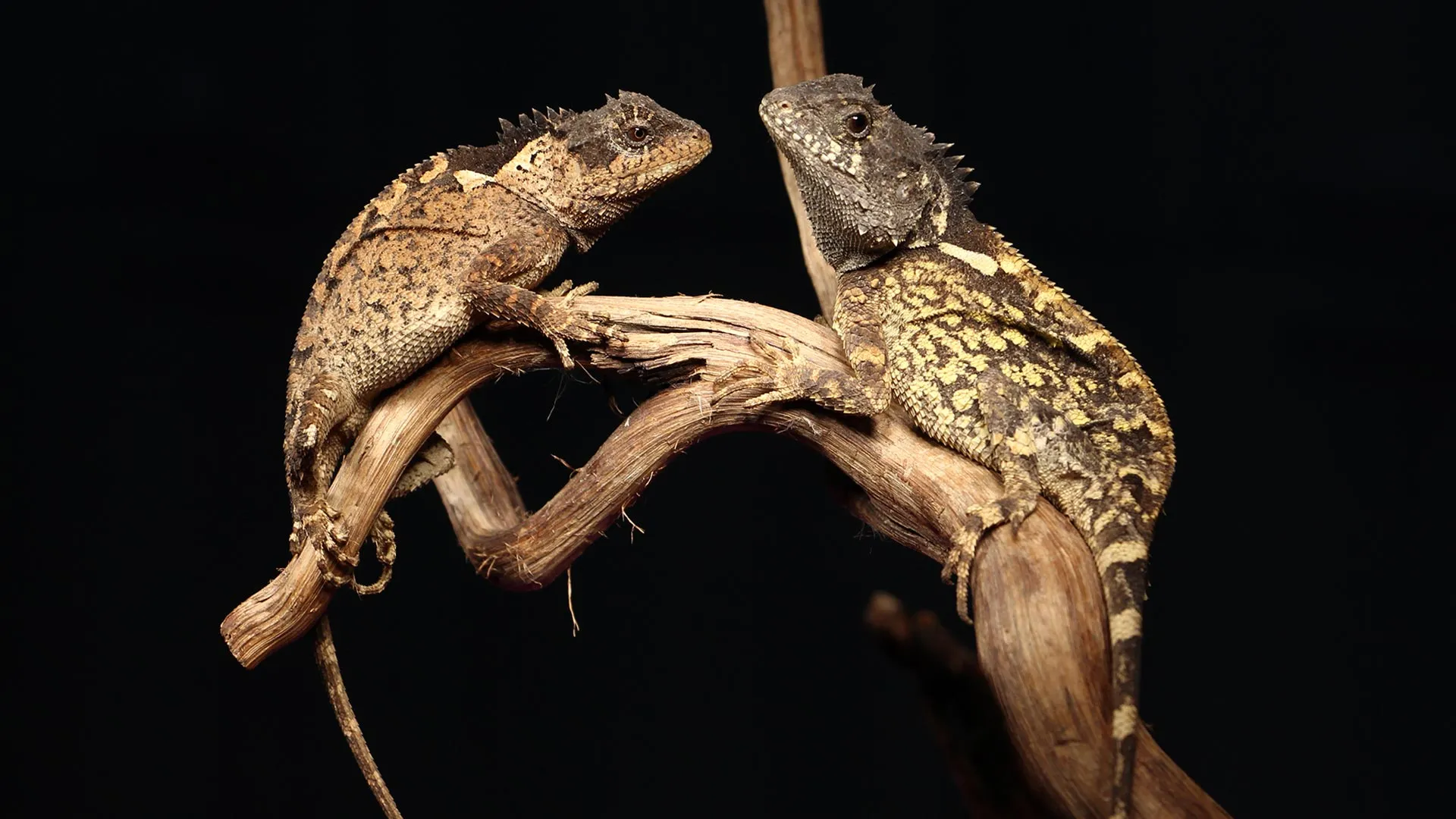
Researchers have identified a previously unknown lizard species inhabiting the high mountain forests of western Thailand. The species, designated Acanthosaura syrax, belongs to the agamid family commonly called mountain horned dragons, recognizable by the spiny crests along their necks and backs. The discovery was made within Mae Wong National Park in Tak-Kamphaeng Phet Province at elevations exceeding 1,300 meters, and the species has not been documented elsewhere to date. This finding brings the total number of recognized species in the genus Acanthosaura to 23.
The research team, headed by Poramad Trivalairat and including scientists from Chulabhorn Royal Academy and Kasetsart University, selected the scientific name Syrax as a reference to the dragon character from House of the Dragon. The team identified several parallels between the fictional dragon and the newly described lizard species. Syrax the dragon is characterized by bright yellow coloration, a relatively compact size compared to other dragons in the series, and notably prolific egg-laying capabilities. The researchers observed comparable features in the actual lizard, including yellowish-green coloration, a body size ranking among the smallest within its genus, and relatively large egg clutches proportional to its body size. The proposed English common name is “Syrax mountain horned dragon,” with an equivalent designation in Thai.
The species exhibits distinctive physical characteristics beyond its pop culture-inspired designation. It possesses the smallest neck and back crest scales documented in its genus and maintains a generally diminutive body size. Unlike certain closely related species, this lizard lacks a black ocular patch but instead displays a distinctive dark collar marking. Genetic analysis of two genes confirmed the physical observations, demonstrating that A. syrax is genetically separate from its nearest relative, A. lepidogaster, and from all other recognized species in the group.
The lizard appears limited to a narrow zone of high-altitude forest habitat, with the mountainous terrain naturally fragmenting populations across the range. This restricted distribution may render the species vulnerable to additional habitat pressures. Researchers are advocating for enhanced protection of Mae Wong’s high-elevation forests and propose that A. syrax could function as a flagship species for regional conservation efforts, alongside other rare fauna including the Asian forest tortoise, Oldham’s leaf turtle, and the Indochinese tiger. The research has been published in the open-access journal ZooKeys.
Article Attribution | Read More at Article Source
Article summary produced by Claude AI