

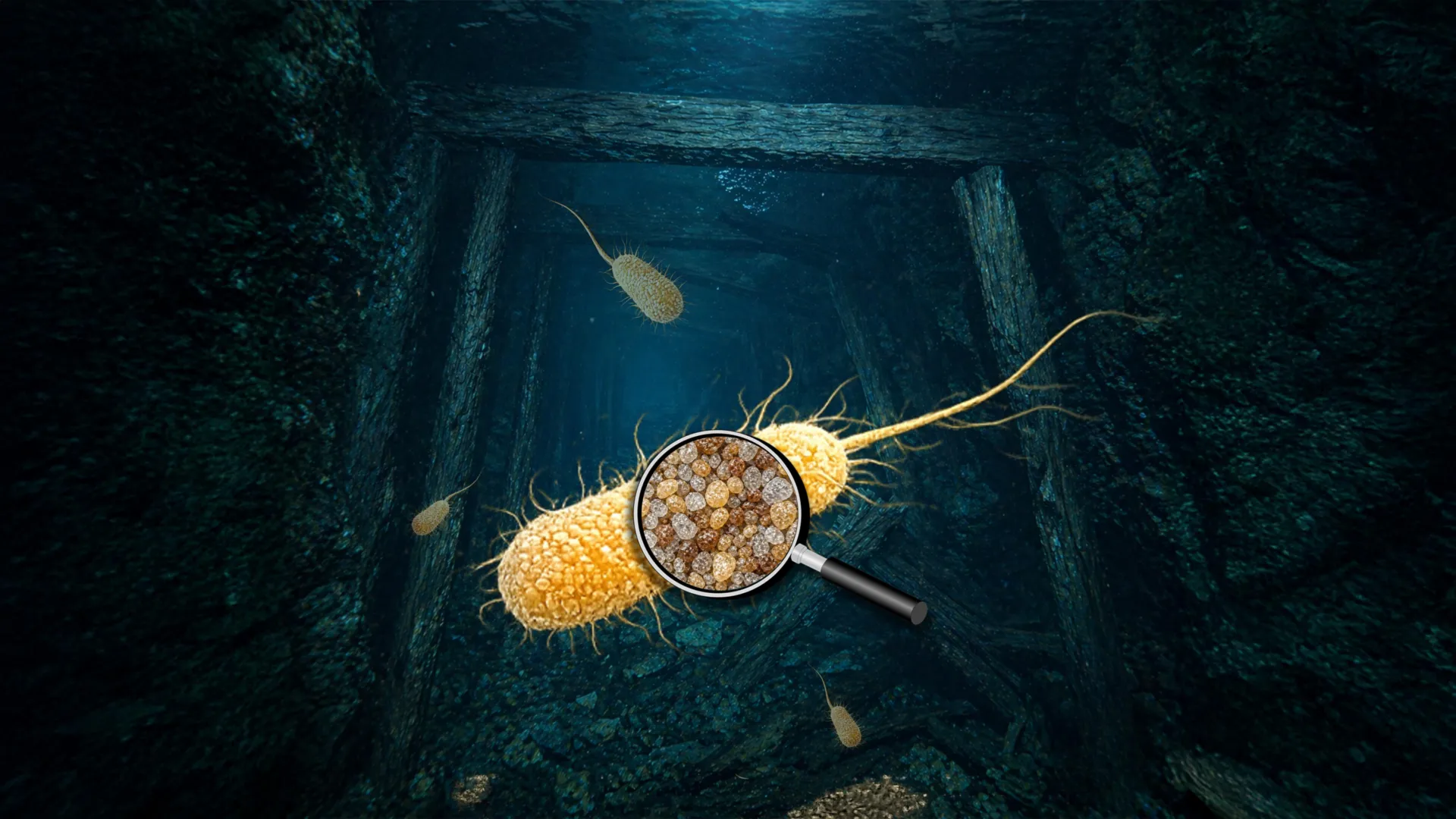
Researchers from the Helmholtz-Zentrum Dresden-Rossendorf, Wismut GmbH, and the University of Granada have identified a bacterial mechanism for stabilizing uranium contamination in water. The study, published in Nature Communications, demonstrates that certain bacteria can process dissolved uranium into a stable form when supplied with glycerol as a carbon source, addressing a significant environmental challenge.
Uranium typically remains locked within soil minerals, but mining and other environmental processes can transform it into water-soluble forms that spread through ecosystems. Once mobile, dissolved uranium poses toxicity risks to humans and organisms. The research team investigated how bacteria found in mine water could reduce the concentration of dissolved uranium by utilizing it for metabolic processes.
Experts collected water samples from a flooded uranium mine in the Ore Mountains and added controlled amounts of glycerol under oxygen-free conditions to simulate natural deep-mine environments. After 130 days, the bacterial community had reduced dissolved uranium levels to approximately five percent of initial concentrations. Advanced microscopy and spectroscopy analysis revealed that uranium had accumulated within bacterial cell walls, transforming into an unusual pentavalent chemical state that combines with iron and oxygen to form the compound FeU(V)O4.
The pentavalent uranium state was previously considered unstable and temporary, making the discovery particularly significant. Additional testing showed that this compound remained stable even when exposed to atmospheric oxygen, suggesting bacteria may convert mobile uranium into immobile forms resistant to environmental dispersion. The researchers noted that FeU(V)O4 had remained chemically stable for over 25 years in naturally contaminated soil samples examined in previous research.
Scientists plan further investigation into uranium-binding bacteria and the biochemical processes underlying uranium transformation. Understanding these mechanisms could inform development of bacterial remediation techniques for uranium-contaminated environments.
Article Attribution | Read More at Article Source
Article summary produced by Claude AI