

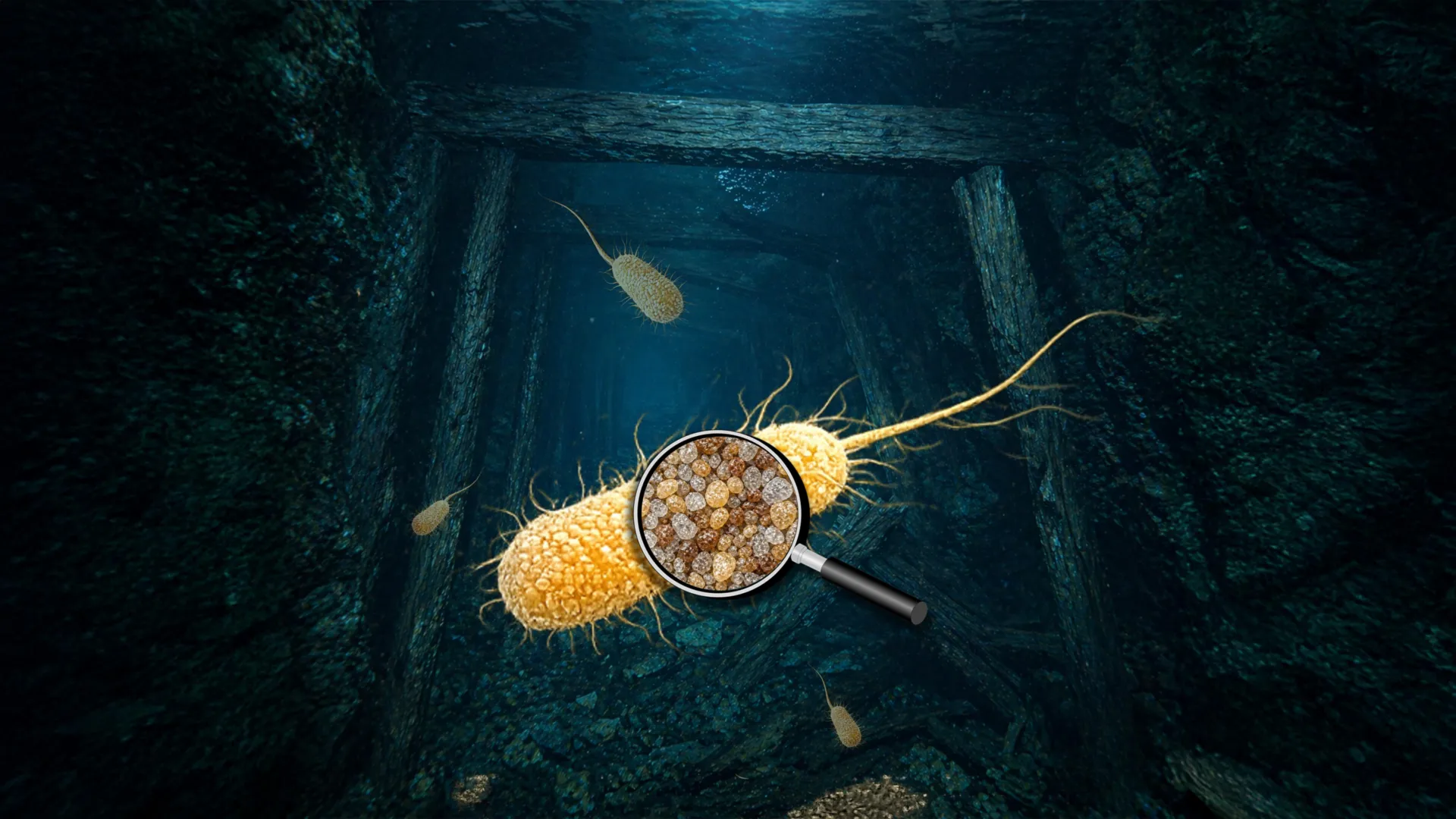
Researchers at the Helmholtz-Zentrum Dresden-Rossendorf, collaborating with Wismut GmbH and the University of Granada, have identified bacteria capable of converting dissolved uranium into a chemically stable form under specific conditions. The findings, published in Nature Communications, demonstrate a previously unknown mechanism for immobilizing uranium in contaminated environments.
The study focused on uranium’s environmental mobility. Uranium naturally occurs in minerals within soil, but mining and other processes can dissolve it into water-soluble forms that spread through ecosystems. This dissolved state poses significant toxicity risks. The research team demonstrated that certain bacteria can metabolically process uranium when glycerol, a component of plant and animal fats, serves as a food source.
To conduct their investigation, scientists collected water samples from a flooded uranium mine in the Ore Mountains operated by Wismut GmbH. They added controlled amounts of glycerol to samples and maintained oxygen-free conditions mimicking the natural deep-mine environment. After 130 days, approximately 95 percent of the dissolved uranium had been removed from the water through bacterial accumulation in cell walls.
Analysis using advanced microscopy and spectroscopy at European research facilities revealed an unexpected finding: the bacteria had converted the uranium into pentavalent uranium, a rare oxidation state previously considered unstable. The uranium combined with iron and oxygen to form FeU(V)O4, a compound first identified in 2020 but whose natural formation mechanism was previously unknown. Notably, this compound remained stable even when exposed to atmospheric oxygen, suggesting exceptional durability.
The discovery opens potential applications for bioremediation of uranium-contaminated sites. Researchers plan to deepen their understanding of the biochemical processes enabling this transformation and assess whether bacterial activity could be harnessed for large-scale environmental remediation efforts.
Article Attribution | Read More at Article Source
Article summary produced by Claude AI