

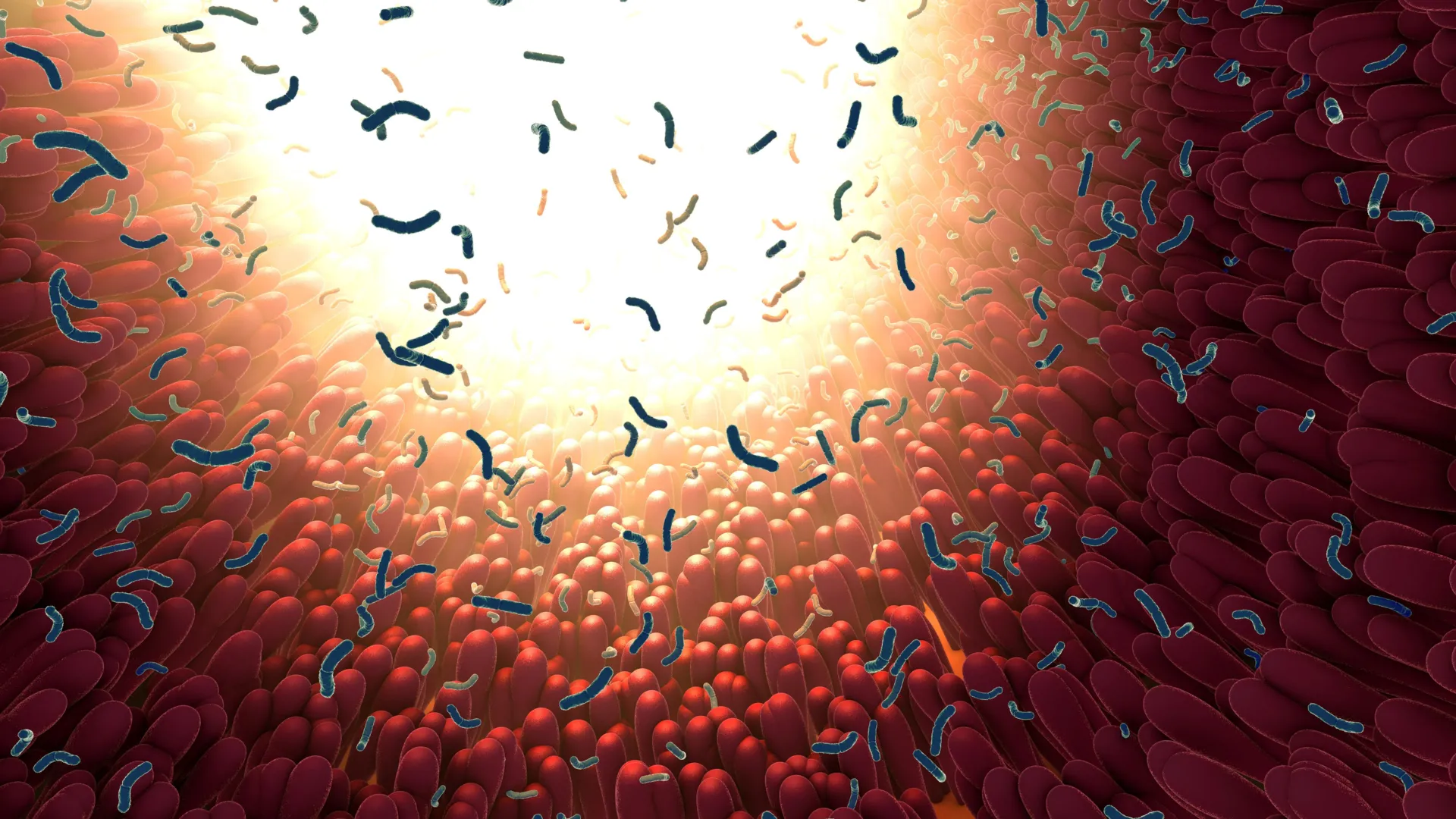
Researchers at Northwestern Medicine have identified a mechanism through which gut bacteria influence intestinal immunity in ways that persist beyond the initial exposure to bacterial metabolites. The study, published in Nature Communications, examined how short-chain fatty acids produced when gut bacteria ferment dietary fiber can establish long-lasting immune tolerance in the intestine.
In experiments, mice given butyrate—a key short-chain fatty acid—in their drinking water showed sustained immune benefits two weeks after treatment ended. The treated animals demonstrated increased production of IL-10, an anti-inflammatory signaling molecule, and exhibited greater resistance to chemically induced colitis compared to untreated controls. These animals experienced less weight loss, lower inflammatory markers, and reduced tissue damage. The protection was shown to depend on IL-10 signaling and did not result from changes to the gut microbiome itself, as similar effects were observed in germ-free mice lacking all microbes.
The research team focused on intestinal epithelial cells, which form the barrier between the body and microbiome. Laboratory experiments revealed that these cells, when exposed to butyrate, triggered increased IL-10 production in both mouse and human T-cells. Through metabolomic analysis, researchers identified N1-acetylspermidine as a likely candidate molecule mediating this effect. The compound appeared to account for part of the immune-regulating activity generated by epithelial cells exposed to butyrate and worked through activation of an enzyme called Sat1.
The findings challenge conventional understanding of intestinal epithelial cells as temporary responders. Instead, the results suggest these cells can retain a molecular record of beneficial signals from the microbiota over time. Researchers indicated that beneficial microbial metabolites may effectively “train” intestinal cells to maintain immune tolerance. Future research will focus on whether this pathway operates similarly in humans and whether it could be leveraged to address inflammatory bowel disease in patients. The team also plans to investigate other metabolites that may contribute to the observed immune-regulating effects.
Article Attribution | Read More at Article Source
Article summary produced by Claude AI