

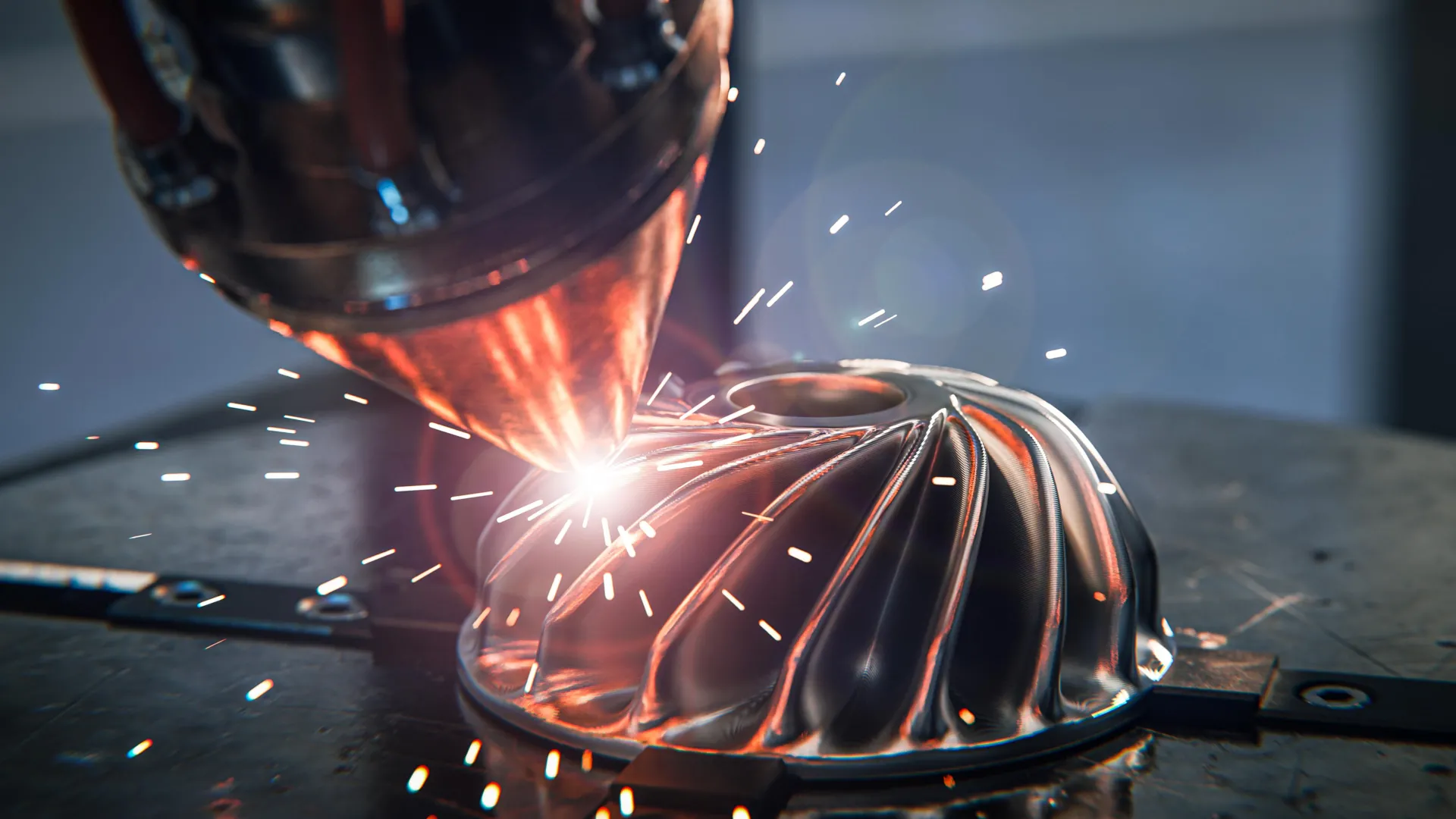
Tungsten carbide-cobalt (WC-Co) cemented carbide is a material prized in industrial applications for its exceptional hardness and resistance to wear. It is commonly used in cutting tools, drills, machining equipment, and construction components. The material combines tungsten carbide particles, which provide hardness, with a cobalt metallic binder that holds the structure together. Traditional manufacturing relies on powder metallurgy, where fine tungsten and cobalt powders are compressed under high pressure and heated in sintering machines to bond particles together at elevated temperatures. While this method produces extremely durable parts, it has significant drawbacks including high raw material costs and substantial waste, as only a portion of input material becomes finished product.
Researchers from Hiroshima University and Mitsubishi Materials Hardmetal Corporation explored whether additive manufacturing, commonly known as 3D printing, could offer a more efficient production method. Unlike conventional manufacturing that either cuts away material or fills molds, additive manufacturing builds objects by placing material only where needed. The team employed hot-wire laser irradiation, a process combining a laser beam with a preheated filler wire. The preheated wire increases the deposition rate while reducing energy requirements from the laser. Rather than fully melting the tungsten carbide, which would alter its internal structure and diminish its valuable properties, both fabrication methods softened the material just enough to form and deposit it properly.
Initial experiments revealed challenges specific to each approach. The rod-leading method caused some tungsten carbide decomposition in upper structural areas, creating defects. The laser-leading method avoided this issue but initially struggled to maintain required hardness levels. Researchers addressed these problems by introducing a nickel alloy-based middle layer and carefully controlling temperature to remain above cobalt’s melting point while preventing grain growth, a phenomenon where microscopic crystals enlarge and alter material properties. With these adjustments, the team successfully produced cemented carbide through additive manufacturing while preserving hardness levels exceeding 1400 HV, placing the material among the toughest substances used industrially.
The findings suggest additive manufacturing has potential for manufacturing complex tungsten carbide-cobalt components more efficiently. Remaining challenges include reducing cracking, improving durability, and developing capabilities for more complicated shapes. Researchers intend to focus future work on producing practical cutting tools, testing the technique with additional materials, and enhancing component durability. If refined for large-scale manufacturing, the approach could allow producers to deposit expensive carbide only where required, making advanced industrial tools less wasteful and more economical while maintaining the extreme hardness necessary for their intended uses.
Article Attribution | Read More at Article Source
Article summary produced by Claude AI