

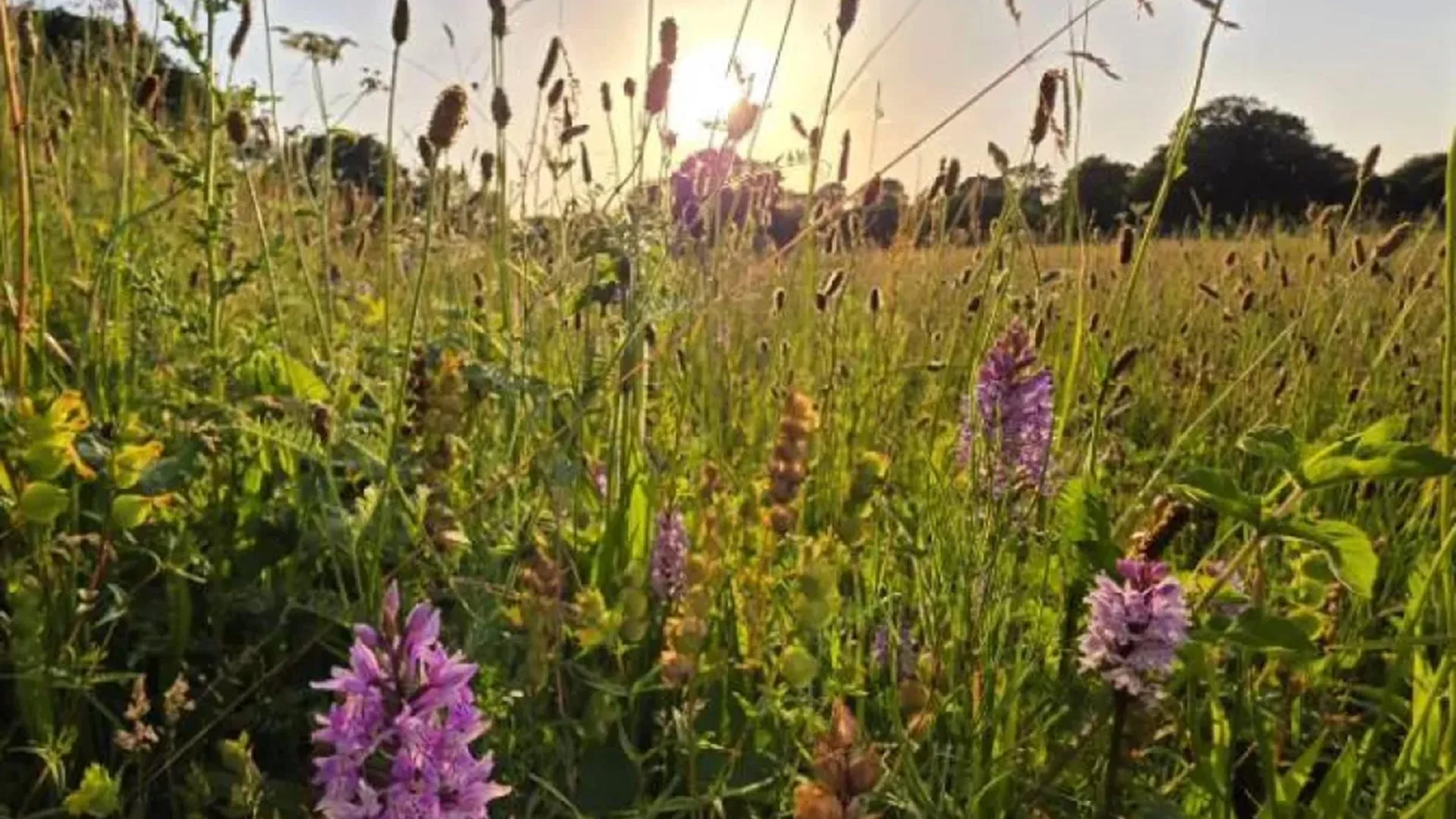
Research conducted at a former agricultural site in North Norfolk has demonstrated that abandoned farmland can spontaneously recover into a biodiverse wildflower meadow with minimal intervention. The study, led by Professor Carl Sayer at UCL Geography and published in Restoration Ecology, tracked vegetation changes across a two-hectare field over 11 years following the cessation of farming in 2005.
The field required only traditional annual hay cutting and was otherwise left to recover naturally. Within 10-15 years, the site developed into a species-rich meadow containing locally uncommon plants including southern marsh orchid, greater tussock-sedge, yellow rattle, and common centaury. Detailed vegetation surveys conducted every two to three years revealed that the average number of plant species per survey plot doubled, rising from approximately 10 species in 2011 to nearly 20 by 2022.
The research suggests that natural ecological processes may restore biodiversity more effectively than conventional restoration methods relying on commercial seed mixes or other costly interventions. The researchers propose that allowing nature to guide recovery preserves the genetic diversity of locally adapted plant populations, resulting in meadows that are specifically suited to their environments rather than generic compositions. Wildlife such as deer may have dispersed seeds of unusual plant species to the site, facilitating the establishment of thousands of orchids and other vegetation.
The findings arrive as governments across the UK and Europe seek effective strategies for restoring biodiversity across expanses of former farmland. Species-rich grasslands provide critical habitat for pollinators, birds, and mammals while enhancing ecosystem resilience and supporting landscape adaptation to climate change. The study underscores how long-term ecological monitoring can inform practical approaches to landscape restoration, offering evidence that patient, nature-led recovery could substantially contribute to biodiversity goals while reducing costs and complexity associated with rehabilitation efforts.
Article Attribution | Read More at Article Source
Article summary produced by Claude AI