

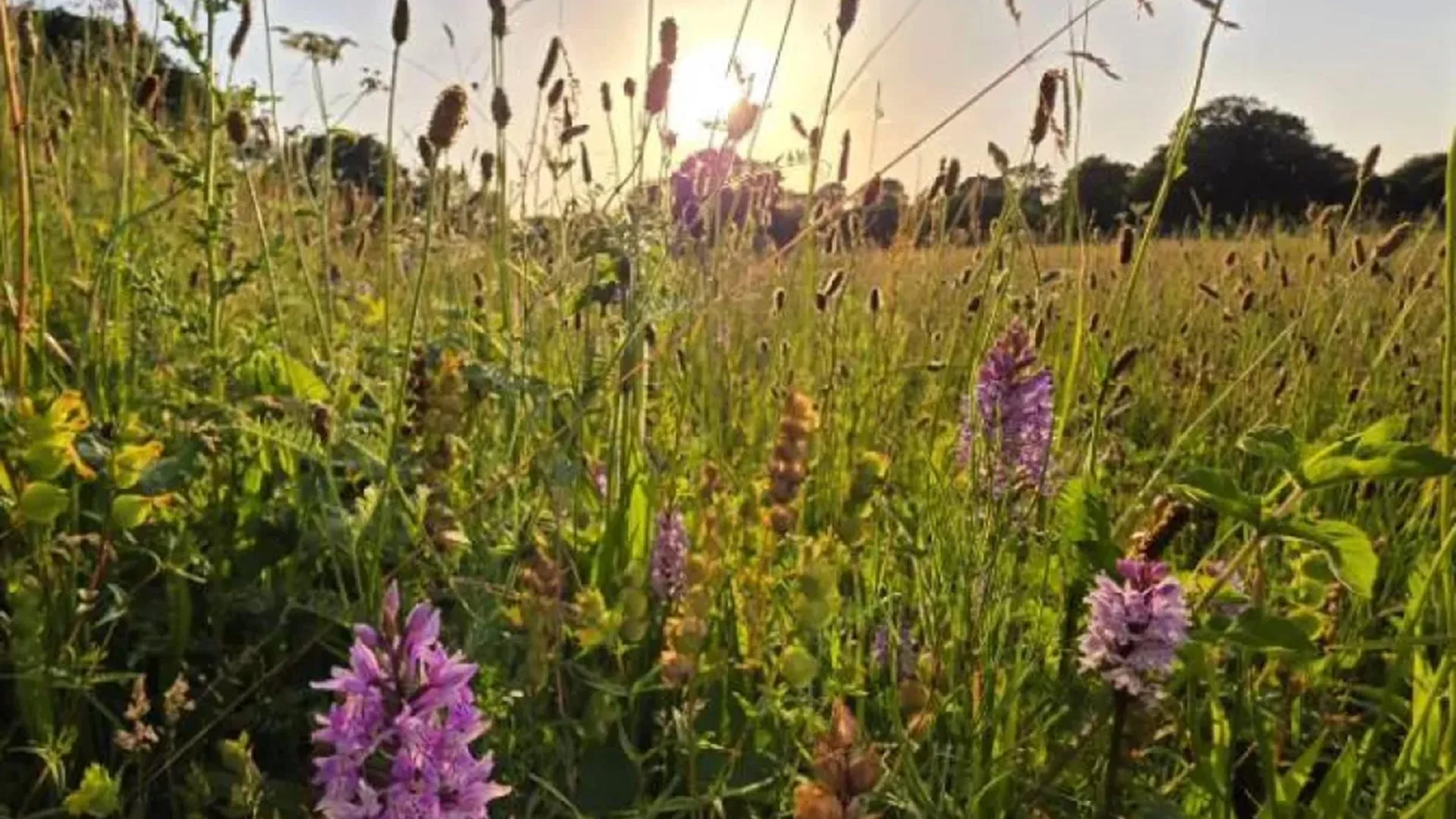
A long-term study led by Professor Carl Sayer at UCL Geography has demonstrated that abandoned farmland can naturally regenerate into biodiverse wildflower meadows with minimal intervention. The research, published in Restoration Ecology, tracked vegetation changes over 11 years (2011-2022) in a two-hectare field in North Norfolk that ceased active farming in 2005.
The former arable land transformed into a species-rich meadow through natural ecological processes, requiring only traditional annual hay cutting. Survey plots showed the average number of plant species doubled during the study period, rising from approximately 10 species in 2011 to nearly 20 by 2022. The meadow now supports thousands of naturally established orchids, including locally rare species such as southern marsh orchid, greater tussock-sedge, yellow rattle, and common centaury, which researchers believe may have been dispersed by wildlife such as deer.
The findings challenge conventional wisdom in habitat restoration that emphasizes commercial seed mixes and expensive interventions. The research suggests that allowing natural processes to unfold can restore biodiversity while preserving genetic diversity of plants already adapted to local conditions, potentially creating meadows that better reflect their regional ecology.
The study carries implications for biodiversity recovery efforts across the UK and Europe, where governments seek effective large-scale restoration strategies for former farmland. Species-rich grasslands provide critical habitat for pollinators, birds, and mammals while enhancing ecosystem resilience and supporting landscape adaptation to climate change. The research provides evidence that nature-led recovery could significantly advance biodiversity restoration goals while reducing both costs and complexity associated with ecological restoration projects.
Article Attribution | Read More at Article Source
Article summary produced by Claude AI