

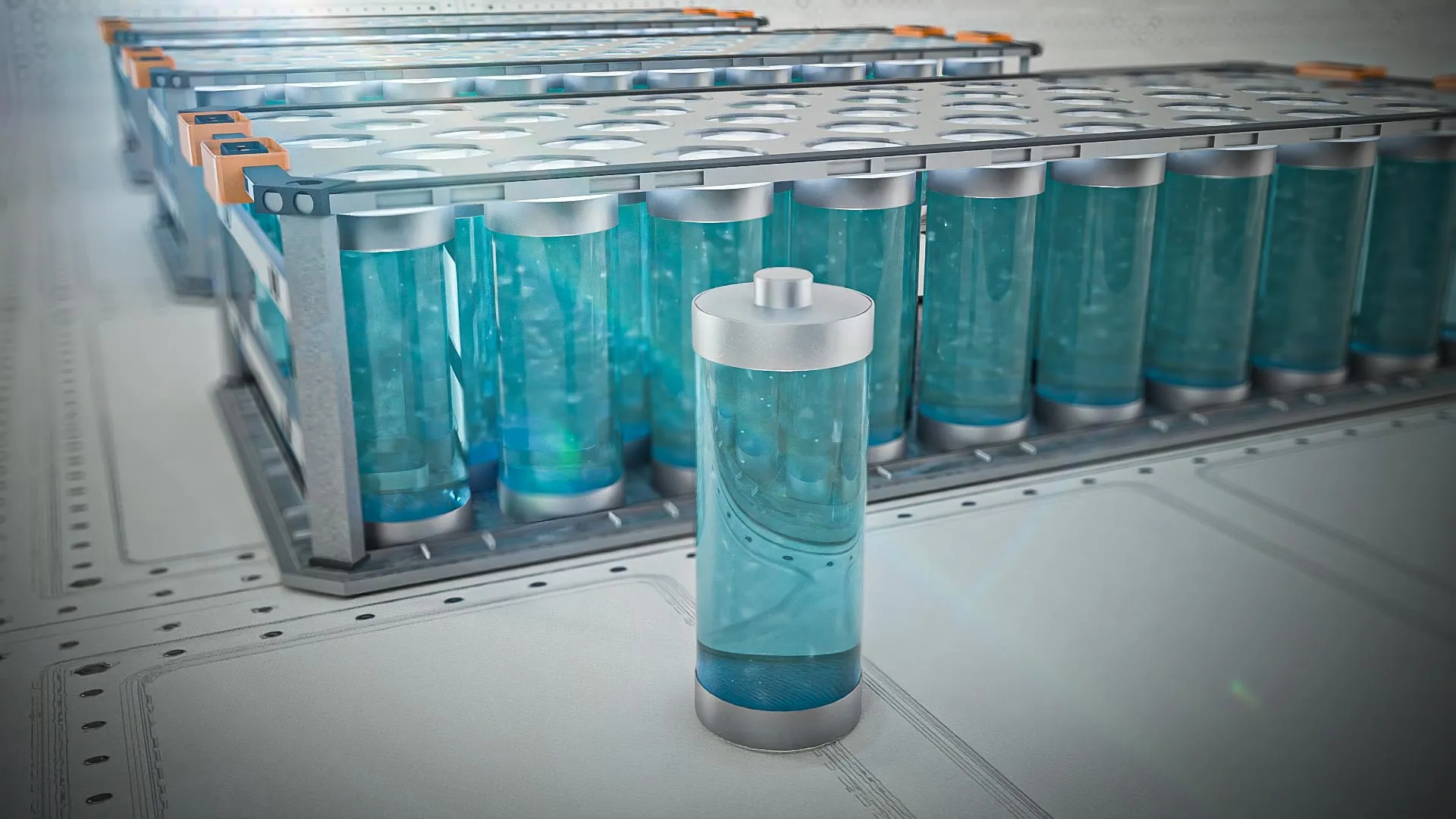
Researchers at the University of Surrey have demonstrated that sodium vanadium oxide, a battery material, performs significantly better when its natural water content is preserved rather than removed. This finding contradicts conventional battery research practices, which typically eliminate moisture from battery materials. The study, published in the Journal of Materials Chemistry A, focused on nanostructured sodium vanadate hydrate and found that the water-containing version stored almost twice as much charge as typical sodium-ion materials, while also maintaining reliable performance over more than 400 charge cycles.
Sodium-ion batteries represent a promising alternative to lithium-ion technology for large-scale energy storage. Sodium is far more abundant than lithium, found naturally in seawater, salt deposits, and various minerals, making it a more cost-effective and sustainable option. However, sodium-ion batteries have historically underperformed compared to lithium technology in charge capacity, charging speed, and operational lifespan. The University of Surrey results suggest these performance gaps may be narrower than previously believed.
Beyond improved energy storage, the research revealed an unexpected secondary capability. When placed in salt water, the material continued to function effectively while simultaneously removing dissolved salt through electrochemical desalination. The sodium vanadate hydrate extracted sodium ions from the water while a graphite electrode removed chloride, the two primary ionic components of common salt. This dual functionality could enable future devices that combine energy storage with water treatment, potentially benefiting coastal regions with limited freshwater access but abundant seawater and renewable energy resources.
The findings suggest several practical advantages. Manufacturing could be simplified by eliminating the heating step used to remove water from battery materials. Additionally, the possibility of using seawater as an electrolyte could further reduce material costs while adding desalination capability to energy storage systems. However, researchers emphasized that the work remains in early stages and requires additional testing before commercial applications become feasible.
Article Attribution | Read More at Article Source
Article summary produced by Claude AI