

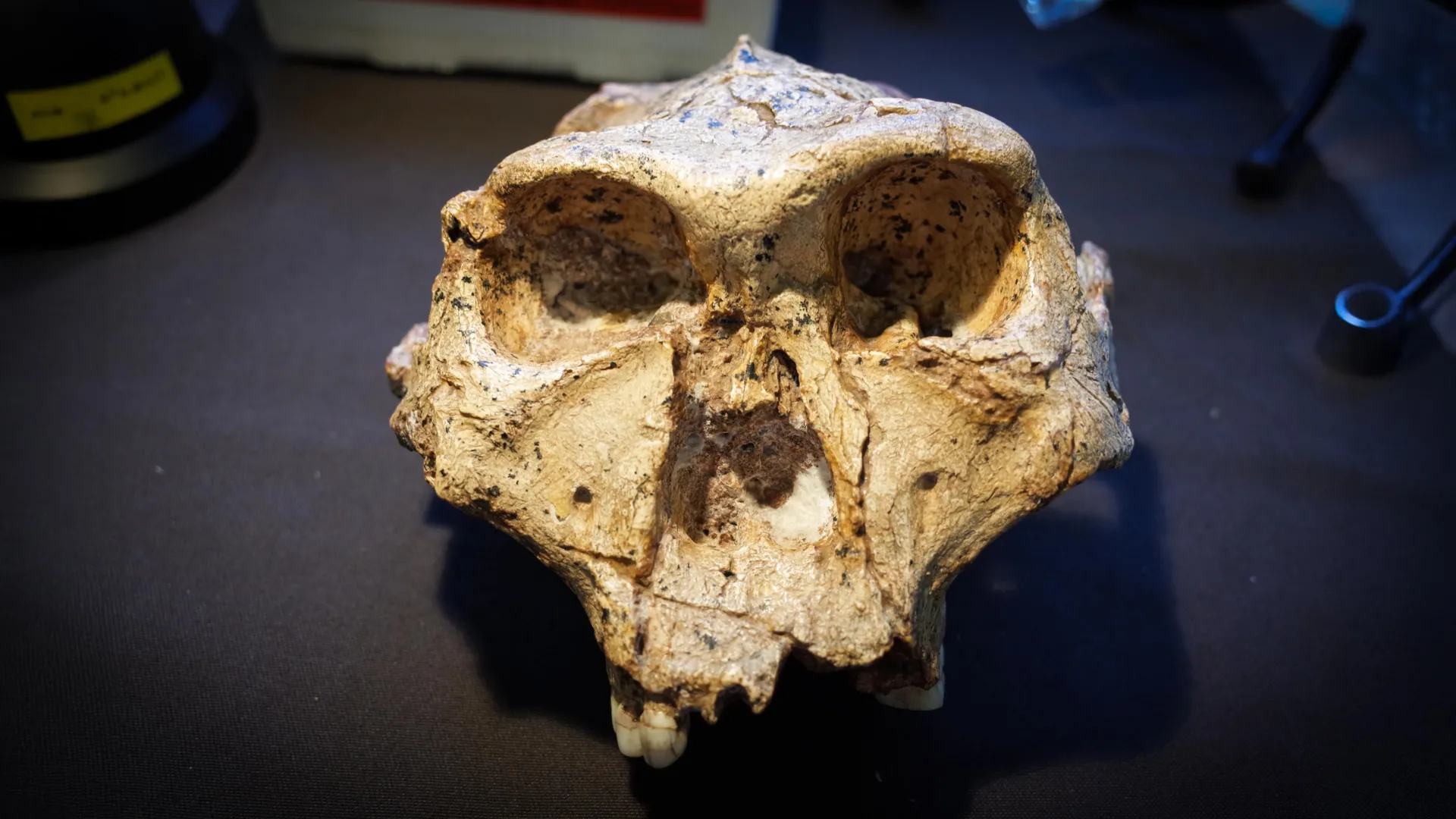
A research study from Monash University published in the American Journal of Biological Anthropology challenges the conventional taxonomic system used to classify human ancestors and their close relatives. The research proposes a substantial revision to how scientists organize human evolutionary history, specifically suggesting that all human species and related fossil ancestors from the past 4-5 million years should be classified within the single genus Homo.
Conventionally, human evolution has been presented as a relatively straightforward progression through distinct species categories, beginning with ape-like ancestors, progressing through Australopithecus and early Homo members, and culminating in modern humans. However, the expanding fossil record reveals a far more intricate evolutionary narrative than this simplified model suggests. As paleontologists discover additional fossils, many of the distinguishing characteristics that once clearly differentiated humans from closely related species have become increasingly ambiguous and difficult to define precisely.
Dr. Ian Towle, the study’s lead researcher at the Monash Biomedicine Discovery Institute, contends that the current classification system has become less useful and less accurate in light of recent findings. He notes that advances in fossil discovery and evolutionary and genetic analysis provide an opportune moment to reassess whether traditional taxonomy genuinely reflects human evolutionary relationships. According to Towle, the groups classified separately do not necessarily represent distinct evolutionary branches, and behavioral and ecological differences previously used to distinguish between categories have become harder to maintain as evidence accumulates.
Modern evolutionary science has increasingly moved toward classifying organisms according to genuine evolutionary groupings, or clades, that share a common ancestor. However, human taxonomy has been slower to adopt this approach. Traditionally, members of the Homo genus were identified through characteristics such as large brain size, sophisticated tool use, and specific anatomical and behavioral traits. These defining markers have become problematic as scientists have discovered that some Homo members possessed relatively small brains, while evidence indicates that Paranthropus and Australopithecus species also demonstrated complex behavioral capabilities.
Dr. Towle argues that incorporating Australopithecus and Paranthropus into the genus Homo would create a more coherent representation of human evolutionary history. Such a reclassification could also diminish the need for repeated redefinition of taxonomic groups as new discoveries emerge and scientific understanding of human ancestors deepens.
Article Attribution | Read More at Article Source
Article summary produced by Claude AI