

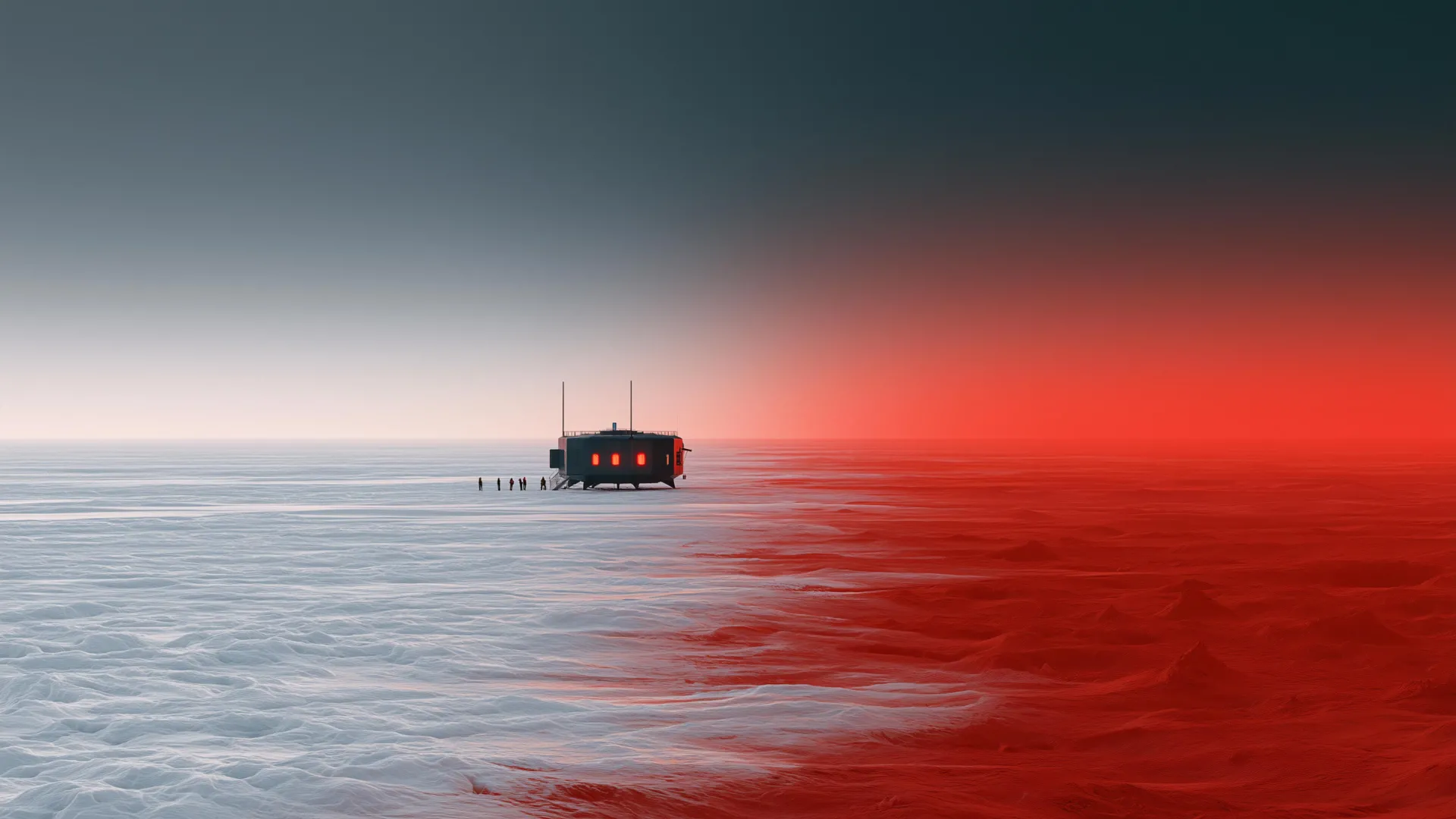
Researchers from the University of Zurich and University of Bern conducted a study monitoring a 12-person crew during a ten-month overwintering mission at Concordia Station in Antarctica. The station’s extreme isolation and harsh conditions—with winter temperatures reaching minus 80 °C—make it an ideal real-world analog for understanding how crews might function during extended lunar or Martian missions.
The research team, led by Jan Schmutz and Andrea Cantisani, employed a combination of questionnaires and wearable proximity sensors to track changes in various social dimensions throughout the mission. Participants responded to surveys at four intervals and wore devices that automatically recorded physical proximity to other team members and the duration of those interactions. This methodology allowed researchers to correlate survey responses about loneliness, trust, conflict, relationships, team cohesion, and performance with objective measurements of social contact patterns.
A significant finding emerged regarding the relationship between physical proximity and social well-being. Contrary to what might be expected, crew members who spent more time in close contact with others also reported higher levels of conflict, decreased trust, and lower perceived performance. The researchers suggest that constant proximity in confined spaces can itself become a source of stress, and that while isolation presents psychological challenges, the absence of privacy opportunities creates additional strain. The researchers emphasized that their findings show correlation rather than causation, noting that lonelier individuals may have sought more interaction without experiencing the supportive benefits they needed.
The sensor data also revealed that crew members gradually formed smaller social subgroups as the mission progressed, with people increasingly associating with colleagues sharing their language or nationality. While these connections may provide psychological support during stressful periods, they could also create social divisions that weaken overall team cohesion in culturally diverse groups.
Schmutz highlighted the practical implications for future space exploration, noting the importance of identifying social dynamics early and providing targeted support to teams. The findings may apply beyond space missions to other demanding environments such as submarines and remote research stations. The study also demonstrated that wearable sensors can function reliably in extreme conditions, offering a non-disruptive tool for monitoring social patterns in future investigations.
Article Attribution | Read More at Article Source
Article summary produced by Claude AI