

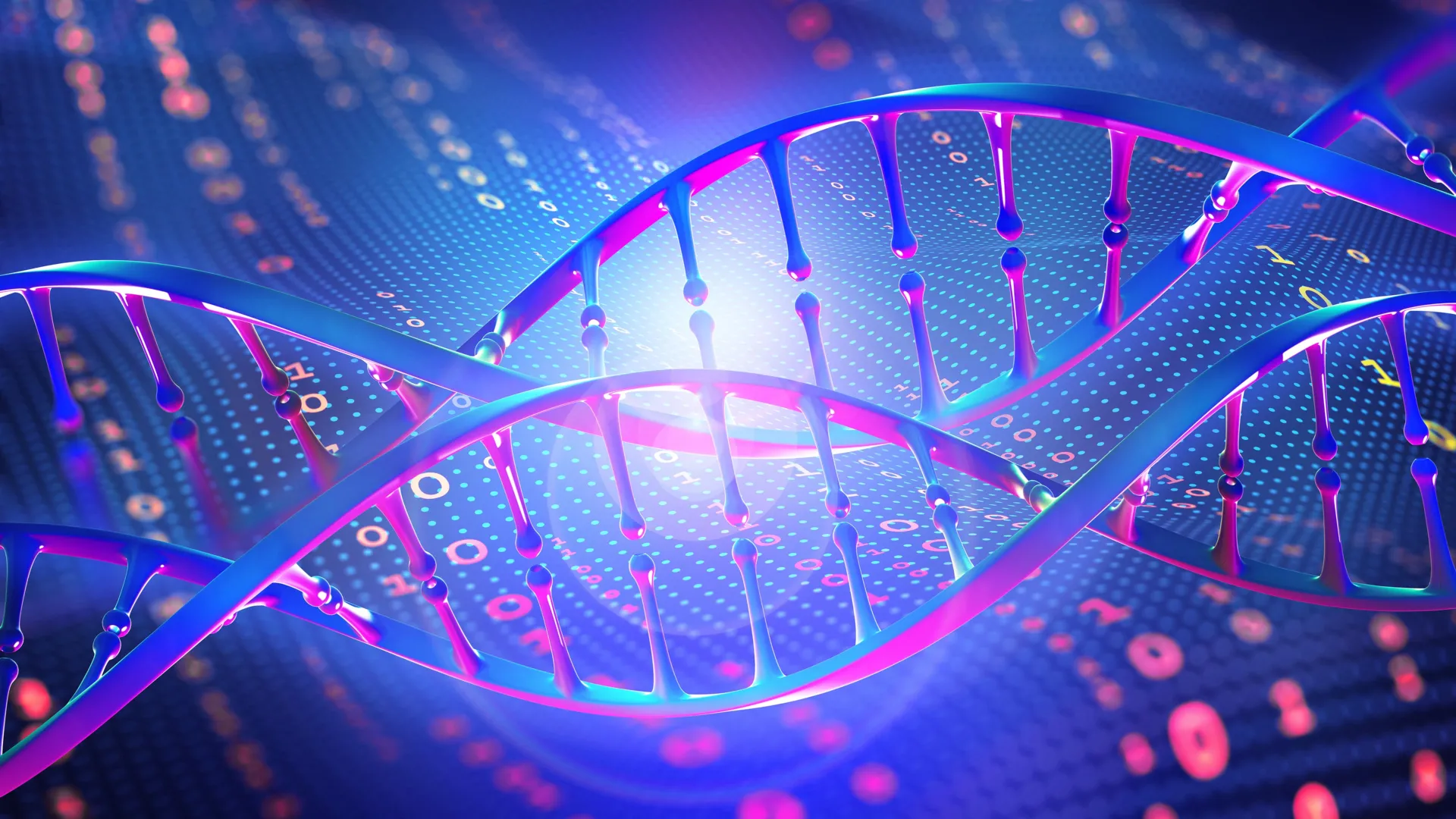
Researchers at Penn State University have created a novel memory storage device that integrates synthetic DNA with crystalline perovskite semiconductors, addressing a long-standing challenge in bridging biological and electronic systems. The work, detailed in Advanced Functional Materials, leverages DNA’s exceptional information density—approximately 215 million gigabytes per gram—alongside perovskite’s proven electronic capabilities in solar cells and data storage applications.
The team engineered a memory resistor, or memristor, using silver-doped synthetic DNA layered with perovskite thin films. Unlike conventional resistors that lose stored information when powered down, memristors retain records of previous electrical activity, enabling information storage and processing in the same physical location. This architecture mimics neuronal function in biological brains and could support simultaneous, sophisticated data processing required for emerging technologies such as artificial intelligence and neuromorphic computing systems.
Synthetic DNA offered significant advantages over natural DNA for this application. While natural DNA consists of long, tangled strands difficult to manipulate precisely, synthetic DNA comprises short, rigid sequences that researchers can design computationally and arrange with exact precision at nanoscale dimensions. The researchers added silver nanoparticles to the DNA through a doping process, enabling electrical conductivity while promoting orderly molecular alignment and seamless integration with perovskite materials.
When combined, the silver-doped DNA and perovskite created bio-hybrid pathways directing electrical current through the device with exceptional efficiency. Testing demonstrated reliable electron movement at voltages below 0.1 volt, with the device operating consistently at temperatures approaching 250 degrees Fahrenheit and maintaining functionality at room temperature for more than six weeks. The system achieved the same memory function as comparable technologies while consuming approximately one-tenth the power, substantially surpassing performance standards of existing perovskite-based memory devices.
Researchers indicated the technology could prove particularly valuable for future electronics requiring high information capacity with reduced energy consumption, addressing escalating demands from artificial intelligence and other computationally intensive applications. The team plans to continue refining the approach and investigating additional applications for bio-inspired electronic systems.
Article Attribution | Read More at Article Source
Article summary produced by Claude AI