

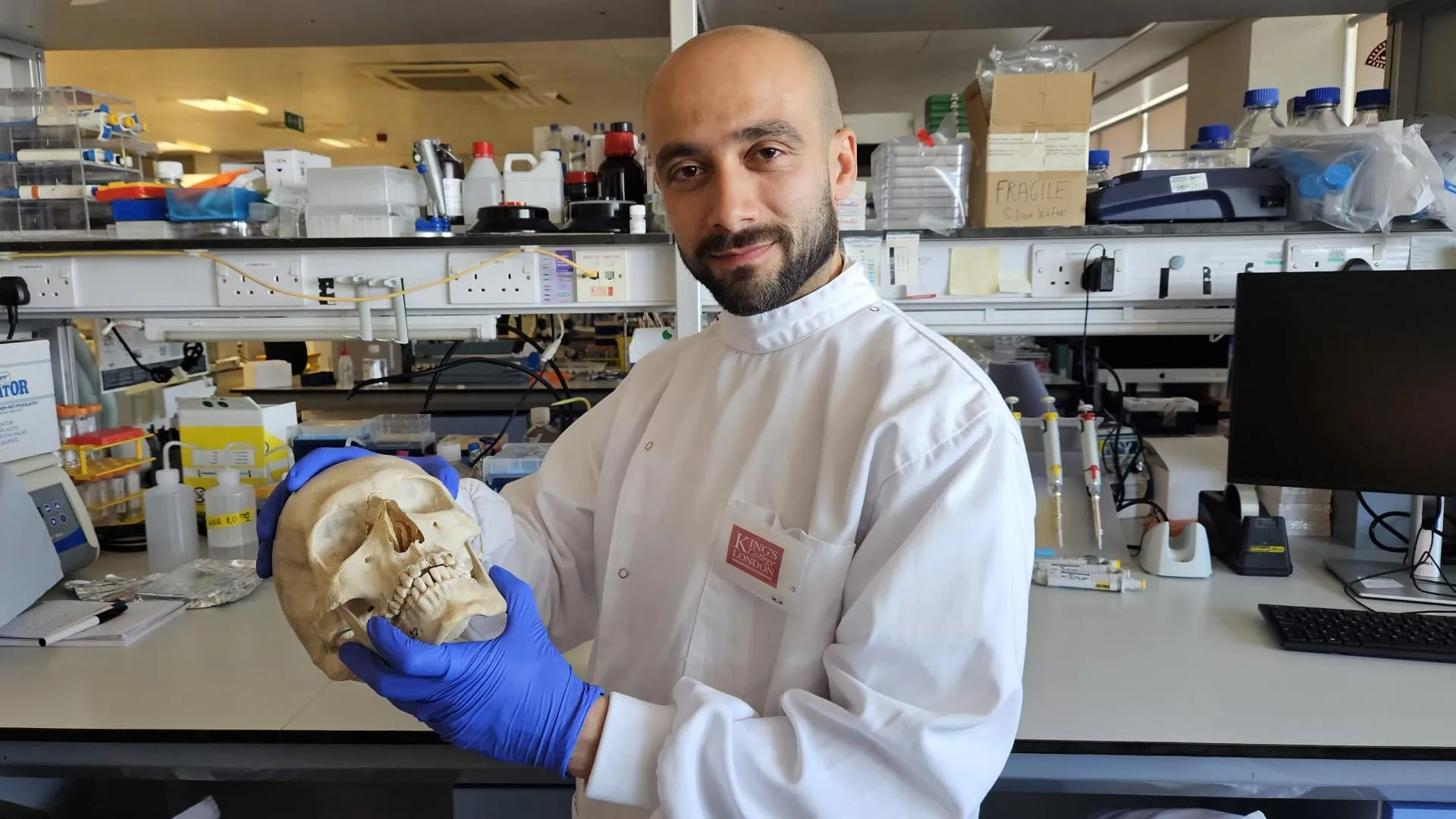
Researchers at King’s College London have identified keratin, a natural protein found in wool, as a promising material for bone repair applications. The team extracted keratin from wool and developed it into membranes designed to serve as scaffolds that guide and support new bone growth in damaged areas. Initial laboratory testing demonstrated that human bone cells grew effectively on the keratin material and exhibited characteristics consistent with healthy bone formation.
The study proceeded to animal trials in which keratin membranes were implanted into rats with skull defects severe enough that natural healing would not occur. Over the following weeks, researchers monitored how well the membranes facilitated bone regeneration across the damaged regions. The findings indicated notable differences between keratin and collagen, the material currently used as the gold standard for bone scaffold applications in regenerative medicine and dental fields.
While collagen scaffolds generated a greater total volume of bone, the bone formed using keratin membranes demonstrated superior structural organization and alignment of its fibers, creating tissue that more closely resembled natural, healthy bone. Additionally, the keratin membranes remained stable throughout the healing process and integrated smoothly with surrounding tissue, both factors considered important for eventual clinical use. The material’s sustainability profile offers another advantage, as keratin can be extracted from wool that is often discarded as waste by the agricultural industry, providing a renewable and potentially scalable resource for medical applications.
Researchers noted that collagen-based scaffolds present several limitations, including relative weakness, rapid degradation that may restrict effectiveness in weight-bearing bone repairs, and complex, costly extraction processes. The successful demonstration of keratin’s effectiveness in living biological systems represents a significant advancement beyond early materials concepts, positioning the wool-derived material as a potential new class of regenerative biomaterial that could challenge the long-standing reliance on collagen scaffolds in bone repair procedures.
Article Attribution | Read More at Article Source
Article summary produced by Claude AI