

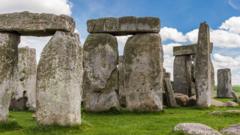
Researchers have identified what they believe to be a predecessor to Stonehenge near the village of Bulford, located roughly 3 miles from the famous prehistoric monument. The site consists primarily of two holes that once held wooden posts, positioned approximately 120 meters apart and estimated to have been between 2 and 4 meters in height. The posts were oriented to align with the Sun during the summer and winter solstices, mirroring the astronomical alignments that characterize Stonehenge itself.
The structure has been dated to around 5,000 years old through radiocarbon analysis, making it approximately 500 years older than Stonehenge. The excavation, led by Phil Harding of Wessex Archaeology, uncovered numerous artifacts surrounding the post pits, including decorated pottery fragments, flint tools, carved animal bones, and an antler used for digging. Among the most significant discoveries was a finely crafted disc-shaped flint knife, noted for its exceptional workmanship and careful placement at the site, which researchers suggest may have held symbolic meaning.
Determining the precise solar alignment required reconstructing the position of celestial bodies as they appeared 5,000 years ago, according to archaeoastronomer Dr. Fabio Silva from Bournemouth University. When accounting for the width of the wooden posts, the alignment proved to be exact for both the summer solstice sunrise and winter solstice sunset. The discovery suggests connections between Bulford and early construction phases at Stonehenge, with researchers proposing that the communities may have been based in the area or gathered seasonally for work on the larger monument.
Experts attribute the ancient focus on solar cycles to the agricultural livelihoods of these early farming communities, whose survival depended on understanding seasonal patterns. The winter solstice held particular significance for these societies, as it marked the critical period when daylight was at its minimum, potentially necessitating rituals or ceremonies to ensure the return of spring and the survival of crops and livestock.
Article Attribution | Read More at Article Source
Article summary produced by Claude AI