

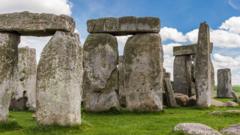
Researchers have identified what they believe to be an earlier version of Stonehenge located in Bulford, approximately 3 miles from the well-known prehistoric monument. The structure, dated to around 5,000 years ago, predates Stonehenge by 500 years and consists of two post holes that once held wooden structures positioned roughly 120 meters apart and estimated to stand between 2 and 4 meters high.
The two wooden posts were oriented to align with the Sun during the summer and winter solstices, similar to how the massive stones at Stonehenge are positioned relative to these celestial events. Archaeological analysis, which included reconstructing what the sky looked like 5,000 years ago, confirmed that the alignment was precise. Phil Harding, who led the excavation for Wessex Archaeology, described the discovery as one of the most significant finds of his career, noting that the simple structure reveals important information about how prehistoric communities viewed and revered the heavens.
Excavations at the site, initially uncovered a decade ago during ground clearing for military housing, yielded numerous artifacts including pottery, flint tools, animal bones, and an antler used for digging. Among the notable discoveries was a rare Neolithic knife shaped into a disc, which Harding characterized as exceptional due to its craftsmanship. Radiocarbon dating of the artifacts confirmed the site’s age. The presence of these objects suggests that prehistoric people gathered at the location regularly.
According to Dr. Jennifer Wexler, curator of history at English Heritage, the Bulford discovery may indicate that people constructing Stonehenge’s earliest phases were based in or seasonally visiting the area. Early farmers of that period relied heavily on understanding seasonal cycles and solar movements for their agricultural survival. Researchers suggest that winter solstice held particular significance for ancient communities, as marking the return of light after the darkest days may have been symbolically important for ensuring successful crops and livestock in the coming season.
Article Attribution | Read More at Article Source
Article summary produced by Claude AI