

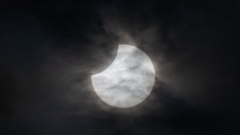
Skywatchers across Ireland are preparing for a significant astronomical event scheduled for next week, when a partial solar eclipse will occur during the early evening. More than 90% of the sun will be blocked from view across the island, marking the most substantial eclipse visible from Ireland until September 2090. The phenomenon will be particularly pronounced in southern and western locations, with Skellig Michael off the County Kerry coast experiencing the most extreme coverage at approximately 98.01% obscuration.
The eclipse will commence at approximately 18:10 BST, though exact timings vary by location. In Belfast, the sun will be covered by 93.05%, while Cork will see 96.43% coverage. Astronomers note that despite the high percentage of obscuration, the event will still maintain considerable brightness, creating conditions similar to viewing the sun through thick cloud cover. According to Dr Rok Nežič from Armagh Observatory and Planetarium, the darkening should be noticeable to observers.
Safety remains a paramount concern, with experts emphasizing that viewers must never look directly at the sun during a partial eclipse. Even when the majority of the solar disk is obscured, the remaining visible portion remains bright enough to cause permanent eye damage. The human retina lacks pain receptors, meaning damage can occur without the observer’s awareness. Safe viewing methods include certified eclipse glasses for naked-eye observation, or indirect techniques such as projecting the sun’s image onto a white card using simple tools like a cereal box pinhole viewer.
The eclipse will be followed hours later by the peak of the Perseid meteor shower, occurring late into the evening and continuing into the following day. Favorable conditions are expected due to a new moon eliminating moonlight interference. The meteors result from Earth’s passage through dust and rock debris left by comet Swift-Tuttle. Under ideal dark-sky conditions, observers may witness approximately 100 meteors per hour, with the apparent origin point located in the constellation Perseus.
Article Attribution | Read More at Article Source
Article summary produced by Claude AI