

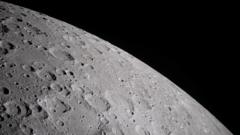
An empty upper stage from a SpaceX Falcon 9 rocket impacted the lunar surface near the Einstein crater at approximately 5,400 miles per hour on Wednesday. The collision occurred during daytime on the illuminated portion of the Moon, making direct observation difficult for astronomers despite the potential dust plume extending roughly 100 kilometers. Larger observatories in the Americas are currently analyzing data from the event, though comprehensive findings may take days or weeks to emerge.
The Falcon 9 upper stage, approximately the size of a five-story building and weighing at least 4,000 kilograms, was launched from Florida in January of the previous year carrying two lunar landers. After successfully delivering the landers on their trajectory toward the Moon, the spent rocket stage remained in orbit. Over the subsequent 18 months, gravitational forces from celestial bodies and solar radiation gradually altered the stage’s trajectory, eventually placing it on a collision course with the lunar surface.
From a scientific perspective, this accidental impact presents valuable research opportunities. Because the rocket’s exact specifications, velocity, and point of impact are known, researchers can use the collision as a controlled experiment to test models of crater formation and debris ejection. The resulting crater and ejected material will provide insights into how impacts excavate rock and distribute debris across the lunar surface, information critical for designing safer lunar landers and future habitats.
Nasa’s Lunar Reconnaissance Orbiter is expected to photograph the impact site in coming days, enabling before-and-after comparisons. The fresh material exposed by the impact will offer additional geological data about the Moon’s composition and contribute to understanding the Earth-Moon system’s formation approximately 4.5 billion years ago. This marks the latest in a series of human-made objects striking the Moon since 1959, including deliberate impacts conducted for scientific purposes and accidental collisions from space debris accumulated over decades.
Article Attribution | Read More at Article Source
Article summary produced by Claude AI